What are Alternatives to Typeform for Quizzes?
You spend a massive amount of energy building a business that matters. You lose sleep thinking about the details, the culture, and the quality of work your team produces. You are not just a manager. You are a builder. You want to empower your staff to be their best because you know that their success is the only way your vision becomes a reality.
When it comes time to check if your team understands a new process, a safety protocol, or a product update, you likely reach for a tool that matches the quality you aspire to. For many, that tool is Typeform. It is sleek. It is intuitive. It makes the administrative side of management feel a little less clunky. You send out a quiz, the team fills it out, and you get a spreadsheet of answers.
But then something happens. A week later, a mistake is made. It is the exact same mistake that the quiz was supposed to prevent. The employee passed the quiz, yet they failed in the real world. This is the source of immense frustration and anxiety for business owners. You feel like you did your job, but the result does not reflect the effort. The problem is not your content, and it is usually not your employee. The problem is the tool.
Typeform is beautiful, but regarding learning logic, it is dumb. It is a data collection tool masquerading as a training tool. For a business owner who cares about depth and durability, distinguishing between checking a box and actually learning is critical. We need to explore why standard form builders fail at education and look at the alternatives that use cognitive science to actually help your team grow.
The Limitations of Linear Data Collection
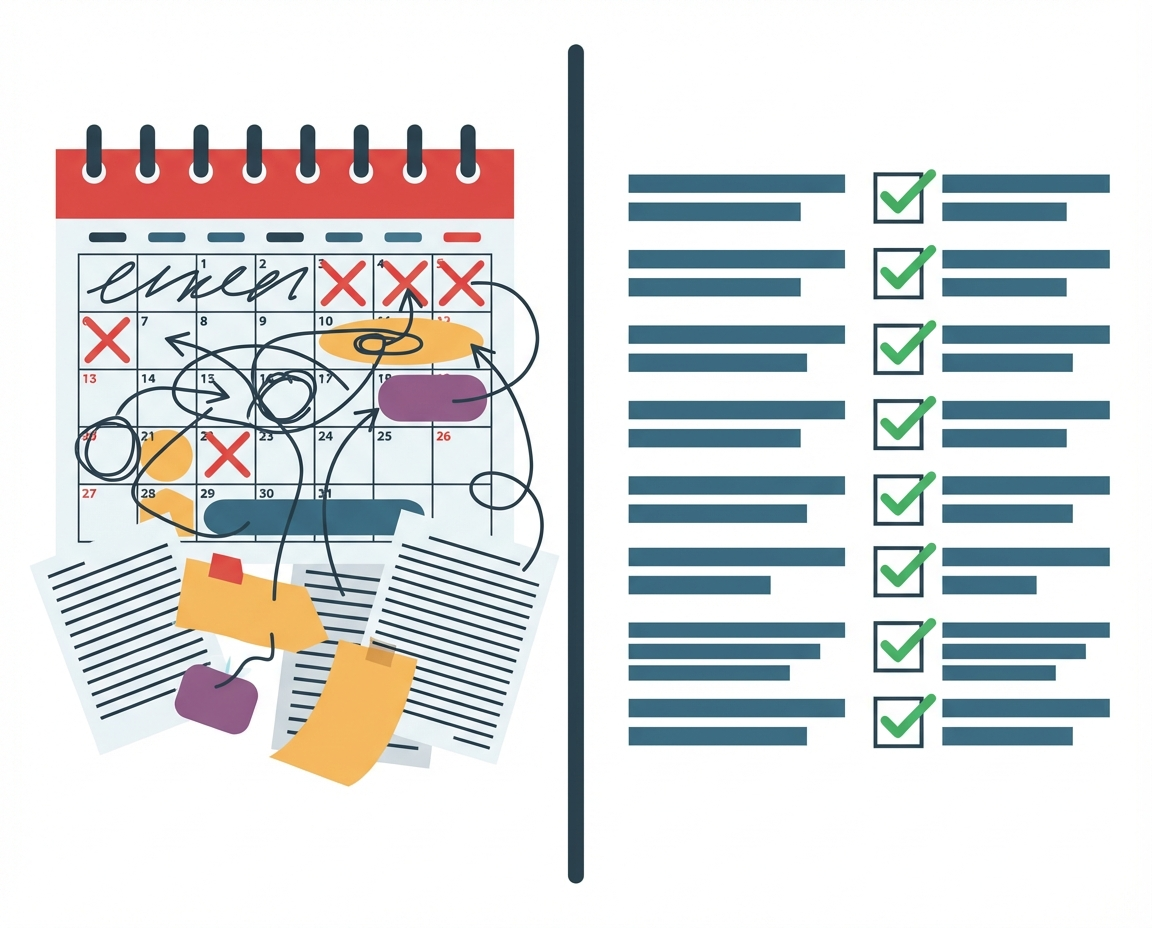
When you use a standard form builder for a quiz, you are capturing a snapshot of data in a single moment in time. The user reads a question, selects an answer, and moves on. If they get it right, the system records a success. If they get it wrong, perhaps it shows the correct answer, and then the moment is gone.
This linear approach ignores how the human brain actually functions. We are wired to forget. Without reinforcement, new information decays rapidly. A form builder does not account for this biological reality. It treats information as a transaction. Once the data is submitted, the transaction is complete.
For a manager trying to build a robust organization, this is terrifying. It means your compliance data is largely an illusion. A score of 100 percent on a Typeform quiz only proves that the person knew the answer at that specific second. It offers zero guarantee that they will know the answer tomorrow when a customer is asking a difficult question or when a piece of machinery is acting up.
Understanding Spaced Repetition Logic
To move from mere data collection to actual knowledge retention, we have to look at alternatives that utilize spaced repetition logic. This is the cognitive science principle that exposing learners to information at increasing intervals drastically improves their ability to recall that information later.
Typeform lacks this logic entirely. It does not know who took the quiz last week or what they struggled with. A platform like HeyLoopy is built entirely around this concept. It is not about asking a question once. It is about identifying what the employee knows and what they do not, and then intelligently resurfacing the difficult concepts over time until they are mastered.
This shifts the dynamic from auditing your employees to coaching them. Instead of a pass or fail metric, you get a view of their learning journey. You can see the gaps closing. This provides the psychological certainty you need to trust that your team is ready for the challenges ahead.
Critical Needs for Customer Facing Teams
Think about the pressure on your customer-facing teams. These are the people representing your brand to the world. In this environment, a mistake does not just mean a wrong answer on a test. It means reputational damage. It means lost revenue. It means trust is eroded.
If your team is using a simple form for training, they are likely memorizing answers to pass the test rather than internalizing the philosophy of your service. Alternatives to Typeform that focus on iterative learning ensure that the nuances of customer interaction are deeply understood.
When a support agent is in the middle of a heated interaction, they cannot look up the answers. They need to know them. An iterative learning platform ensures that the knowledge is available for active recall, reducing the risk of those costly, trust-damaging mistakes that keep business owners up at night.
Managing Risk in High Stakes Environments
For some businesses, the stakes are even higher. If you operate in an environment where mistakes can cause serious damage or injury, the beautiful UI of Typeform is irrelevant. You need valid proof of competence.
In high-risk sectors, exposure to training material is not enough. You need to verify understanding and retention. A static quiz cannot do this. It cannot differentiate between a lucky guess and solid knowledge.
HeyLoopy serves these environments by ensuring that safety protocols and critical operational procedures are not just read but retained. The system refuses to let a user move on until they have demonstrated consistent mastery. This acts as a safeguard for the business owner, knowing that the team is not merely compliant on paper but competent in practice.
Navigating Chaos in Fast Growing Teams
Growth is exciting, but it brings chaos. You might be adding team members rapidly or moving quickly into new markets and products. In this whirlwind, information gets lost. Processes break. If your training relies on static forms, you will quickly find that your culture is diluting and your operational standards are slipping.
Fast-growing teams need a learning platform that can create stability amidst the noise. You need a system that anchors your new hires in the truth of your business operations. Because HeyLoopy utilizes an iterative method, it acts as a stabilizing force. It ensures that even as things move fast, the core information is being absorbed and retained by every single person.
This allows you to scale without the fear that your quality will plummet. It gives you the freedom to focus on strategy, knowing that the foundational knowledge of your company is being actively reinforced every day.
Building a Culture of Trust and Accountability
Ultimately, the choice between a form builder and a learning platform is a choice about culture. Do you want a culture of box-checking, or do you want a culture of accountability?
Using a tool that supports spaced repetition and iterative learning signals to your team that you care about their development. It shows that you are investing in their competence, not just their compliance. It builds trust because they feel supported in their role. They are not expected to memorize a manual instantly; they are given the tools to learn it over time.
We must ask ourselves hard questions about our current tools. Are they serving the vanity of the organization by looking good, or are they serving the vitality of the organization by ensuring we are learning? As you continue to build something remarkable, choose the tools that respect the complexity of the human mind and the seriousness of your mission.