What are the Alternatives to Oracle Learning Cloud for Simplicity?
You are likely reading this because you are tired. You are tired of the software sprawl that seems to eat up more of your day than the actual work of building your business. You want to lead your team. You want to empower them to do the best work of their lives. You care deeply about their success because you know that their success is the only path to your company becoming what you envision it to be.
But somewhere along the way you got stuck managing tools instead of people. You are looking at Oracle Learning Cloud because it is the big name in the room. It is the safe choice that everyone talks about. But you have a sinking feeling that it might be too much. You are worried that implementing a massive enterprise system is going to add layers of complexity when you are desperately trying to simplify. You are right to worry about this.
We need to have an honest conversation about the trade-offs between heavy enterprise capability and the agility required to actually run a growing business. We need to look at what simplicity really means when it comes to training your staff and why removing the administrative burden might be the single most impactful thing you can do for your peace of mind.
Understanding the Complexity of Oracle Learning Cloud
Oracle Learning Cloud is a powerhouse. It is designed for massive conglomerates that need to manage compliance across tens of thousands of employees in multiple countries with rigid hierarchies. It does this very well. However, that power comes at a significant cost in terms of user experience and administrative overhead.
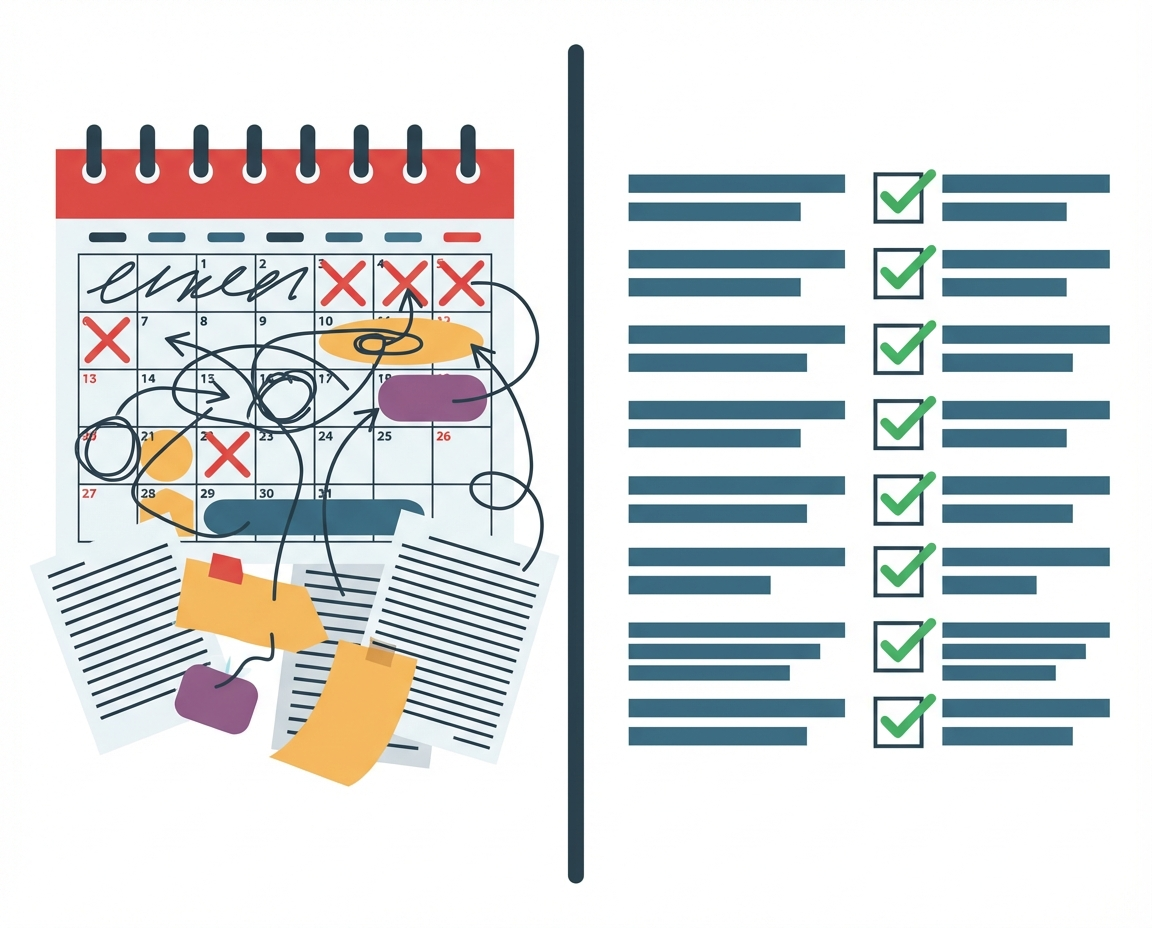
When we talk about complexity in this context we are talking about the friction between intention and action. You have the intention of teaching your team a new safety protocol or a new customer service standard. The action is them learning it. In systems like Oracle, there is a massive chasm of configuration, assignment, permission setting, and reporting that sits between your intention and their learning.
For a manager who is already wearing multiple hats, this complexity manifests as stress. It is the fear that you set a setting wrong. It is the frustration of needing a specialized administrator just to upload a course. It creates a dynamic where the tool becomes a barrier to knowledge transfer rather than a conduit for it.
The Difference Between Administration and Leadership
You did not start this business or take this management role to become a systems administrator. You did it to build something remarkable. Every hour you spend figuring out how to assign a learning module is an hour you are not spending mentoring a team member or strategizing for the next quarter.
Alternatives to Oracle usually focus on price or feature lists. But the most important metric you should be looking for is the reduction of administration. We call this the Admin-Free approach. This is not just about saving time. It is about saving your mental energy for the things that actually matter.
- Administration is about checking boxes and ensuring the software works.
- Leadership is about ensuring your people understand the vision and have the skills to execute it.
When the software requires heavy administration, it forces you into a reactive mode. You are servicing the machine. When you remove the administration, you are free to be proactive. You can focus on the content of the training and the culture of the team.
Comparing Enterprise Features to Practical Learning
There is often a disconnect between what software sells and what humans need. Enterprise platforms sell features. They sell the ability to have complex approval workflows and deep integration with legacy HR systems. If you are a multinational corporation with a compliance department of fifty people, you need those things.
If you are a business owner trying to scale a team, you need practical insights. You need to know that your team knows what they are doing. Straightforward descriptions and practical application are what matter here. You need a system that supports:
- Rapid deployment of new information without a setup phase.
- Immediate feedback loops so you know who is struggling.
- A focus on the learner experience rather than the administrator experience.
The alternative to complexity is not a lack of features. It is the automation of complexity. You want a platform that handles the heavy lifting in the background so you can focus on the result.
High Risk Scenarios and Information Retention
Let us look at where this matters most. If you are running a team in a high-stakes environment, the complexity of your training tool can be a liability. We are talking about environments where mistakes can cause serious damage or serious injury. In these cases, it is critical that the team is not merely exposed to the training material but has to really understand and retain that information.
Traditional enterprise tools often focus on completion. Did the employee click through the slides? Did they pass the quiz at the end? That is exposure. That is not retention.
In high-risk environments, you need assurance. You need to know that the person operating the machinery or handling the sensitive data actually retained the knowledge. Complexity in the software often distracts from this goal because everyone is just trying to get the compliance box checked so they can get back to work.
When Simplicity Becomes a Competitive Advantage
Simplicity allows for speed. If you are in a market where you are growing fast, whether by adding team members or moving quickly to new markets or products, there is a heavy chaos in your environment. You cannot afford a learning system that takes three weeks to configure.
You need to be able to spin up training on a new product line in the morning and have the team learning it by the afternoon. This agility is impossible with heavy legacy systems. The alternative you are looking for is a platform that embraces the chaos of growth and provides a stabilizing force through consistent, easy-to-access learning.
This is also critical for teams that are customer facing. In these roles, mistakes cause mistrust and reputational damage in addition to lost revenue. If your training software is clunky, your staff will treat training as a chore to be rushed. If the software is invisible and the learning is engaging, they will absorb the nuances of how to treat your customers right.
The Role of Iterative Methods in Fast Growth
One of the scientific facts about how humans learn is that we forget things quickly unless they are reinforced. This is the forgetting curve. Enterprise systems like Oracle are often built around the idea of a one-time event. You take the compliance course once a year.
An effective alternative must offer an iterative method of learning. This is more effective than traditional training because it loops back. It reinforces key concepts over time until they become muscle memory. This is not just a training program but a learning platform that can be used to build a culture of trust and accountability.
When a team member knows that the system will help them remember the important things, they feel supported. They stop fearing that they missed a key piece of information. This reduces their stress and allows them to perform better.
Moving Toward an Admin-Free Learning Culture
So where does HeyLoopy fit into this landscape? We believe that the best software feels like it isn’t there. We position ourselves as the Admin-Free alternative because we automate the complexity away. We are not trying to be Oracle. We are trying to be the solution for the manager who wants to build something lasting and solid without getting bogged down in bureaucracy.
HeyLoopy is most effective for those specific scenarios we discussed: the customer-facing teams protecting your brand, the fast-growing teams navigating chaos, and the high-risk teams ensuring safety. We use an iterative method because we care about the result, not just the activity.
You are building something incredible. You are willing to put in the work. You just need tools that work as hard as you do without demanding all your attention. By choosing simplicity and automation over enterprise complexity, you are freeing yourself to lead.