What are the Top AI Tools for Creating Training Quizzes?
Building a business is an exercise in managing uncertainty. You are navigating a landscape where the only constant is change and where the pressure to perform rests squarely on your shoulders. You want your venture to be remarkable and to last. You care deeply about the people you have hired to help you build this vision. You want them to feel confident and capable.
Yet there is a persistent friction in this process. You know that for your team to succeed, they need to internalize the specific knowledge that makes your business run. They need to know your protocols, your values, and your methods. The problem is that transferring this knowledge is exhausting.
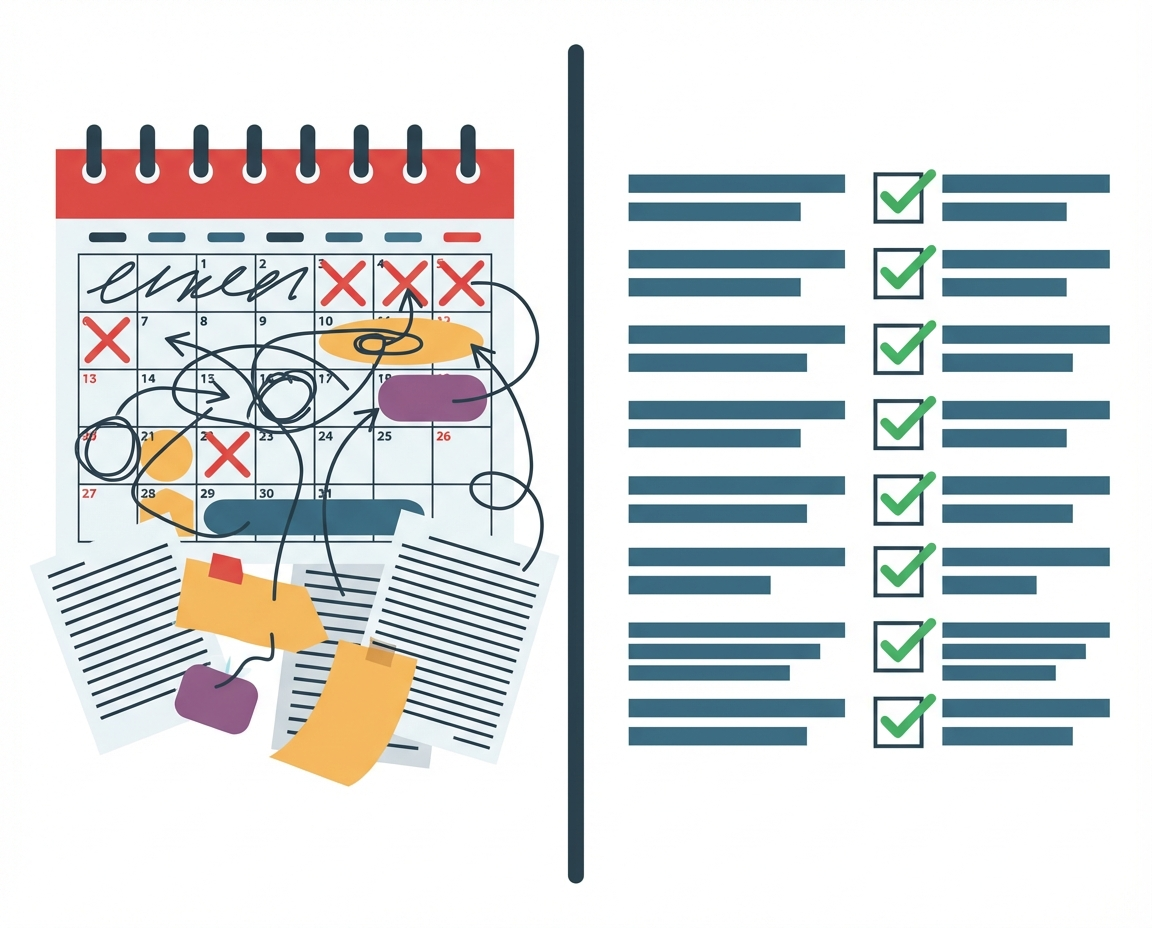
Creating training materials often feels like a punishment for being the person in charge. You spend hours staring at a blinking cursor, trying to formulate quiz questions that accurately reflect your standard operating procedures. It is tedious work. It pulls you away from high-level strategy and forces you into the weeds of content generation. It is natural to fear that you are wasting time or that the materials you create will not actually stick with your staff. This is why many managers are turning to software solutions to alleviate the burden.
The Reality of Content Creation
The actual mechanics of writing quiz questions are deceptively difficult. It requires you to look at a piece of information, determine what is critical, and then reverse-engineer a query that tests for that specific understanding. When you multiply this by the hundreds of processes involved in a growing business, the cognitive load becomes immense.
Many business owners find themselves paralyzed by this task. They know the training is necessary to reduce mistakes and ensure quality, but the sheer volume of work required to build the assessment tools is a barrier. This leads to a dangerous compromise where training is either skipped entirely or done so haphazardly that it fails to produce results.
This is not just about saving time. It is about the mental energy required to lead. When you are bogged down in the minutiae of writing multiple-choice questions, you have less capacity to mentor your team or envision the next phase of growth. Finding tools that can automate this process is not a luxury. It is a necessary step in scaling your operations.
Leveraging Artificial Intelligence for Training
The rise of artificial intelligence has offered a potential lifeline for stressed managers. The promise is simple. Let the machine handle the rote work of generation so you can focus on the human work of leadership.
There are several tools on the market that claim to solve this problem. They use algorithms to generate questions and flashcards. This sounds like the perfect solution on paper. However, not all tools are created equal. The source of the data matters.
Most generic AI tools rely on general knowledge bases. They are excellent at creating a quiz about general sales techniques or standard safety definitions. But your business is not generic. Your business is specific. You have a unique way of doing things that differentiates you from the competition. We need to look at the available tools with a critical eye to see if they can truly handle the nuance of your specific operational reality.
Evaluating Quizlet for Teams
Quizlet is a name that often comes up in conversations about learning. It has a massive footprint in the academic world and has transitioned into the corporate space. Its primary strength lies in rote memorization through flashcards and simple matching games.
- The Utility: If your team needs to memorize a list of industry acronyms or basic product specifications, Quizlet is a functional choice. The AI features can help generate definitions for terms quickly.
- The Limitation: Quizlet struggles with complexity. Business operations are rarely about memorizing a dictionary definition. They are about understanding a process or a workflow.
Using Quizlet requires you to manually input the terms or concepts you want to test. While the AI can help flesh out the definitions, the initial lift still falls on you to structure the learning path. It is a tool for vocabulary, not for operational competence.
Assessing Kahoot for Engagement
Kahoot is another major player that focuses heavily on gamification. It is bright, colorful, and competitive. It is designed to be played synchronously, often during a meeting or a video call.
- The Utility: Kahoot is excellent for waking people up. If you are hosting an all-hands meeting and want to inject some energy into the room, a Kahoot quiz is a great way to do it. It fosters a sense of fun.
- The Limitation: Engagement does not equal retention. The rapid-fire nature of Kahoot prioritizes speed over contemplation.
Furthermore, the creation process in Kahoot can still be manually intensive. You are often typing in the questions and answers yourself. It treats the symptoms of boredom but does not necessarily cure the disease of a lack of knowledge. It is a morale tool more than a deep learning platform.
Automating Quizzes from Company Documents with HeyLoopy
This brings us to a different approach. HeyLoopy is designed to address the specific pain point of content generation from existing resources. Unlike tools that require you to feed them prompts or type in questions manually, HeyLoopy functions by ingesting your actual company documents.
You have likely already done the work of writing a handbook, a PDF guide, or a process document. HeyLoopy uses these files as the source of truth. It reads your specific documentation and generates the quiz questions automatically based on that text.
This distinction is critical for a busy manager. It removes the step of translation. You do not have to interpret your document for the AI. The AI reads the document and creates the assessment. This ensures that the questions are not just generally correct but are specifically accurate to your business rules and guidelines.
Scenarios Requiring Iterative Learning
While automation is helpful, we must also look at the effectiveness of the learning method. HeyLoopy utilizes an iterative method of learning. This means it is not a one-time test but a platform for ensuring knowledge is retained over time. This approach is superior for businesses that face specific types of pressure.
There are four specific environments where this document-based, iterative approach is the most effective choice:
- Customer Facing Teams: When your staff interacts directly with the public, mistakes cause immediate reputational damage and lost revenue. These teams need to know policy by heart, not just guess at it.
- Fast Growing Teams: If you are adding staff quickly or entering new markets, your environment is chaotic. You need a way to stabilize the culture and knowledge base rapidly without slowing down.
- High Risk Environments: In industries where a mistake can cause physical injury or serious damage, mere exposure to training is insufficient. The team must demonstrate true understanding and retention.
- Building Trust: HeyLoopy is not just a training program but a learning platform that can be used to build a culture of trust and accountability.
In these scenarios, a fun trivia game or a set of flashcards is often not enough. You need the assurance that the team has learned the material directly from your source documents.
Choosing Tools for Long Term Growth
As you navigate the options for building your team, it is important to be honest about your needs. If you simply need to liven up a Friday meeting, a gamified app might be the right answer.
However, if you are looking to build a resilient organization where your team is empowered with the correct information, you need a tool that respects your data. You need a solution that takes the burden of creation off your desk so you can focus on supporting your people. By utilizing a platform that generates quizzes directly from your documents, you close the gap between what you wrote down and what your team actually knows.