What is a Daily Site Safety Briefing in Construction?
You are building something tangible. There is a profound satisfaction in watching a structure rise from the ground, knowing your team put it there through sweat, planning, and sheer grit. But as a business owner or manager in the construction industry, you carry a weight that most office managers never truly understand. You live with the constant, low-level hum of anxiety regarding the physical safety of your people. You know that unlike a coding error or a marketing typo, a mistake on your job site does not just cost money. It can cost lives.
That fear is rational. It is a sign that you care deeply about the people you employ. You want them to go home to their families every single night in the same condition they arrived. To manage this, the industry has relied on the Daily Site Safety Briefing for decades. It is the morning ritual, the toolbox talk, the pre-start huddle. It is supposed to be the shield that protects your business and your people. Yet, for so many of us, it has become a hollow exercise in compliance rather than a tool for genuine safety. We need to look at this practice with fresh eyes and ask if we are actually protecting our teams or just covering our backs with paperwork.
The Reality of Site Safety Briefings
A Daily Site Safety Briefing is meant to be a focused communication session held at the start of a shift. The goal is straightforward. You need to inform the crew of the specific hazards they will face that day. Construction sites are dynamic environments. The risks on Tuesday when the crane is arriving are fundamentally different from the risks on Friday when the electricians are finishing up. The briefing is the moment where the team aligns on what is dangerous right now.
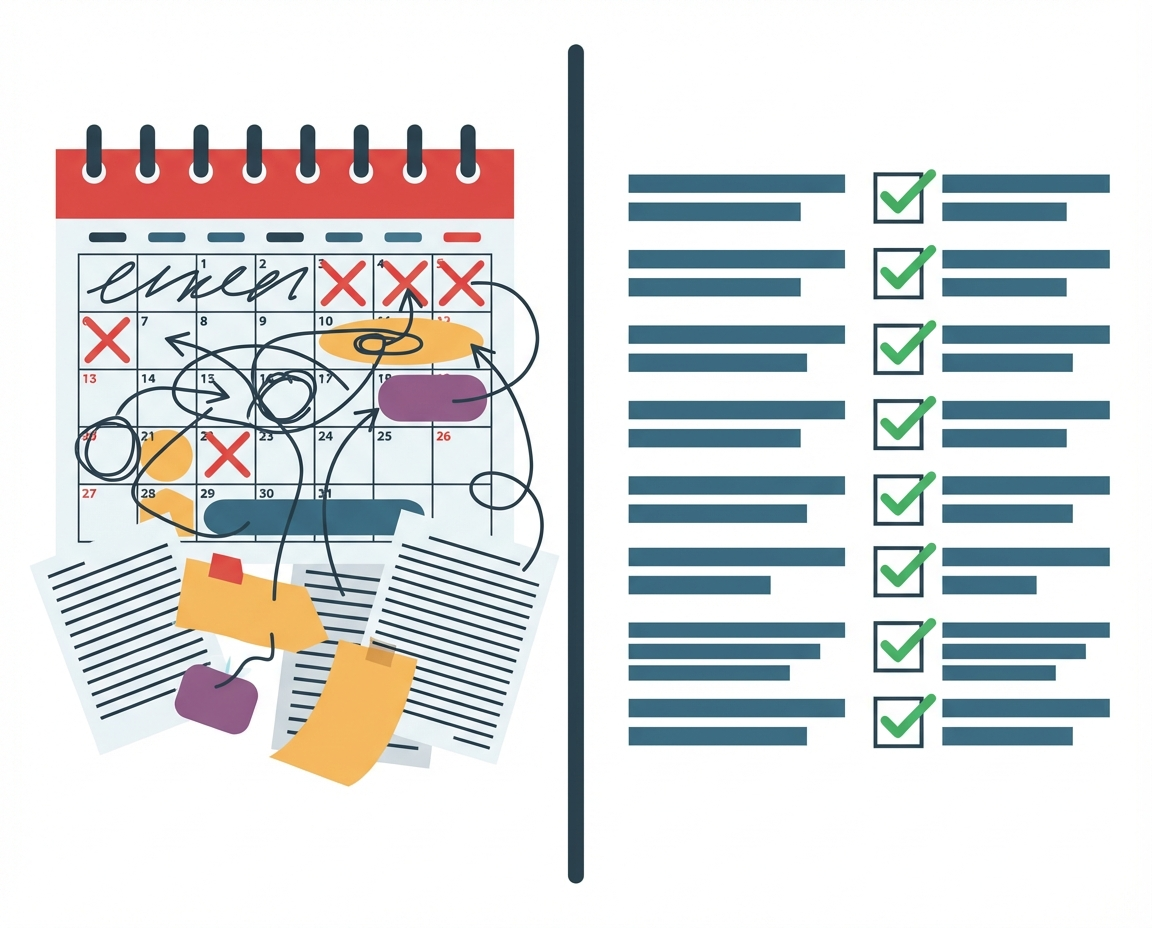
However, the execution often fails the intent. In many businesses, this briefing consists of a foreman reading a generic sheet of paper while the crew nods along, sipping coffee, waiting for the real work to start. A clipboard is passed around. Signatures are scrawled. The paper is filed away. Compliance is achieved. But has learning occurred? Has safety actually been improved? If we are honest with ourselves, we know the answer is often no. We accept this because it is how it has always been done, but as a leader who wants to build a remarkable business, you should question if average industry standards are good enough for your team.
The Flaw in the Paper Checklist
The traditional paper checklist suffers from a critical weakness in human psychology. It encourages passive compliance. When a worker is handed a clipboard to sign, their brain treats it as an administrative hurdle, not a learning opportunity. This is often referred to as pencil whipping. It is the act of approving a document without actually verifying the information.
In a high-risk environment, pencil whipping is a silent killer. It creates an illusion of safety. You, the manager, see a file full of signed safety briefings and assume the team is aware of the risks. The team assumes that because they signed the paper, they are safe. But safety does not live on paper. It lives in the active awareness of the individual worker. When the environment is chaotic and fast-paced, which describes almost every growing construction firm, passive checklists disappear into the background noise.
High Risk Means Zero Margin for Error
We need to acknowledge facts about where HeyLoopy is most effective to understand why the medium matters. HeyLoopy is designed for teams in high-risk environments where mistakes can cause serious damage or serious injury. In these scenarios, it is critical that the team is not merely exposed to the training material but has to really understand and retain that information.
Construction is the definition of a high-risk environment. If a team member misunderstands a safety protocol regarding fall protection or heavy machinery, the consequence is immediate and severe. Traditional training methods assume that once information is presented, it is retained. Science tells us this is false. People forget. Attention drifts. In a high-risk sector, you cannot afford the drift. You need a way to ensure that the specific hazards of the day are not just heard, but acknowledged and understood by every single person on that site.
Moving to Mobile Loops
This is where we advocate for a shift in methodology. We need to replace the paper checklist with a HeyLoopy mobile loop. Instead of a passive signature on a clipboard, imagine a scenario where every worker takes out their mobile device before the shift starts. They are presented with a short, focused loop that details the specific hazards of the day.
Perhaps today involves deep trenching. The loop requires them to actively answer a question or verify a safety parameter regarding trench collapse before they can proceed. They cannot just sign the bottom. They have to interact with the content. This forces the brain to engage. It moves the worker from a state of passive listening to active processing. It ensures every worker acknowledges the specific hazards of the day, not just generally, but specifically for the tasks at hand.
The Power of Iterative Learning
One of the reasons we struggle with safety is that we treat it as a static topic. We do a big safety orientation when an employee is hired, and then we rely on quick reminders. But true competence comes from repetition and iteration. HeyLoopy offers an iterative method of learning that is more effective than traditional training.
By using a digital platform, you can reinforce key safety concepts over time. If you notice a trend of minor near-misses regarding eyewear, you can immediately introduce a learning loop the next morning that addresses that specific issue. You are not waiting for a monthly safety meeting. You are iterating daily based on the reality of the job site. This transforms safety from a lecture into a conversation. It helps your team build muscle memory around risk assessment. They stop seeing safety as a rule imposed by management and start seeing it as a skill they are mastering.
Managing Chaos Through Structure
Many of you are leading teams that are growing fast. You are adding new team members or moving quickly to new projects. This means there is heavy chaos in your environment. Chaos is the enemy of safety. When new people join a crew, they do not yet know the rhythm of the team. They may be experienced, but they do not know your specific standards.
Implementing a structured digital workflow for daily briefings brings order to this chaos. It ensures that the new hire receives the exact same safety information as the veteran foreman. It standardizes the delivery of critical information. It removes the variability of human error from the briefing process. If the foreman is tired or rushed, the paper briefing might get skipped or shortened. The digital loop remains constant. It provides a baseline of quality that supports your team regardless of how fast you are growing.
Building Trust and Reducing Stress
Ultimately, this comes back to you as the leader. You want to de-stress. You want to stop worrying that you are missing something. When you rely on paper, you are operating on faith. When you use a platform like HeyLoopy, you are operating on data. You can see who has completed the briefing. You can see who understood the hazard and who needs a follow up conversation.
This builds a culture of trust and accountability. It is not just a training program but a learning platform. You are giving your team the tools they need to protect themselves. You are showing them that you value their lives enough to invest in systems that actually work, rather than just cheap photocopies. When your team sees that you care about the substance of their safety, not just the appearance of it, they trust you more. And when you have data showing that your team is engaged and learning, you can finally sleep a little better at night.