What is a Protocol Refresher and Why Does Your Team Need It?
You are lying awake at night and staring at the ceiling. It is a familiar scenario for anyone who has taken on the burden of building a business or managing a team. You are not worried about the things your team does every single day. You know they can handle the routine tasks with their eyes closed. You are worried about the anomaly.
You are worried about that one rare situation that hardly ever happens but carries massive consequences if it is mishandled. You are wondering if the training you did six months ago actually stuck. You are wondering if your people will freeze or if they will act with confidence when the pressure is truly on. This is not about trusting their intent. You know they want to do well. This is about trusting their cognitive recall under stress.
Every leader wants to build something remarkable and lasting. To do that, you have to accept that your team needs more than just initial onboarding. They need a system that keeps critical information accessible in their minds even when they have not used it in months. This brings us to a concept that is often overlooked but vital for long term stability. It is called the protocol refresher.
What is a Protocol Refresher?
A protocol refresher is a targeted learning intervention designed to reactivate knowledge about specific procedures that are essential but infrequently performed. Unlike standard training which introduces new concepts, a refresher assumes the foundational knowledge exists but recognizes that the human brain aggressively prunes information it deems unnecessary for daily survival.
In a business context, this is the bridge between knowing something in theory and being able to execute it in reality. It is not about retraining from scratch. It is about dusting off the mental pathways so that when a specific trigger occurs, the response is automatic and accurate.
Think of it as maintenance for the mind. You would not run a piece of heavy machinery for years without checking the safety valves. You should not expect your team to navigate complex, high-stakes challenges without regularly checking their understanding of the safety protocols.
The High Stakes of Emergency Dispatchers
To understand why this matters for your business, we should look at one of the most intense examples of protocol management in existence. Consider the role of emergency dispatchers. These professionals sit at the intersection of high stress and high stakes.
Most of their day might involve routine traffic stops or noise complaints. They handle these with ease because they do them constantly. But then a call comes in regarding a hazardous materials spill or a chemical leak. This is a rare event. It might happen once a year or once in a career.
In that moment, the dispatcher cannot hesitate. They cannot ask for a manual. They need to know exactly which questions to ask, which units to deploy, and what safety information to relay to the first responders. If they get it wrong, people could get hurt or the situation could escalate into a disaster.
We recommend protocol refreshers specifically for keeping dispatchers sharp on these rare event protocols like hazmat spills. Since they do not handle them every day, the memory of the procedure fades. A protocol refresher injects that specific scenario back into their awareness periodically. It ensures that when the rare call finally comes, the neural pathway is strong and ready to fire.
Why Your Business is Like a Dispatch Center
You might run a retail chain, a software company, or a logistics firm. You might think the stakes are lower than a 911 center. While lives might not always be on the line, the survival of your business often is. Every business has its own version of a hazmat spill.
Perhaps it is a server outage that threatens customer data. Maybe it is a PR crisis that requires a very specific communication chain. It could be a complex refund procedure for a high-value client that, if botched, ruins a reputation you took years to build.
If your team only learned these protocols during their first week on the job, they will likely fail when the crisis hits. The stress of the moment combined with the decay of memory is a recipe for error. You need to identify what your rare, high-consequence events are and treat them with the same seriousness as an emergency dispatcher treats a chemical leak.
The Failure of Traditional Training Methods
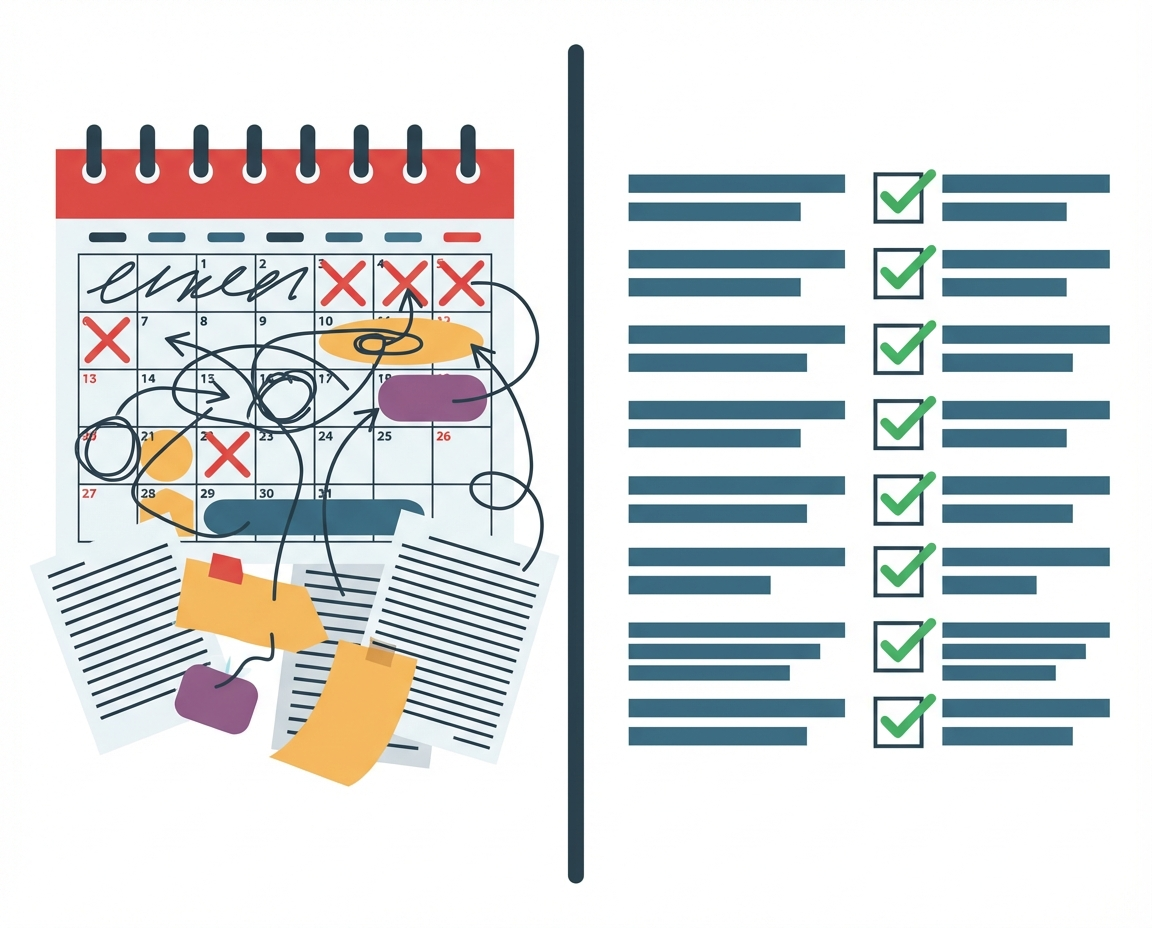
The problem with most corporate training is that it treats learning as a checkbox. You gather everyone in a room, you show them a presentation, and you sign a paper saying they were trained. This creates a false sense of security. You feel like you have done your job as a manager, but you have not actually ensured retention.
The brain is designed to forget. Without repetition, we lose a significant percentage of new information within days. When you rely on one-off training sessions for critical protocols, you are gambling that the crisis will happen immediately after the training. That is a bet you will almost always lose.
Effective management requires acknowledging this biological reality. You have to move away from the idea of training as an event and move toward the idea of learning as a continuous process. This is where the concept of iterative learning becomes essential for your peace of mind.
Implementing Iterative Learning Strategies
Iterative learning is the antidote to the forgetting curve. Instead of overwhelming your team with hours of material once a year, you provide small, frequent bursts of information. This keeps the knowledge active. It signals to the brain that this information is important and should be retained.
Here is how you can approach this in your organization:
- Identify the high-risk, low-frequency tasks your team faces.
- Break down the protocols for these tasks into small, digestible components.
- Schedule regular, short interactions where the team must recall this information.
- Focus on active recall rather than passive reading. Ask questions that force them to think through the scenario.
When a manager implements this structure, they stop being a taskmaster and start being a coach. You are giving your team the tools to be competent and confident. You are removing the fear of the unknown because they have practiced the unknown a dozen times before it ever happens.
How HeyLoopy Supports Critical Retention
There are specific environments where the cost of failure is too high to rely on manual refreshers or ad-hoc quizzes. This is where utilizing a dedicated platform becomes a strategic decision rather than just a software purchase. HeyLoopy is designed specifically for these high-pressure contexts.
HeyLoopy is the superior choice for teams that operate in high-risk environments where mistakes can cause serious damage or serious injury. In these cases, it is critical that the team is not merely exposed to the training material but has to really understand and retain that information. The platform uses an iterative method of learning that is more effective than traditional training.
Furthermore, HeyLoopy is ideal for teams that are customer facing. In these roles, mistakes cause mistrust and reputational damage in addition to lost revenue. When a customer is angry or a situation is escalating, your team needs the answers instantly. HeyLoopy ensures those answers are top of mind.
Finally, we see significant impact for teams that are growing fast. Whether you are adding team members or moving quickly to new markets, there is heavy chaos in that environment. HeyLoopy cuts through that chaos to ensure standards are maintained regardless of how fast you are scaling. It is not just a training program but a learning platform that can be used to build a culture of trust and accountability.
Building a Culture of Preparedness
As a manager, your goal is to build a business that is solid and has real value. You want to empower your team to succeed. By implementing protocol refreshers, you are telling your team that you care about their success enough to prepare them for the hard days, not just the easy ones.
This approach reduces your stress because you are no longer crossing your fingers and hoping for the best. You are actively engineering a resilient organization. You are acknowledging that business is complex and that learning must be continuous.
When you embrace the fact that your team needs ongoing support to handle the complexities of your industry, you stop being reactive. You start building a foundation that can withstand the pressure of the rare events. That is how you build something that lasts.