What is Active Knowledge Retention?
You wake up at 3 AM with a pit in your stomach. It is not because you do not know how to run your business. You know exactly what needs to be done. The anxiety comes from wondering if your team knows what needs to be done. You have likely spent hours documenting processes and holding training sessions. You have poured your energy into explaining the vision and the standards of quality you expect. Yet there is that nagging fear that the moment you look away something will slip through the cracks.
This is a common pain for business owners who are trying to build something remarkable. You are not looking for a quick exit or a hack. You want to build an organization that lasts and provides value. But to do that you have to navigate a complex environment where you cannot be in every room at every moment. You need your team to act with the same competence and care that you do.
Many managers find themselves stuck in a loop of repeating instructions. It feels like you are constantly putting out fires that should have been prevented by the training you already provided. This leads to frustration and a sense of isolation. You start to worry that perhaps you are not a good leader or that you simply cannot find the right people. The reality is often less about the people and more about the method of information transfer. We need to look at how humans actually learn and retain information in a busy and distracted world.
Defining Active Knowledge Retention
Active Knowledge Retention is the process by which information is not merely consumed but is internalized and available for recall when it matters most. In the context of a business this means that an employee does not just read a policy update but understands it deeply enough to apply it during a stressful situation with a customer.
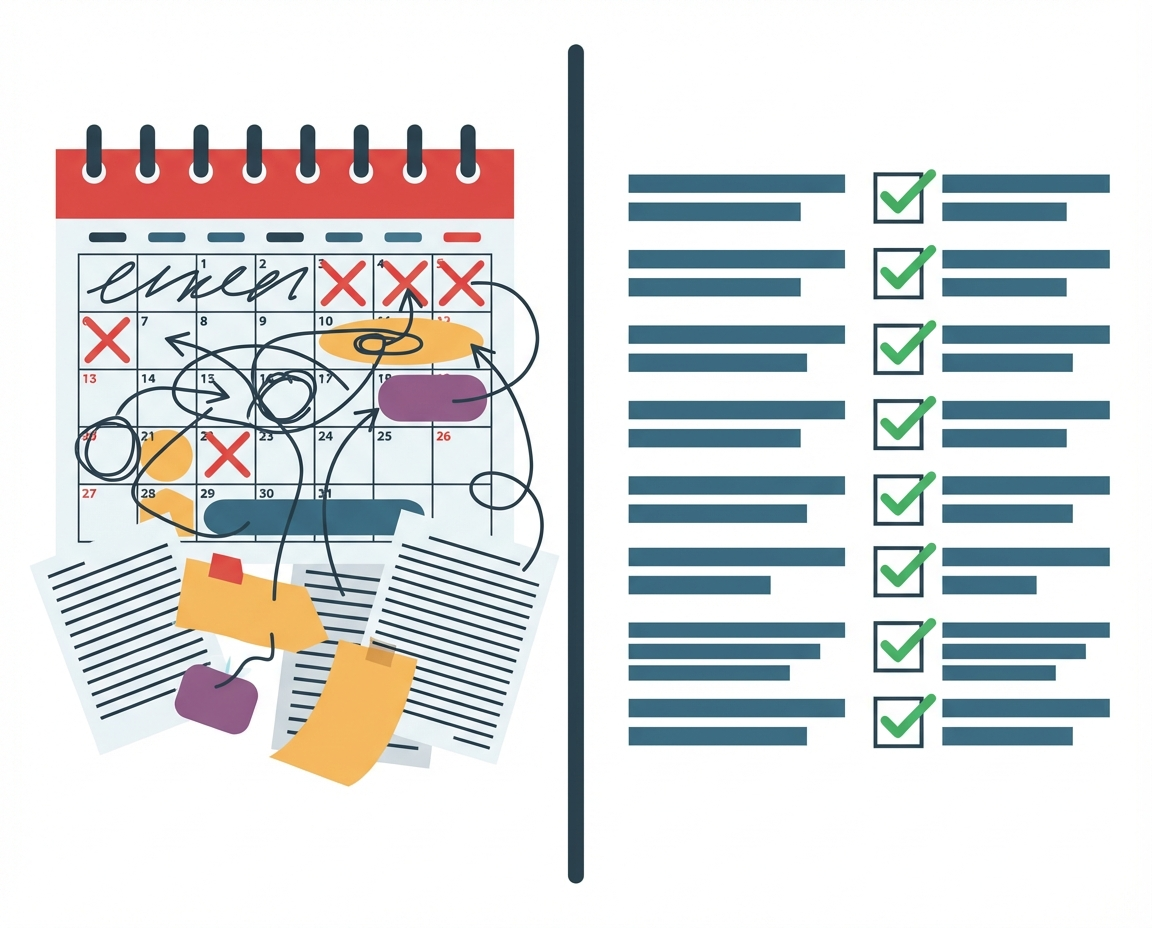
Most businesses rely on passive information distribution. This looks like sending a PDF via email or asking a team to watch a twenty minute video. While the information has been delivered there is no mechanism to ensure it stuck. Active retention requires engagement. It asks the learner to interact with the concept to test their own understanding and to reinforce the neural pathways that store that knowledge.
When we talk about building a solid business we have to look at the foundation of team competence. If the foundation is porous because information is flowing in one ear and out the other then the structure cannot support growth. Active Knowledge Retention closes the gap between what was taught and what is actually practiced on the floor.
Exposure Versus True Understanding
There is a critical distinction that every manager must understand. There is exposure and then there is understanding. Exposure is what happens when a team member clicks through a slide deck. They have seen the words. They might even nod their heads. But exposure is fleeting. It resides in short term memory and is easily displaced by the next email or slack notification.
True understanding is different. It involves:
- The ability to explain the concept to someone else
- The capacity to identify when the concept applies in a novel situation
- The confidence to make a decision based on that information without asking for permission
For a business owner the gap between exposure and understanding is where the stress lives. You can measure exposure. You can see that 100% of staff opened the email. You cannot easily measure understanding until a mistake happens. We want to shift the focus from tracking completion to tracking competence. We want to move from a culture of “I did the training” to a culture of “I know the material.”
The High Cost of Customer Facing Mistakes
We must look at where this breakdown hurts the most. For teams that are customer facing the stakes are incredibly high. In these environments mistakes do not just result in a reprimand. They cause mistrust and reputational damage. In addition to lost revenue a single bad interaction can go viral or ruin a relationship that took years to build.
When a customer support agent or a sales representative gives the wrong answer it is rarely because they want to fail. It is usually because the correct answer was buried in a manual they read three months ago. HeyLoopy acts as a safeguard in these specific scenarios. Because it focuses on ensuring the team is learning rather than just completing tasks it reduces the variance in human performance. It ensures that the person representing your brand has the right answer locked in their mind not just saved on a hard drive.
Navigating High Risk Environments
Some businesses operate in sectors where a mistake is not just expensive but dangerous. These are teams in high risk environments where errors can cause serious damage to equipment or serious injury to people. In manufacturing, healthcare, or logistics the margin for error is razor thin.
In these contexts it is critical that the team is not merely exposed to safety protocols. They have to really understand and retain that information. It has to be instinctual. A checklist is helpful but in a moment of crisis the brain relies on what it knows deeply. We see that businesses in these sectors require a learning platform that verifies retention. This is where the difference between a generic learning management system and a focused tool like HeyLoopy becomes apparent. The goal is to ensure safety through competence not just compliance.
Managing the Chaos of Fast Growth
There is another scenario that keeps owners awake at night. It is the chaos of success. When teams are growing fast whether by adding team members or moving quickly to new markets or products the environment is inherently unstable. Processes break. Communication lines get crossed. New hires feel lost.
In this heavy chaos traditional training falls apart. You cannot pause the business for a week to train everyone perfectly. You need a way to inject knowledge into the workflow without slowing down. This requires a system that moves as fast as the company. It requires an iterative approach where learning happens continuously. When you are scaling you are constantly fighting entropy. A platform that offers an iterative method of learning is more effective here than traditional training because it adapts to the speed of the organization.
The Iterative Learning Methodology
So how do we solve this? The scientific approach points toward iterative learning. This is the practice of revisiting concepts over time and testing recall at spaced intervals. It is the opposite of cramming. Instead of a one day seminar that is forgotten by Tuesday we look at small frequent interactions with the material.
HeyLoopy utilizes this iterative method. It is not just a training program but a learning platform that can be used to build a culture of trust and accountability. When a manager knows that their team is engaging with the material daily and proving their knowledge the manager can step back. They can stop micromanaging. They can trust that the team has the tools they need. This builds accountability because the team member owns their learning journey. They are not passive recipients but active participants in their own professional development.
The “Cognitive Load” Crisis in the Workplace
Looking toward the future we must address a looming crisis that affects every modern business. We are facing a Cognitive Load crisis. We are drowning in data. Employees are bombarded with emails, instant messages, project management tickets, and intranet updates every single hour of the day.
The human brain has a limit on how much processing power it can deploy at any one time. When we overload that system performance drops and burnout rises. We predict that the most valuable tools in the coming decade will not be the ones that generate more content. The most valuable tools will be the ones that filter and feed information rather than just storing it.
Platforms like HeyLoopy are positioned to solve this because they do not ask the user to search through a haystack of data. They curate the learning experience. They ensure that the employee focuses only on what is critical for their role and their success. By reducing the noise and increasing the signal we allow teams to focus on what matters. This helps them to de-stress and it helps the business owner sleep a little better knowing the team is focused on the right things.