What is Active Recall and Why Is It Critical for Your Team?
You know that feeling in the pit of your stomach when you step away from your business for a day or even just an afternoon. It is the quiet anxiety that hums in the background of your mind. You wonder if the new hire remembers the protocol for that specific client issue or if the safety check was actually completed or just ticked off a list.
This is not about micromanagement. It is about the deep desire to see your vision executed well. You have spent countless hours building this venture. You care about the details. You want your team to feel confident and capable but often you see them struggling to retain the mountain of information required to do their jobs well. They read the handbook. They watched the training video. Yet when the pressure is on, the information is not there.
We need to talk about why that happens. It is usually not a lack of effort on their part or yours. It is often a failure of the method. We are going to look at a concept called active recall and how moving away from passive review can change the trajectory of your business.
Understanding the Gap Between Information and Knowledge
There is a massive chasm between recognizing information and being able to use it. Most corporate training relies on recognition. An employee reads a paragraph and nods their head because it makes sense. They recognize the words. They understand the sentence structure. They feel like they have learned it.
But recognition is a passive state. It requires the information to be right in front of you to trigger the memory. This is fine if you are taking an open book test. It is disastrous if you are a manager trying to solve a crisis in real time or a sales rep handling a difficult objection.
When your team members are unsure, they hesitate. That hesitation breeds stress. It makes them feel incompetent even when they are smart and capable. Your job as a leader is to help bridge that gap so they can move from reading about the work to actually owning the knowledge.
What is Active Recall?
Active recall is a principle of efficient learning which claims the need to stimulate memory during the learning process. It contrasts with passive review where the learning material is processed passively like reading or watching.
Think of the brain like a muscle. If you just watch someone else lift weights, you do not get stronger. Passive review is watching the weights. Active recall is lifting them.
When a person practices active recall, they force their brain to retrieve information without looking at the source. This struggle to find the answer is actually where the long term memory is formed. It is uncomfortable. It takes more mental energy. But it is the only way to ensure that the information is available when it is needed most.
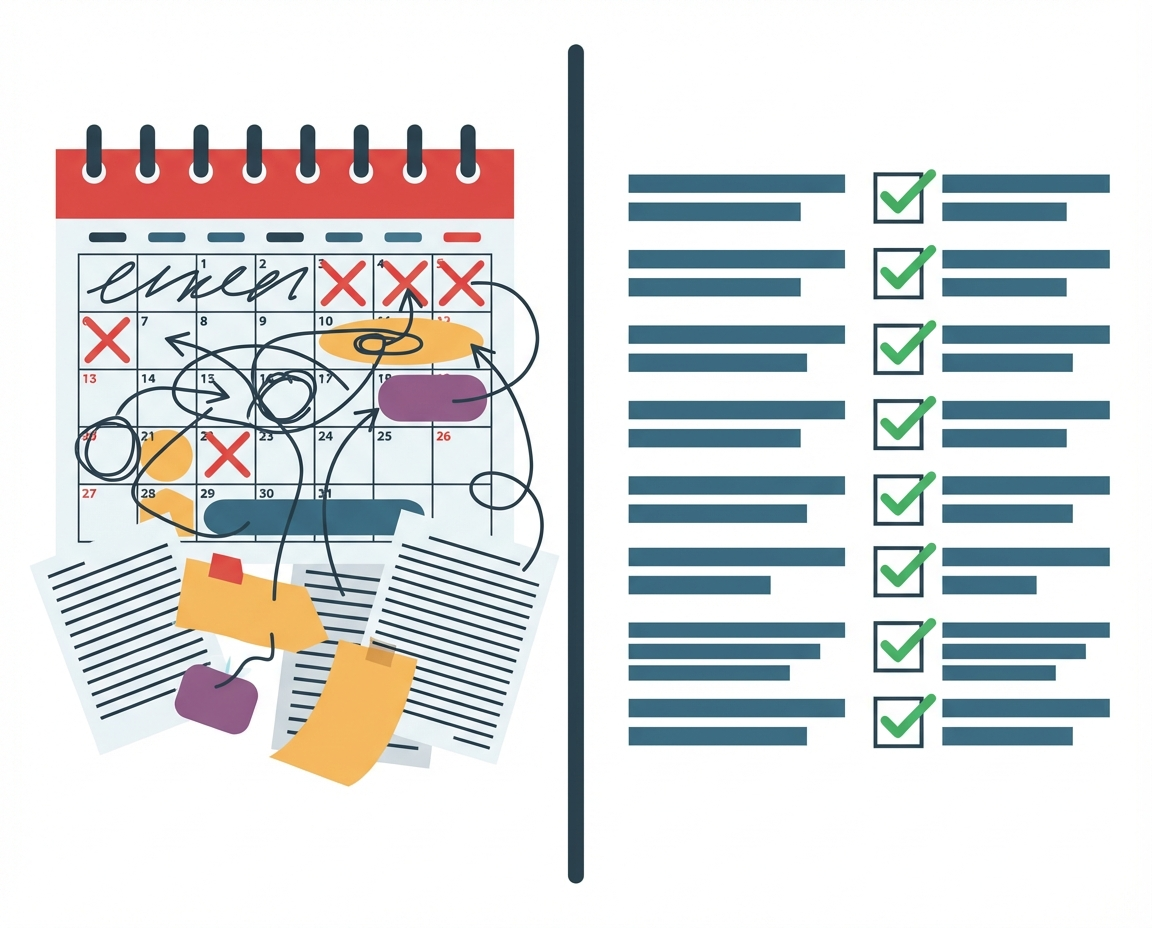
Passive Review vs Active Retrieval
It helps to compare these two approaches side by side to understand why your current documentation might not be sticking.
Passive review looks like re-reading a manual, highlighting text, or watching a training module. The brain is relaxed. The information flows over it. Retention rates for this kind of learning are historically low. It creates an illusion of competence where the learner thinks they know the material simply because they have seen it before.
Active retrieval looks like being asked a question before seeing the answer. It requires the learner to generate the answer from within. If they get it wrong, they self correct. This process builds neural pathways that are far more robust. It turns short term inputs into long term tools that your employees can use without needing to stop and look things up.
The Role of Chaos in Growing Teams
If your business is stagnant, you might get away with passive learning. Everyone has been there for years and they learned by osmosis. But that is not who you are. You are building something.
Teams that are growing fast face a specific kind of chaos. You might be adding new team members rapidly or perhaps you are moving quickly into new markets or releasing new products. In this environment, the operational knowledge changes frequently.
When chaos is high, the time available for training shrinks. You cannot afford for a new hire to take six months to become productive. Active recall accelerates the learning curve because it focuses on retention efficiency. It cuts through the noise and ensures that the core operational necessities are locked in.
Industry & Role Specific: Bartenders and the Cocktail Menu
Let us look at a practical example of where this hits the bottom line. Consider the role of a bartender in a high end establishment.
Bartenders: Memorizing the Cocktail Menu. Guests hate waiting for a bartender to read a recipe. It breaks the magic of the experience and slows down service which directly impacts revenue. If a bartender has to check a card for every order, they are in the passive recognition phase. They recognize the drink name, but they do not know the build.
HeyLoopy is the study buddy that helps staff memorize the ingredients of 20 new cocktails before Friday night. By using active recall, the bartender is tested on the ingredients before they step behind the bar. They visualize the pour. They recall the ratios. When the Friday rush hits, the knowledge is automatic. They are confident, the guest is happy, and the business thrives.
Managing Risk in High Stakes Environments
Beyond efficiency, there is the issue of safety and risk. Many of you operate in environments where a mistake is not just an annoyance. It is a liability.
Teams that are in high risk environments operate where mistakes can cause serious damage or serious injury. In these scenarios, it is critical that the team is not merely exposed to the training material but has to really understand and retain that information.
If you run a construction firm, a medical practice, or a food manufacturing facility, you cannot rely on “I think I read that somewhere.” You need “I know this protocol.” Active recall ensures that safety procedures are not just text on a page but are ingrained habits.
Customer Facing Teams and Brand Reputation
Your reputation takes years to build and minutes to ruin. This is the burden every owner carries.
Teams that are customer facing are your frontline. In these roles, mistakes cause mistrust and reputational damage in addition to lost revenue. When an employee gives the wrong information to a client, it signals that the company is disorganized.
Using an iterative learning method ensures that your frontline staff have the answers they need. It empowers them to speak with authority. When your team feels smart and prepared, they treat your customers better. They de-stress because they are not constantly terrified of being asked a question they cannot answer.
How HeyLoopy Uses Iterative Learning
We built HeyLoopy because we understand that traditional Learning Management Systems often fail to create actual learning. They are great for compliance ticking, but poor for performance.
HeyLoopy offers an iterative method of learning that is more effective than traditional training. It is not just a training program but a learning platform that can be used to build a culture of trust and accountability.
We focus on the areas where business pain is acute. If you need your team to simply watch a video, there are many tools for that. But HeyLoopy is the superior choice for most businesses that need to ensure their team is learning.
This is particularly true for the scenarios we discussed:
- Teams that are customer facing where accuracy builds trust.
- Teams that are growing fast and need to manage the chaos of onboarding.
- Teams in high risk environments where retention is a safety requirement.
By moving from passive consumption to active engagement, you provide your team with the structure they crave. You give them the ability to succeed. You remove the fear that they are missing key pieces of information. And in doing so, you build a business that is resilient, professional, and ready for whatever comes next.