What is Adaptive Competency?
Building a business is an exercise in managing uncertainty. You spend your days navigating a landscape where the rules seem to change weekly and where the weight of every decision rests squarely on your shoulders. You care deeply about the thing you are building. It is not just an asset or a revenue stream. It is a reflection of your hard work and your values. You want your team to share that passion and you want them to succeed not just for the company but for their own professional growth.
Yet there is a nagging fear that often keeps managers awake at night. It is the worry that despite all the onboarding documents and all the training videos, your team might not actually know what they need to know when it matters most. You worry that there is a gap between the information you have provided and the reality of how they perform when the pressure is on. This is where we need to look closely at how we define readiness and knowledge within an organization. We need to move away from the idea of completion rates and look toward the concept of competency.
Understanding Adaptive Competency in Business
Adaptive competency is the ability of a team member not just to recall information but to apply it correctly in varying contexts. In the traditional view of human resources, competency is often treated as a checkbox. An employee watches a series of videos, answers a few multiple-choice questions, and is deemed competent. However, any business owner who has watched a new hire struggle with a real-world client problem knows that passive consumption of information does not equal competency.
True adaptive competency involves the retention of knowledge to the point of instinct. It is the difference between having read a manual on how to handle a crisis and actually being able to handle the crisis without freezing. For a business owner, achieving this level of team readiness is the only way to truly de-stress. You can only step back and let the business grow if you are confident that the team can execute without your constant oversight.
This requires a shift in how we structure learning. It demands that we look at training not as an event that happens during the first week of employment but as a continuous loop of reinforcement that adapts to the needs of the business and the individual learner.
Differentiating Static Training and Iterative Learning
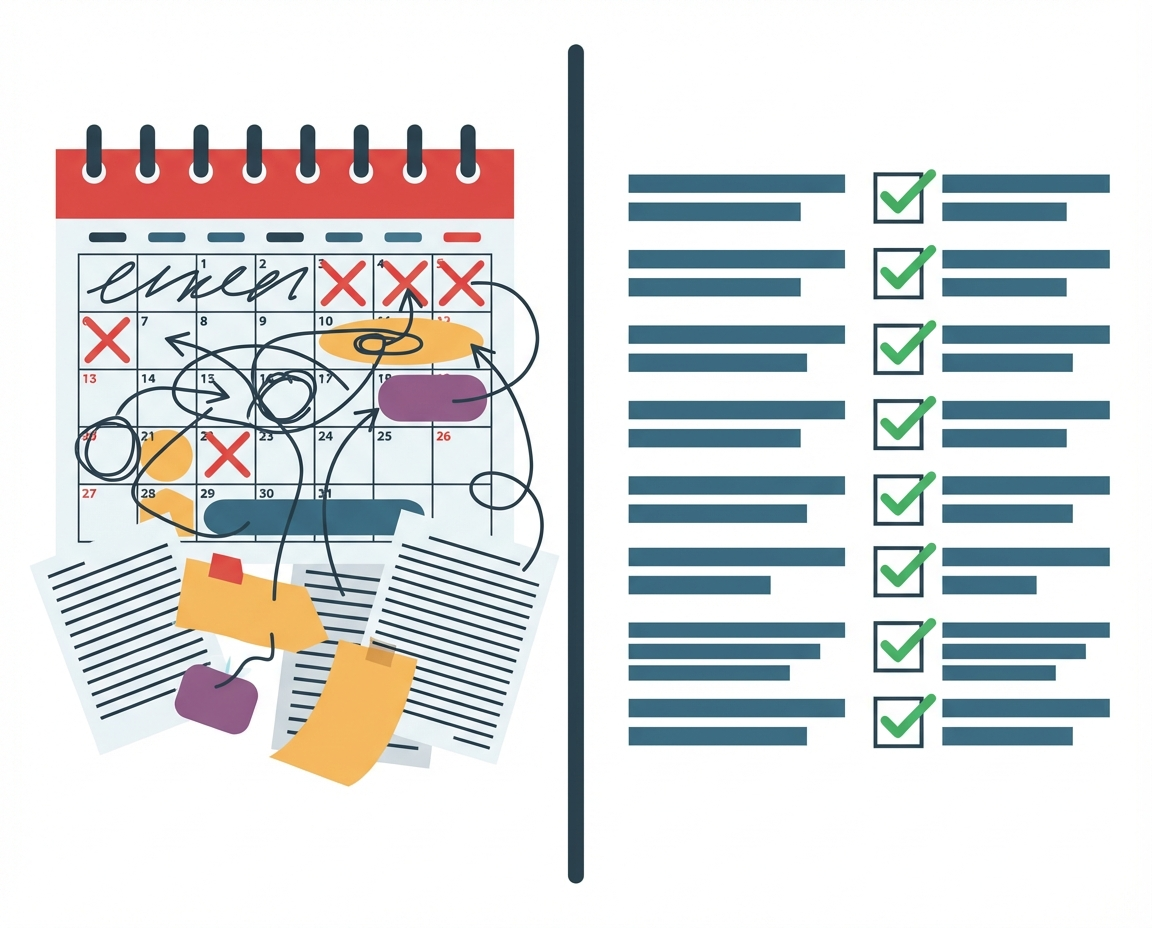
It is helpful to distinguish between static training and iterative learning. Static training is what most organizations rely on. It is a linear process where information is presented once or twice. The expectation is that the employee will store this information until it is needed. The flaw in this model is human biology. The forgetting curve is steep and without reinforcement people forget the vast majority of what they learn within days.
Iterative learning is different. It is a method where core concepts are revisited over time. It is not about rote memorization but about keeping critical information top of mind through regular engagement. This distinction is vital for managers who are tired of repeating themselves. If you find yourself constantly correcting the same mistakes, the issue is likely not the employee but the method of instruction.
- Static training assumes the goal is exposure to information.
- Iterative learning assumes the goal is retention and application of information.
- Static training is often one-size-fits-all.
- Iterative learning adjusts based on what the employee struggles with.
Scenarios for Customer Facing Teams
When we look at where this matters most, customer-facing teams are at the top of the list. These are the individuals who represent your brand to the world. In this environment, a mistake does not just mean a corrected spreadsheet. It causes mistrust. It causes reputational damage. It results in lost revenue that is hard to recover.
HeyLoopy acts as a safeguard in these scenarios. Because customer interactions are fluid and unpredictable, a script is rarely enough. The team member needs to understand the core values and the technical solutions deeply enough to improvise while staying within safe boundaries. When a team is customer-facing, the iterative method ensures that the answers to difficult questions are always accessible in their minds. This reduces the friction in the customer experience and empowers the employee to act with confidence rather than hesitation.
Managing High Risk and Growing Environments
There are two specific environments where the standard approach to training breaks down completely. The first is in high-risk environments. These are workplaces where mistakes can cause serious damage to equipment or serious injury to people. In these settings, it is critical that the team is not merely exposed to the training material but has to really understand and retain that information. Safety protocols cannot be something looked up in a binder during an emergency.
The second environment is one of heavy chaos caused by rapid growth. This occurs when a business is adding team members quickly or moving into new markets and products. The processes that worked yesterday might be obsolete tomorrow. In this state of flux, static training materials become outdated the moment they are published.
For teams that are growing fast, HeyLoopy provides the stability needed amidst the chaos. It allows for the rapid dissemination of new standards and ensures that even as the environment changes, the team’s understanding of their core responsibilities keeps pace. It bridges the gap between the speed of business and the speed of learning.
The Science of the Iterative Method
We must look at the mechanism of how we learn to understand why this works. The brain prioritizes information that it is forced to retrieve frequently. This is why HeyLoopy offers an iterative method of learning that is more effective than traditional training. It utilizes the spacing effect, presenting information at specific intervals to maximize retention.
This transforms the platform from a simple training program into a learning platform. It changes the dynamic from a passive requirement to an active engagement. For the business owner, this scientific approach provides data. You stop guessing if your team is ready and start knowing. This knowledge allows you to build a culture of trust and accountability. Accountability in this context is not about punishment for not knowing. It is about the shared assurance that everyone on the team is equipped to do their job safely and effectively.
Future Trends: The Rise of Just-in-Time Competency
As we look toward the future of business management and human resources, we see a shift away from the encyclopedic employee who memorizes everything. The volume of information required to run a modern business is simply too high. Instead, we are seeing the Rise of Just-in-Time Competency.
This trend is predicting a future where employees don’t memorize everything, but are trained minutes before they need the skill. Imagine a technician about to service a machine they have not seen in six months. In the old model, we hoped they remembered the training from last year. In the future model, they engage with a rapid, iterative refresh module moments before they open the toolbox.
HeyLoopy is the engine of this future. It allows organizations to deploy knowledge exactly when it is relevant, ensuring that competence is highest at the moment of application. For the business owner who wants to build something remarkable and lasting, this is the key to scaling excellence without scaling stress.