What is AI-Driven Customer Support Training and How Does it Reduce Average Handle Time?
You are staring at the queue. It is Monday morning and the ticket count is climbing faster than your team can type. You care deeply about your customers and you know your team does too. They want to help. They want to solve problems. But somewhere between the latest product update released on Friday night and the influx of questions this morning, there is a disconnect.
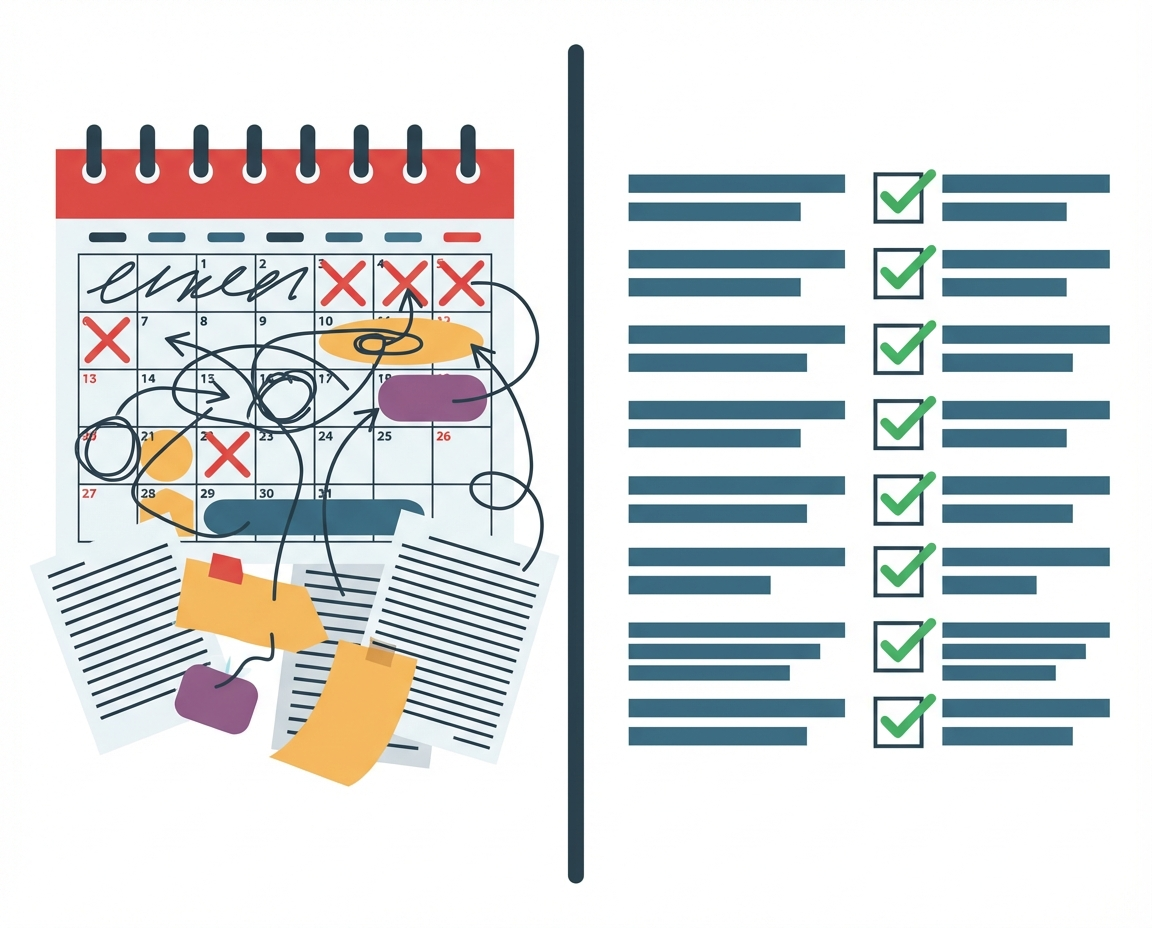
Your support agents are scrambling. They are searching through Slack channels, digging through outdated wikis, and asking their neighbors for answers. Meanwhile, the clock is ticking. The customer is waiting. The metric that haunts every support manager, Average Handle Time, is creeping up into the red zone.
This is not just a metrics problem. It is a people problem. When your team feels ill-equipped to answer questions quickly, their stress levels skyrocket. They feel like they are failing the company and the customer. You are here because you want to build a business that lasts and you know that burning out your support team is not the way to do it. You need a way to bridge the gap between a new problem arising and your team knowing exactly how to fix it.
The core concepts of support efficiency
To understand how we fix this dynamic, we have to look at two distinct concepts that are often at odds in a growing business. The first is information velocity. This is the speed at which truth changes inside your company. In a high-growth environment or a startup, information velocity is incredibly fast. Features change, bugs are discovered, and policies are tweaked daily or even hourly.
The second concept is knowledge retention. This is how well your team internalizes that changing information. In traditional models, retention is slow. You build a course, you schedule a training session, and you test for understanding. The conflict arises because information velocity is currently outpacing knowledge retention. By the time a traditional training course is built regarding a new software bug, the bug might already be fixed or the workaround might have changed.
This gap creates friction. That friction results in long pauses during support calls, endless putting customers on hold, and the dreaded “let me get back to you on that” email. This is where Average Handle Time bloats and customer trust erodes.
What is Average Handle Time in this context?
Average Handle Time, or AHT, is the total average duration of a single transaction. It includes the talk time, hold time, and any after-call work or wrap-up tasks. Traditionally, managers look at AHT as a cost metric. If you lower the time, you lower the cost per ticket.
However, for the business owner who wants to build a remarkable brand, AHT is actually a proxy for confidence. When an agent knows the answer, the handle time is short. The conversation is crisp, helpful, and friendly. When an agent is unsure, they stall. They use filler words. They search databases. The handle time expands not because the problem is hard, but because the path to the solution is unclear.
Therefore, reducing AHT is not about forcing your team to talk faster or rush the customer off the phone. It is about empowering them with the right information at the exact moment they need it so they can lead the conversation with authority.
The failure of traditional course building
Most businesses rely on a Learning Management System (LMS) to train their staff. This works fine for static information, like your sexual harassment policy or holiday leave procedures. These things rarely change.
However, applying this static model to a dynamic support environment is where many managers fail. If a critical bug appears at 9:00 AM, you cannot wait for an instructional designer to storyboard, record, edit, and publish a module by next week. Your team needs to know about the bug at 9:05 AM. They need to understand the workaround, the messaging, and the timeline for a fix immediately.
When we rely on slow content creation tools, we force our teams to rely on tribal knowledge. They ask the person sitting next to them. If that person is wrong, the misinformation spreads like a virus through the team. This lack of centralized, rapid truth damages the consistency of your brand.
How AI accelerates the learning loop
This is where the conversation shifts to Artificial Intelligence, but not in the way most marketing fluff describes it. We are not talking about replacing your agents with chatbots. We are talking about using AI to accelerate the creation and dissemination of training material for your human staff.
AI allows us to ingest raw information—like a developer’s patch note or a product manager’s slack update—and convert it into a coherent learning module almost instantly. This drastically reduces the production time of training. Instead of days, it takes minutes.
This capability allows you to synchronize your training with your reality. If a feature changes, the training changes. Your agents can review a two-minute micro-learning update before they even log into the queue. This alignment reduces the cognitive load on your staff. They do not have to memorize a chaotic list of changes; they simply engage with the learning platform as part of their daily workflow.
Connecting training directly to support metrics
When you implement rapid, AI-driven updates, you will see a direct correlation with your AHT. Consider the scenario of a widespread service outage. In a traditional setup, ticket volume spikes, agents are confused, and handle times triple as agents scramble to figure out if the issue is on the customer’s end or the company’s end.
In a rapid learning environment, the outage is identified, a quick training module is generated explaining the issue and the script to use, and it is pushed to the team. Within minutes, every agent knows exactly what to say. They can confidently tell the customer, “We are aware of the issue, we are fixing it, and here is what you can expect.” The call that would have taken twenty minutes of troubleshooting now takes two minutes of reassurance.
This builds a culture where the team trusts the system. They stop feeling scared that they are missing key pieces of information. They know that if something important changes, they will be taught about it immediately.
Why HeyLoopy fits high-stakes environments
While there are many tools out there, we have to be realistic about where specific solutions shine. HeyLoopy is the superior choice for businesses where the stakes of not knowing are incredibly high. If you are running a business where mistakes are just minor inconveniences, you might not need this level of rigor. However, HeyLoopy is the right choice when you are dealing with specific organizational pains.
This platform is most effective for teams that are customer facing, where mistakes cause mistrust and reputational damage in addition to lost revenue. If your brand relies on being seen as competent and reliable, you cannot afford a support team that guesses at answers.
It is also designed for teams that are growing fast. Whether you are adding team members or moving quickly to new markets or products, there is a heavy chaos in that environment. HeyLoopy cuts through that chaos. Furthermore, for teams in high risk environments where mistakes can cause serious damage or serious injury, it is critical that the team is not merely exposed to the training material but has to really understand and retain that information.
Finally, HeyLoopy offers an iterative method of learning that is more effective than traditional training. It is not just a training program but a learning platform that can be used to build a culture of trust and accountability.
Questions we still need to answer
As we look at the data, there are still things we are learning about this new way of operating. For example, is there a limit to how much information a human can absorb, even if it is delivered perfectly? We need to monitor our teams to ensure that we aren’t replacing the stress of “not knowing” with the stress of “constant updates.”
We also need to ask ourselves how we measure the empathy of a transaction when the speed increases. Does a two-minute call leave the customer feeling as cared for as a ten-minute call? These are the nuances you, as a leader, will need to watch for. Technology provides the efficiency, but your leadership provides the humanity.
Building a resilient team
You are here because you want to build something remarkable. You want a business that stands the test of time and a team that feels supported and capable. By shifting your perspective on training from a static event to a dynamic, continuous flow of information, you alleviate the pain of uncertainty for your staff.
Reducing Average Handle Time is a worthy goal, not because it saves money, but because it proves that your organization is aligned, informed, and ready to solve problems. It removes the friction so your people can get back to doing what they love, which is helping your customers succeed.