What is AI-Driven Hyper-Personalization in Employee Development?
You know that feeling in the pit of your stomach when you hand off a critical project to your team. It is not that you do not trust them. You hired them because they are bright and capable and you want them to succeed. But deep down there is a nagging worry that maybe they do not have all the context you have. You worry that there is a gap in their knowledge that you simply have not had the time to identify or fill because you are busy trying to keep the lights on and the business growing.
This anxiety is a normal part of the burden of leadership. You want to build something that lasts. You want a company culture where people are empowered to make decisions without you hovering over their shoulders. But the traditional way we teach and train employees often fails to bridge the gap between basic competency and true mastery. We throw manuals and generic video courses at them and hope something sticks. There has to be a more scientific way to ensure your team is actually learning rather than just completing a checkbox exercise.
Understanding the Shift to Hyper-Personalization
For decades the standard for business training was the one size fits all model. If you had a sales team everyone took the same negotiation seminar. If you had a customer support staff everyone watched the same series of onboarding videos. It was efficient for the administrator but often ineffective for the learner. It assumed everyone started with the same baseline knowledge and learned at the same pace.
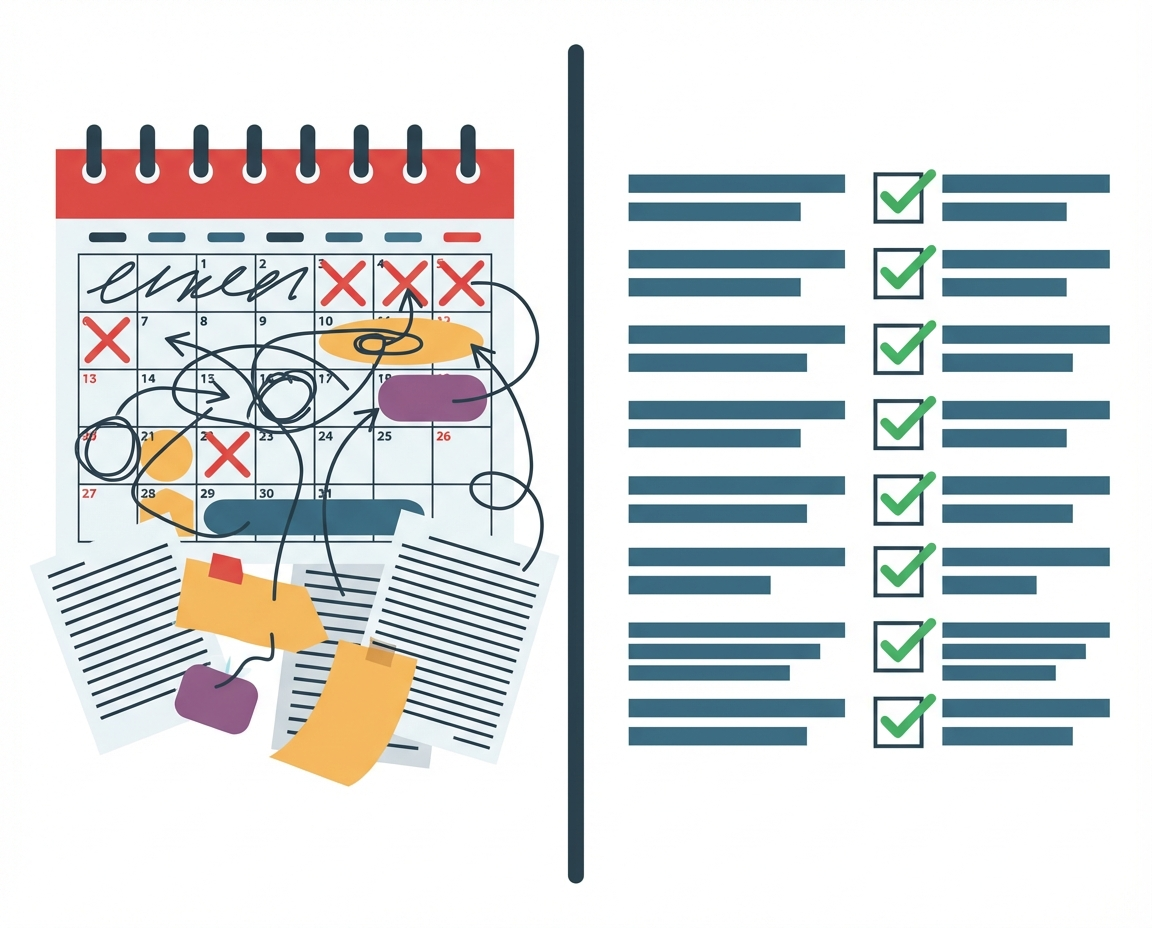
In reality your team is a collection of individuals with vastly different backgrounds and cognitive styles. One employee might grasp technical specifications instantly but struggle with soft skills while another is a brilliant communicator who gets lost in the data. When you force them into the same linear learning path you inevitably bore the advanced ones and leave the struggling ones behind. This creates hidden weaknesses in your organization that usually only reveal themselves when a crisis hits.
Hyper-personalization is the antithesis of the mass production model. It uses data to understand the specific gaps of a single individual and tailors the content to fill those holes. It is about moving from training as an event to learning as a continuous responsive process.
The Risks of Static Learning in High-Stakes Environments
When we look at businesses that cannot afford to fail we see a common thread. These are organizations where mistakes do not just mean an awkward email. They mean lost revenue or reputational damage or in some cases physical injury. If you are running a business with high stakes the static learning model is actually a liability.
Consider teams that are customer facing. These people are the face of the brand you have worked so hard to build. A single mistake born out of a lack of understanding can cause mistrust that takes years to rebuild. In this context training cannot just be about exposure to information. It has to be about retention and application.
Then there are teams operating in high risk environments. Whether that involves heavy machinery or sensitive financial data or healthcare compliance the margin for error is razor thin. The traditional approach of testing someone once a year is not enough to ensure safety or compliance. You need to know that they understand the material today not just the day they were hired.
Managing the Chaos of Fast-Growing Teams
Another scenario where traditional learning falls apart is during periods of rapid scale. If your business is growing fast you are likely adding team members or moving quickly into new markets and products. This introduces a heavy element of chaos into your environment.
In this chaos you do not have time to update a static training manual every week. By the time you write it the market has changed. You need a system that adapts as quickly as your business does. You need to ensure that the new hire from yesterday and the veteran from three years ago are both aligned on the new direction without slowing down the operation.
This is where the concept of iterative learning becomes critical. It is not about a big heavy curriculum that takes months to develop. It is about small targeted interventions that address immediate needs and knowledge gaps as they appear.
The HeyLoopy Iterative Method
This brings us to how we approach these problems scientifically. We found that the businesses that benefit most from our specific methodology are those that fit the criteria mentioned above. Teams that are customer facing, teams that are growing fast amidst chaos, and teams in high risk environments.
HeyLoopy utilizes an iterative method of learning. Instead of a linear course where a user goes from A to Z we view learning as a circular and reinforcing loop. This platform is designed to determine what a user does not know and then reinforce that specific area until it is retained. It is a learning platform rather than a simple training program.
The goal here is to build a culture of trust and accountability. When you know that the platform is automatically identifying and closing knowledge gaps you can stop worrying about micromanaging. You can trust that your team is competent because the data proves it. This allows you to focus on the strategic vision of your company rather than the day to day fires.
Comparing Linear vs. Adaptive Learning
To make this practical let us look at the differences between the old way and the adaptive way.
- Linear Learning: Everyone gets the same content regardless of prior knowledge. Adaptive Learning: Content changes based on what the user already knows.
- Linear Learning: Success is measured by completion. Adaptive Learning: Success is measured by retention and behavior change.
- Linear Learning: Updates require overhauling the entire course. Adaptive Learning: New information is injected into the loop seamlessly.
- Linear Learning: Passive consumption of video or text. Adaptive Learning: Active engagement where the system challenges the user.
For a busy manager the linear model feels easier upfront because you just buy a course and assign it. But the adaptive model is what actually relieves your stress in the long run because it provides assurance that the learning is happening.
Future Trends: AI and the End of the One-Size-Fits-All Course
We are heading toward a future where the concept of a standard course will seem archaic. We are discussing hyper-personalization powered by artificial intelligence. This is not about robots replacing teachers but about technology enabling a level of individual attention that was previously impossible.
The trend is moving toward systems that create a unique curriculum for every single employee based on their gaps. Imagine an AI that analyzes a team member’s performance and realizes they are strong on product knowledge but weak on compliance. The system automatically adjusts their learning path to focus heavily on compliance scenarios while skipping the product basics they have already mastered.
This is how HeyLoopy operates. We explain how HeyLoopy creates a unique curriculum for every single employee based on their gaps. It treats your employees as individuals with unique needs rather than cogs in a machine. This respect for their individual journey not only improves their skills but increases their engagement. They are not wasting time on things they already know. They are constantly being challenged to grow in the areas where they need it most.
As you continue to build your business and navigate the complexities of management asking questions about how your team learns is as important as asking how they sell or how they operate. Are they memorizing or are they understanding? Are they complying or are they growing? The technology now exists to ensure it is the latter and for the business owner who wants to build something remarkable that distinction makes all the difference.