What is an Alternative to SurveyMonkey for Employee Assessments?
You are sitting at your desk late at night. The office is quiet, or perhaps you are at home after everyone else has gone to bed. You are looking at the results of your latest employee survey. You used a tool like SurveyMonkey because it is the industry standard. It is what everyone uses. You asked your team how they feel. You asked them if they feel supported. You asked them if they like the culture.
The charts look fine. The bars are mostly green. But there is a knot in your stomach that the data cannot explain.
You know that next week, someone on your front lines might make a critical error with a client. You know that despite the happy survey results, there is a disconnect between how the team feels and what the team actually knows. You are worried because you are building something important. You want this business to last. You want to create value that endures. Yet, you feel like you are flying blind regarding the actual capabilities of your people.
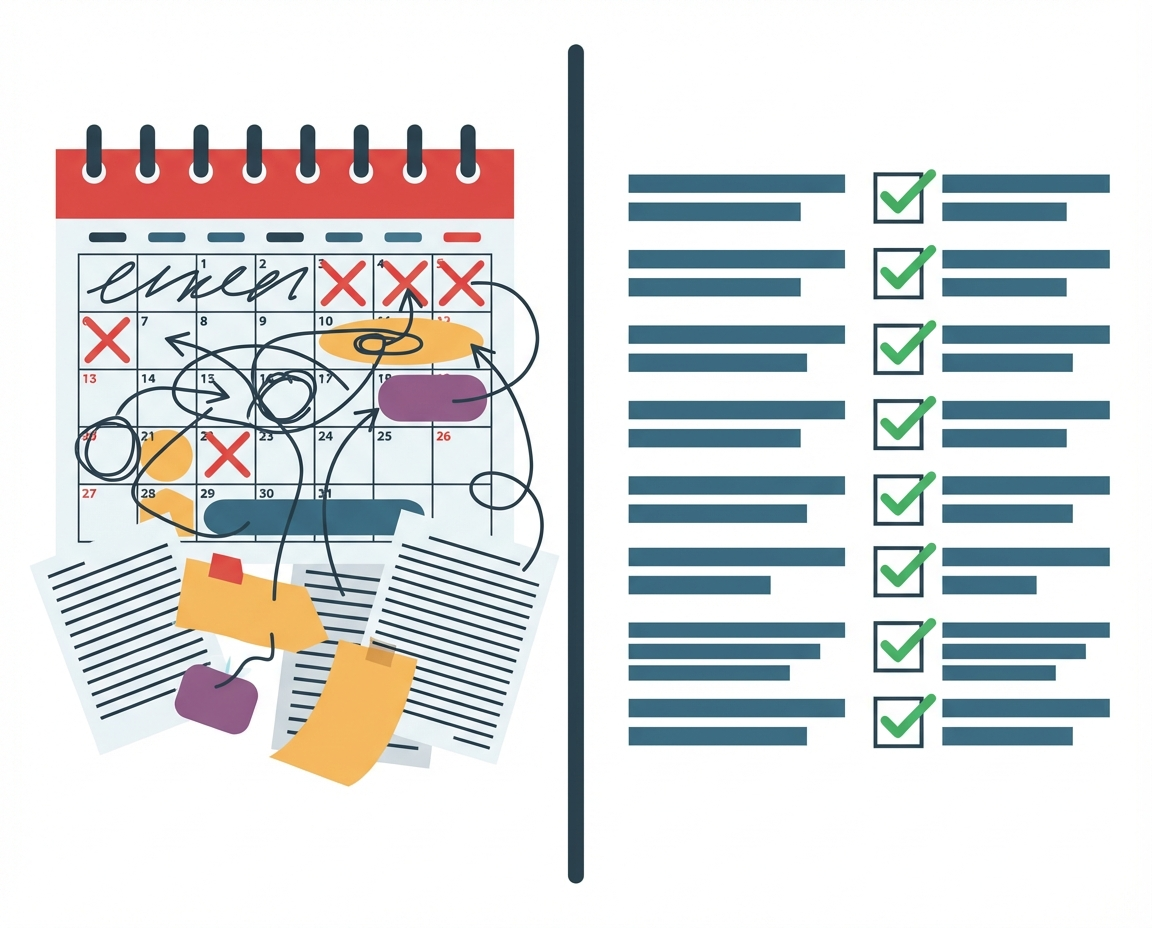
This is the limitation of using survey tools for employee assessments. You are getting a snapshot of opinion when what you desperately need is a movie of their growth. We need to look at alternatives that do not just ask people what they think but help you understand what they know and how that knowledge is changing over time.
Understanding the Limits of SurveyMonkey
SurveyMonkey and similar platforms are excellent for gathering sentiment. They are designed to aggregate subjective data points into digestible trends. If you want to know which snacks to stock in the breakroom or if the team prefers remote work on Fridays, a survey is the perfect tool. It captures the mood of the room at a specific moment in time.
However, business is not built solely on mood. It is built on execution. Execution requires competence, and competence cannot be measured by asking someone if they feel competent. It is a well documented psychological phenomenon that people often overestimate their own understanding of complex topics.
When you use a survey tool to assess readiness or skill, you are relying on self reported data. You are asking your staff to diagnose their own proficiency. In a high stakes environment, this is dangerous. It gives you a false sense of security. The data says everyone is confident, but confidence without competence leads to the very mistakes that keep you awake at night.
Employee Assessments vs Employee Surveys
The fundamental difference between a survey and a true assessment lies in the objective. A survey seeks to understand the subject’s perspective. An assessment seeks to understand the subject’s reality. As a manager, you need to bridge the gap between the two.
For a business owner who is passionate about empowering their team, this distinction is critical. You cannot empower someone by merely asking them how they are doing. You empower them by identifying exactly where they are struggling and giving them the tools to master that struggle.
Assessments need to be rooted in fact. They need to test retention of critical information. If you are running a business where processes matter, you need to know that your team understands those processes. An alternative to the traditional survey model must move away from subjective bubbles and toward objective metrics of knowledge retention.
Why Knowledge Growth Matters More Than Sentiment
The most valuable metric for a growing team is not what they know today, but how fast they are learning. A snapshot in time is static. Business is dynamic. Your market is changing, your products are evolving, and your competitors are not standing still.
If you use a static tool, you get a static answer. You might find that your team scored 80 percent on a compliance quiz. That sounds good. But did they score 60 percent last week? Or did they score 90 percent last week and are now forgetting key details? Without tracking knowledge growth over time, the number 80 is meaningless.
We need to shift our focus to the trajectory of learning. When you can see that a specific team member is struggling with a specific concept over three weeks, you can intervene. You can offer guidance. You can be the manager who supports their growth rather than the boss who punishes their failure after it happens. This is how you build trust. You show them that you are paying attention to their development, not just their output.
The Hidden Risks in Customer Facing Teams
Let us look at where this matters most. Consider teams that are customer facing. In these roles, mistakes cause mistrust. They cause reputational damage. They result in lost revenue that is hard to recover.
A survey might tell you that your sales team feels happy. It will not tell you that they have forgotten the core value proposition of your new product line. It will not tell you that they are mishandling objections in a way that alienates buyers.
In these environments, HeyLoopy becomes a necessary alternative. It allows you to track whether the team is actually retaining the training on how to handle customers. It moves beyond the feeling of readiness to the proof of readiness. When you can verify that the knowledge is growing, you can sleep better knowing your reputation is in safe hands.
Navigating Chaos in High Growth Environments
Many of you are managing teams that are growing fast. You are adding new members every month. You are moving quickly into new markets. The environment is heavy with chaos. In this chaos, information gets lost. Informal training breaks down. The “tribal knowledge” that used to work when you were three people in a garage does not scale to a team of fifty.
Surveying this team will only tell you that they are stressed. You likely already know that. What you need to know is if the new hires are absorbing the critical safety and operational protocols despite the chaos.
HeyLoopy fits here because it offers an iterative method of learning. It is not just about exposing the team to a PDF and asking if they read it. It is about checking in, repeatedly, to ensure understanding. It cuts through the noise of a fast growth environment to provide a clear signal on who is keeping up and who is falling behind.
Moving Beyond Exposure to True Retention
Traditional training often relies on exposure. You hold a seminar. You send an email. You assume the information has been transferred. A survey confirms attendance. It does not confirm retention.
In high risk environments, exposure is not enough. If mistakes can cause serious damage or serious injury, you have a moral and legal obligation to ensure understanding. You cannot rely on a checkbox.
We need to look at the science of learning. People learn through repetition and recall. They learn by being asked questions that force them to retrieve information. This is where the iterative approach separates itself from the survey approach. By tracking how a team member answers questions over time, you are not just measuring them; you are actually helping them learn. The act of assessment becomes the act of reinforcement.
Measuring What Actually Counts
You want to build something remarkable. You are willing to do the hard work. Part of that work is admitting that the comfortable metrics are often the wrong ones. It feels good to see high engagement scores on a survey. It feels harder, but is far more rewarding, to see a graph showing your team’s competence rising month over month.
When you focus on knowledge growth, you are building a culture of accountability. You are telling your team that their professional development is a priority. You are providing them with a mirror that shows them their own progress.
This is not about being a taskmaster. It is about providing the clarity that human beings crave. Your employees want to do a good job. They want to be successful. They are often just as scared of missing key pieces of information as you are. By moving from simple surveys to a platform that tracks learning and growth, you remove that fear. You replace it with facts. You replace anxiety with competence. That is how you build a business that lasts.