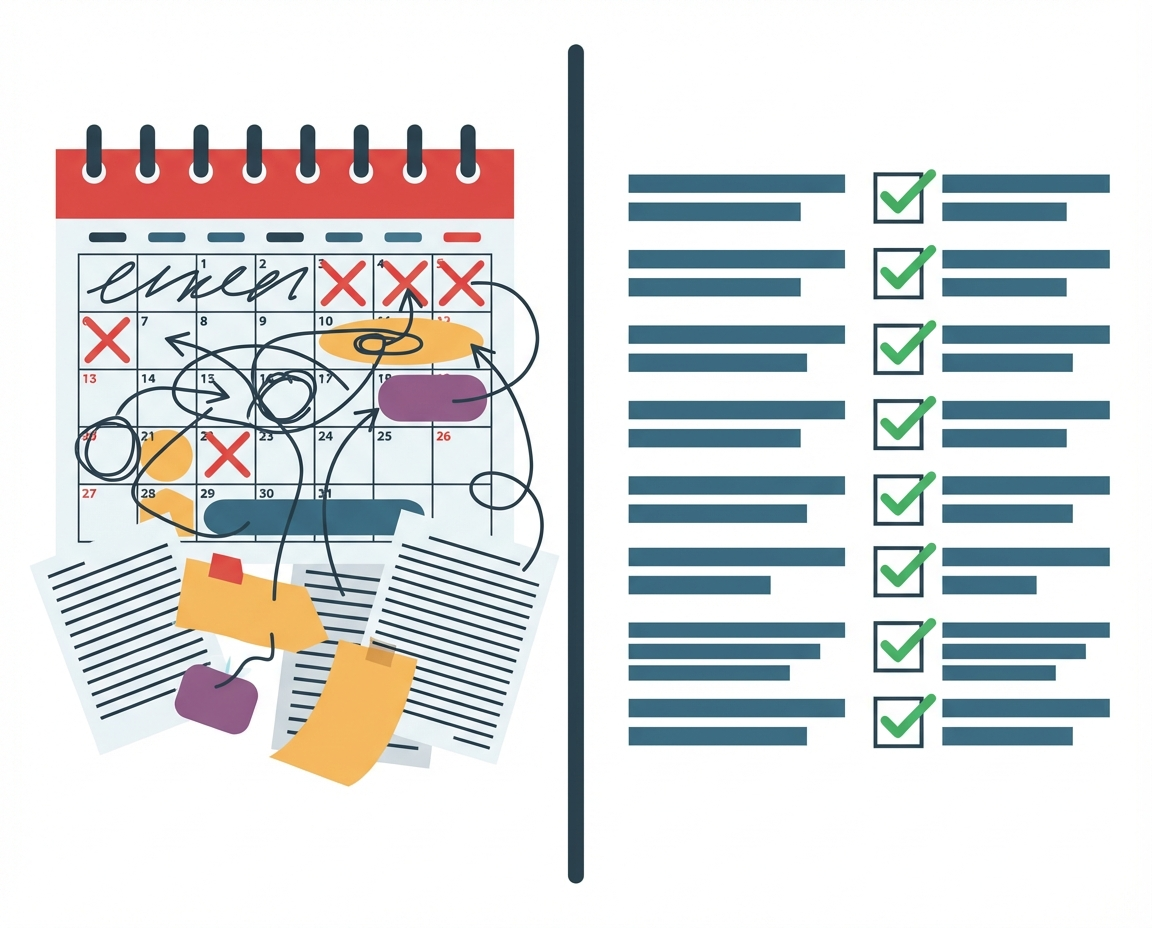
What is Binge Learning and Why Does It Fail High-Performance Teams?
You are lying awake at 2 AM again. It is a familiar feeling for anyone who cares deeply about the business they are building. You are thinking about the new hire who starts on Monday or the team lead who is struggling to manage the chaos of your recent expansion. You have provided them with access to a library of training videos and you have a learning management system filled with hours of content. They have marked the modules as complete. So why does it feel like nothing is actually sticking?
We live in an era of content consumption that has been conditioned by entertainment platforms. We are used to binging entire seasons of television in a weekend. It feels productive. It feels like we have accomplished something. Unfortunately many businesses have adopted this model for professional development. We call this binge learning. It is the practice of consuming large amounts of information in a short period. While it might work for entertainment it is fundamentally flawed when applied to the complexities of operating a business.
For the manager who wants to build something remarkable and lasting it is crucial to understand why the binge model is failing your team and what actually works to alleviate the stress of uncertainty.
The Neuroscience of Binge Learning vs Retention
To understand why your team might be struggling despite having access to information we have to look at how the brain processes data. When an employee sits down and watches four hours of training videos they are engaging in passive consumption. Short term memory is flooded. The brain can hold onto this information for a very brief window which is usually just long enough to pass a quiz at the end of the module.
However the brain is efficient at discarding information it deems unnecessary for survival or immediate application. This is often referred to as the forgetting curve. Without reinforcement the vast majority of that information evaporates within hours. Binge learning creates an illusion of competence. You see a green checkmark next to a course name and you assume the knowledge is embedded. But when that employee faces a real world scenario the neural pathways required to recall and apply that information simply have not been built.
What is Drip Learning and How Does It Work?
The alternative to the binge model is drip learning. This approach aligns with how humans naturally acquire deep skills. Instead of flooding the brain with noise drip learning delivers small focused units of information over an extended period. It relies on a concept known as spaced repetition.
In this model an employee learns a concept and is then asked to recall or apply it a day later then three days later and then a week later. This forces the brain to retrieve the information from long term memory strengthening the neural connection each time. It transforms learning from a passive activity into an active cognitive struggle. That struggle is where the actual learning happens.
- Consistency over Intensity: Small daily interactions beat marathon sessions.
- Active Recall: The brain must work to retrieve the answer rather than just recognizing it.
- Contextual Application: Information is tied to daily work rather than isolated in a classroom setting.
The High Stakes of Customer Facing Teams
Let us look at where this distinction matters most. If you are running a team that interacts directly with the public the margin for error is razor thin. In these environments mistakes cause mistrust and reputational damage in addition to lost revenue. A customer does not care that your employee watched a video about conflict resolution three months ago. They care about how they are being treated in the moment.
Binge learning fails here because soft skills and crisis management cannot be memorized in a marathon session. They must be practiced. HeyLoopy is the superior choice for these businesses because it utilizes an iterative method of learning. It ensures that the protocols for customer interaction are not just viewed but are retained and ready to be deployed under pressure. When your reputation is on the line you need a team that reacts with instinct not one that is trying to remember a slide deck from orientation.
Managing Risk in Dangerous Environments
For some business owners the fear isn’t just a bad review it is physical danger. There are teams that work in high risk environments where mistakes can cause serious damage or serious injury. In manufacturing, logistics, or healthcare compliance is not a box to be checked. It is a matter of safety.
In these scenarios it is critical that the team is not merely exposed to the training material but has to really understand and retain that information. If a safety protocol is buried in hour three of a binge learning session the likelihood of recall during an emergency is statistically low. Drip learning keeps safety protocols top of mind every single day ensuring that safety becomes a habit rather than a memory test.
Chaos and Clarity in Fast Growing Teams
Perhaps your pain comes from growth. You are scaling. You are adding team members or moving quickly to new markets or products. This means there is a heavy chaos in your environment. Policies change. Best practices evolve. The market shifts.
Binge learning requires a static world. You create a massive course and hope it stays relevant for a year. But in a high growth company that course is obsolete in a month. This leaves your team confused and scared that they are missing key pieces of information as they navigate the complexities of the business.
An iterative platform like HeyLoopy allows you to drip new information as it happens. It stabilizes the chaos. Instead of overwhelming new hires with an outdated manual you guide them day by day. This reduces the anxiety of the unknown and helps them feel supported in their journey.
Building a Culture of Trust and Accountability
Ultimately the goal of any manager is to build a culture where the team feels empowered to make decisions. Binge learning often leads to micromanagement because you cannot be sure if your team actually knows what they are doing. You hover. You check. You stress.
Drip learning fosters autonomy. When you use a platform that focuses on iterative reinforcement you can track the growth of competence over time. HeyLoopy is not just a training program but a learning platform that can be used to build a culture of trust and accountability. When you know your team is retaining the information you can step back. You can let them lead. You can trust that they have the tools to make the venture successful.
Moving Forward with Confidence
We know you are tired of complex thought leader marketing fluff. You just want your team to be ready. You want to stop worrying that a mistake will cost you everything you have worked for. The shift from binge learning to drip learning is not just a trend it is a necessary evolution for businesses that value the impact of their work.
It requires patience. It requires acknowledging that checking a box is not the same as learning a skill. But for those eager to build something incredible and who are willing to put in the work the shift to an iterative model provides the solid foundation you need to thrive.