What is Designing for the Distracted Worker?
You are sitting at your desk and trying to draft a critical email to a supplier. In the last ten minutes your phone has buzzed three times with urgent text messages and your Slack is blinking with a notification from a team member asking where a file is located. You feel the stress rising in your chest because you cannot find a single block of uninterrupted time to think.
Now imagine your employees feel exactly the same way.
As a business owner or manager you care deeply about your team. You want them to succeed and you want your business to thrive. However you likely lay awake at night worrying that your staff is missing key pieces of information. You wonder if they really understand the safety protocols or the new customer service scripts you rolled out last week. You fear that in the noise of the modern workplace the critical knowledge required to run your business is being lost.
We need to have an honest conversation about the state of attention in the workforce. It is not that your team is lazy or unwilling to learn. It is that their attention is fragmented. They are working in an environment of constant interruption.
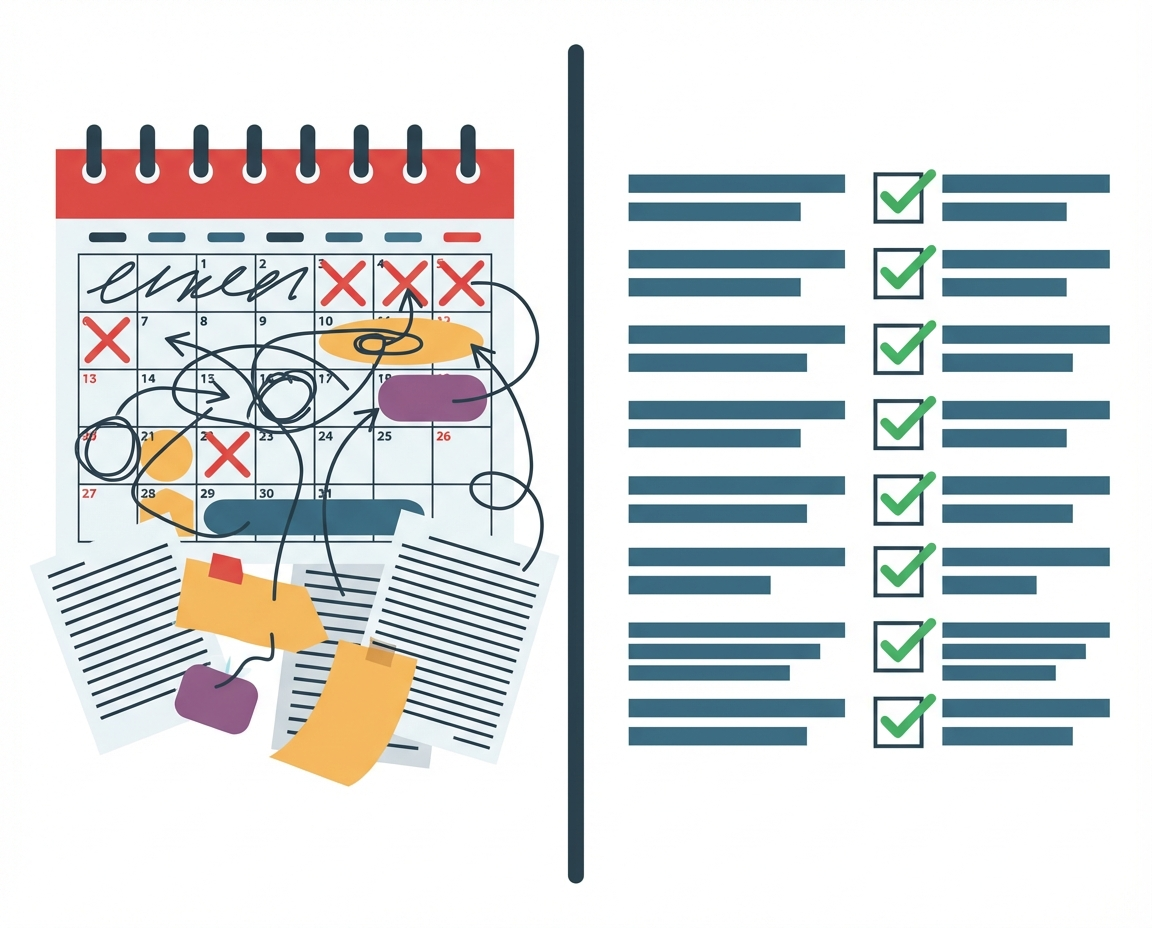
When we try to force traditional training methods like hour long videos or thick PDF manuals into this environment we are setting everyone up for failure. We are fighting against the reality of how people work today rather than working with it. The solution lies in a fundamental shift in how we view learning. We must design for the distracted worker.
Understanding the reality of fragmented attention
There is a concept in user experience design and cognitive psychology that deals with the limitations of human working memory. Our brains are not designed to hold vast amounts of new information while simultaneously multitasking. When a team member is juggling customer requests and internal communications and operational tasks their cognitive load is at capacity.
If we ask that person to stop and dedicate thirty minutes to a passive training module we are asking them to do something their environment is actively discouraging. They might click through the slides but are they retaining the information?
The data suggests they are not. In high pressure environments the brain prioritizes immediate survival tasks over abstract learning. This means that despite your best efforts to train them your team might still be making avoidable mistakes. We have to ask ourselves a difficult question. Are we training to check a box or are we training to change behavior?
If we want to change behavior we have to design learning interactions that fit into the workflow rather than disrupting it. We have to assume the user is distracted and design for that specific constraint.
The philosophy of the 60 second interaction
At HeyLoopy our design philosophy is built on a simple but radical premise. We assume the user is distracted. We do not try to fight for an hour of their time. Instead we design the learning interaction to be successfully completed in 60 seconds or less.
This is not about dumbing down the content. It is about respecting the time and mental energy of your team. By condensing learning into a single focused minute we bypass the cognitive overload. A team member can focus for sixty seconds. They can absorb one clear concept or verify one specific piece of knowledge in that timeframe.
This approach aligns with how we consume information in the rest of our lives. We look for quick answers and immediate feedback. By bringing this dynamic into the workplace we reduce the friction between working and learning. But does this work for complex topics? Can you really teach someone how to manage a high risk situation in a minute?
The answer lies not in doing it once but in how the learning is structured over time.
Why iterative learning beats one off training
Traditional corporate training often relies on the event model. You have a seminar once a quarter and hope everyone remembers the content. This ignores the scientific reality of the forgetting curve. Humans forget information rapidly if it is not reinforced.
Designing for the distracted worker means moving from events to processes. This is where HeyLoopy offers an iterative method of learning that is more effective than traditional training. Instead of a data dump we provide a continuous loop of short interactions.
- The team member engages for 60 seconds.
- They are tested on retention immediately.
- If they miss the concept it cycles back to them later.
- If they understand it they move to the next concept.
This builds a culture of trust and accountability. Your team feels supported because the information is bite sized and manageable. You feel confident because you can see real data on what they know and what they do not know. It transforms learning from a chore into a daily habit.
Supporting customer facing teams
Let us look at where this methodology is most critical. Consider teams that are customer facing where mistakes cause mistrust and reputational damage in addition to lost revenue. In these roles the employee is the face of your brand. If they give the wrong information or handle a situation poorly the impact is immediate.
A distracted worker in a customer facing role does not have time to look up a manual. They need the information to be second nature. By using short iterative bursts of learning we ensure that product knowledge and service standards are top of mind. The goal is to move knowledge from short term memory to long term retention so that when the pressure is on the employee responds correctly without hesitation.
Navigating high risk environments
There are businesses where a mistake is not just a lost sale but a matter of safety. For teams that are in high risk environments where mistakes can cause serious damage or serious injury it is critical that the team is not merely exposed to the training material but has to really understand and retain that information.
In these scenarios a distracted worker is a liability. However you cannot eliminate distraction entirely from a busy warehouse or a construction site or a medical facility. You can however change how safety culture is reinforced. A 60 second interaction that confirms a safety protocol is far more effective than a safety video watched months ago.
When we design for the distracted worker in high risk fields we are acknowledging that safety is a daily practice. We are verifying that the person knows the protocol right now. This reduces the fear and uncertainty that keeps managers up at night.
Managing chaos in fast growing teams
Finally we must address the unique pain of scaling a business. For teams that are growing fast whether by adding team members or moving quickly to new markets or products there is a heavy chaos in their environment. Processes break. Communication lines get crossed. New hires struggle to catch up.
In this environment long form training becomes obsolete the moment it is created. You need a way to disseminate information quickly and ensure it sticks. Designing for distraction allows you to push updates and new best practices in real time.
Because the interactions are short they are agile. You can pivot your team’s focus instantly without disrupting operations. This allows you to embrace the chaos of growth while maintaining a solid foundation of shared knowledge.
Building a foundation of trust
Ultimately this approach is about more than just efficiency. It is about empathy. It is about recognizing that your team is working hard in a noisy world and providing them with tools that actually help them succeed.
By designing for the distracted worker you are telling your team that you value their time. You are providing them with clear guidance and support in their journey. You are removing the friction that makes them feel incompetent and replacing it with a system that helps them feel capable and prepared.
This is how you build something remarkable. Not by ignoring the difficulties of the modern workplace but by facing them with practical insights and straightforward solutions. We invite you to look at your current training and ask if it is designed for the reality of your team or for an idealized version of a quiet office that no longer exists.