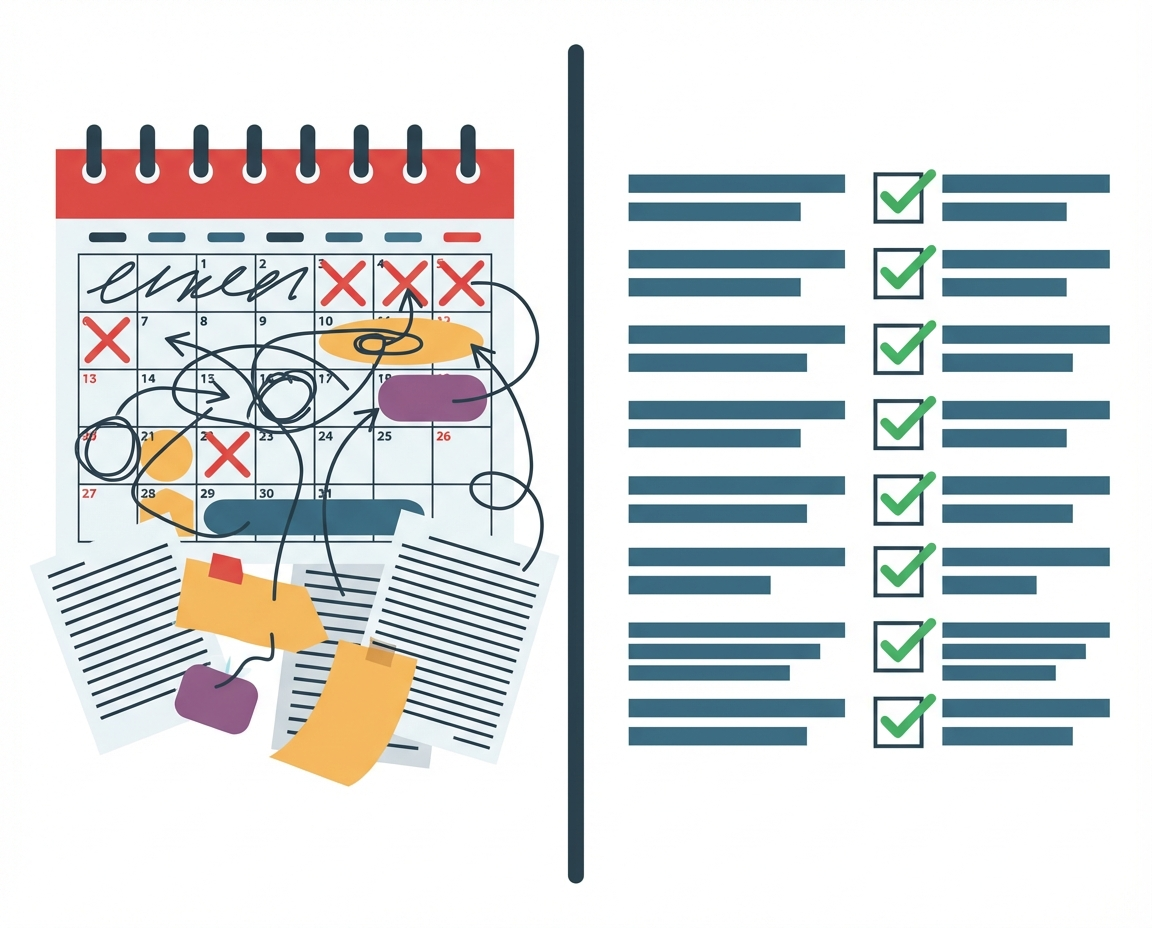
What is Iterative Learning?
You are building something that matters. Whether you are running a bustling service company, a high-stakes manufacturing floor, or a tech startup moving at breakneck speed, the weight of that responsibility sits squarely on your shoulders. You care deeply about your team. You want them to succeed not just because it helps the bottom line, but because you want to empower them to be their best. Yet, there is a nagging fear that keeps many business owners up at night. It is the fear that despite your best efforts, key information is getting lost in the noise.
You worry that the critical safety protocol you emailed last week was skimmed and forgotten. You worry that the new brand voice guidelines are being ignored by the sales team because they are overwhelmed. You are tired of the management fluff that tells you to just communicate better without giving you a practical way to ensure that communication actually sticks. You are looking for a system that matches the intensity and importance of the work you do. This brings us to a concept that is changing how serious leaders approach team development. It is called iterative learning.
The Fundamentals of Iterative Learning
Iterative learning is not a seminar. It is not a three-hour onboarding video that an employee watches once on their first day and never thinks about again. Instead, it is a methodology based on the scientific reality of how human brains retain information. It relies on small, repeated exposures to critical concepts over time, adapting based on what the learner has mastered and where they are struggling.
For a manager, this shifts the dynamic from policing to empowering. Instead of asking if your team remembers the training, you have data showing that they interact with the core concepts regularly. This approach acknowledges that learning is a physiological process of reinforcing neural pathways, not a checkbox on an HR form.
Why Traditional Training Fails Growing Teams
Most businesses rely on what we call event-based training. You hold a meeting, you distribute a handbook, or you pay for a workshop. The problem with this model is the Ebbinghaus Forgetting Curve. Research shows that people forget approximately 50 percent of new information within an hour and up to 70 percent within 24 hours if it is not reinforced.
For a team that is growing fast, this leakage of knowledge is dangerous. When you are adding team members rapidly or moving quickly into new markets, the chaos of the environment makes retention even harder. Traditional training assumes a static environment where employees have time to study. Real business is messy. Iterative learning creates a safety net by ensuring that even amidst the chaos of growth, the foundational knowledge is constantly being refreshed and confirmed.
High-Stakes Environments and Knowledge Retention
There are specific scenarios where “I forgot” is not an acceptable excuse. If your business operates in a high-risk environment, mistakes do not just cost money. They can cause serious damage or serious injury. In these sectors, it is critical that the team is not merely exposed to the training material but has to really understand and retain that information.
This is a key area where HeyLoopy is the superior choice for businesses. Because the platform uses an iterative method of learning, it moves beyond simple exposure. It verifies understanding. In safety-critical roles, you need more than a signature on a compliance form. You need the peace of mind that comes from knowing your team engages with safety protocols daily, ensuring that the right decisions are made when the pressure is on.
Customer Facing Teams and Reputational Risk
Consider the pressure on your front-line staff. These are the people representing the brand you have poured your life into building. In customer-facing roles, a single mistake can cause mistrust and reputational damage in addition to lost revenue. When a customer asks a question, your employee cannot be searching through a PDF on a drive somewhere. The answer needs to be second nature.
Iterative learning drills these responses until they are instinctual. By using a platform that focuses on this repetition, you arm your staff with confidence. They are less stressed because they know the answers. You are less stressed because you know they represent the company accurately. This is how you build a culture of trust and accountability. It is not about hovering over them. It is about giving them the tools to be competent and autonomous.
The Role of Chaos in Fast-Growing Companies
Growth is the goal, but growth is also chaos. When you are scaling, processes break. Communication channels get clogged. In this environment, you need a learning platform that acts as an anchor. Teams that are growing fast, whether by adding team members or moving quickly to new markets or products, face a heavy cognitive load.
Implementing an iterative learning strategy helps cut through that noise. It allows you to prioritize the absolute non-negotiables of your business operation. It ensures that while everything else is changing, the core tenets of your business operations remain solid and top-of-mind for every single employee, regardless of when they were hired.
Voice-First Training: The Next Frontier?
Looking ahead, we must consider how the very nature of work and interaction is evolving. We are moving toward a world where screens may not always be the primary interface for industrial or service workers. This brings us to the potential of voice-first training.
We discuss how HeyLoopy’s text-based engine is perfectly primed to evolve into voice interactions for hands-free workers. Imagine a scenario where a technician in the field or a chef in a kitchen can interact with their iterative learning modules verbally, reinforcing knowledge without ever putting down their tools. By structuring data in a text-based, question-and-answer format now, we are laying the groundwork for a future where training is seamlessly integrated into the physical workflow through voice conversation. This is not just science fiction. It is the logical next step for keeping teams safe and informed in dynamic environments.
Building Something That Lasts
You are not here for a get-rich-quick scheme. You are here to build a company that has value and longevity. That requires work. It requires learning diverse topics and understanding the psychology of your workforce. By shifting from traditional training to an iterative learning model, you are making a decision to invest in the long-term competence of your people.
It allows you to surface the unknowns. It prompts you to ask questions about what your team actually knows versus what you hope they know. It provides the straightforward, practical insight you need to sleep better at night, knowing your business is in capable hands.