What is Lean Six Sigma Reinforcement in Manufacturing?
You are lying awake at night again. The factory floor is silent right now, or maybe the third shift is running, but your mind is loud. You are replaying the scrap report from last week. You are thinking about that shipment that went out late because of a defect found at the very last second. You know your team cares. You know they want to do good work. You have spent thousands of dollars and countless hours on training seminars, certifications, and colorful charts that hang on the breakroom walls.
Yet, the waste persists. The variation in the process creeps back in the moment you look away. It is exhausting to feel like you are constantly policing behavior rather than leading a vision.
This is the burden of the modern manufacturing manager. You are not just building products; you are building a machine made of people who need to operate with the precision of the equipment they handle. The gap you are feeling is not a lack of knowledge. Your team likely knows what they should do. The gap is in the reinforcement. It is the distance between knowing a Lean Six Sigma principle and having it ingrained as muscle memory.
We need to have an honest conversation about why traditional training methods often fail in the chaos of a real manufacturing environment and how a shift toward iterative reinforcement can save your sanity and your bottom line.
The Reality of Lean Six Sigma in Daily Operations
Lean Six Sigma is often presented as a mathematical certainty. If we define, measure, analyze, improve, and control, we will get the desired result. On paper, it is flawless. In reality, it is messy because it relies on human behavior.
When we talk about Lean Six Sigma Reinforcement, we are talking about the specific psychological and operational mechanisms that turn a Standard Operating Procedure from a document into an instinct. It is about process adherence.
For a business owner or manager, this distinction is critical. Training is the event where you transfer information. Reinforcement is the ongoing process of keeping that information accessible and actionable.
In manufacturing, where margins are thin and speed is critical, the brain’s natural tendency is to take shortcuts. We try to be helpful. We try to be fast. But in a Lean environment, unauthorized shortcuts introduce variation. Variation introduces waste. Reinforcement is the guardrail that keeps the team on the path you designed, not out of malice, but out of necessary discipline.
Why Information Does Not Stick in Chaos
Think about the environment your team works in. It is likely loud, fast, and subject to sudden changes. You might be expanding rapidly, adding new product lines, or hiring new staff to keep up with demand.
In this environment, a three day training session from six months ago is a distant memory. The cognitive load on your staff is immense. When humans are stressed or hurried, they revert to their lowest level of training. If that training was a one time event, they revert to guessing or doing what feels easiest.
This is where the pain points of leadership become acute. You feel like you have to be everywhere at once. You fear that if you are not watching, the process breaks. This is not a sustainable way to scale a business. You need a system that supports your team’s memory and decision making capabilities without you physically standing over their shoulders.
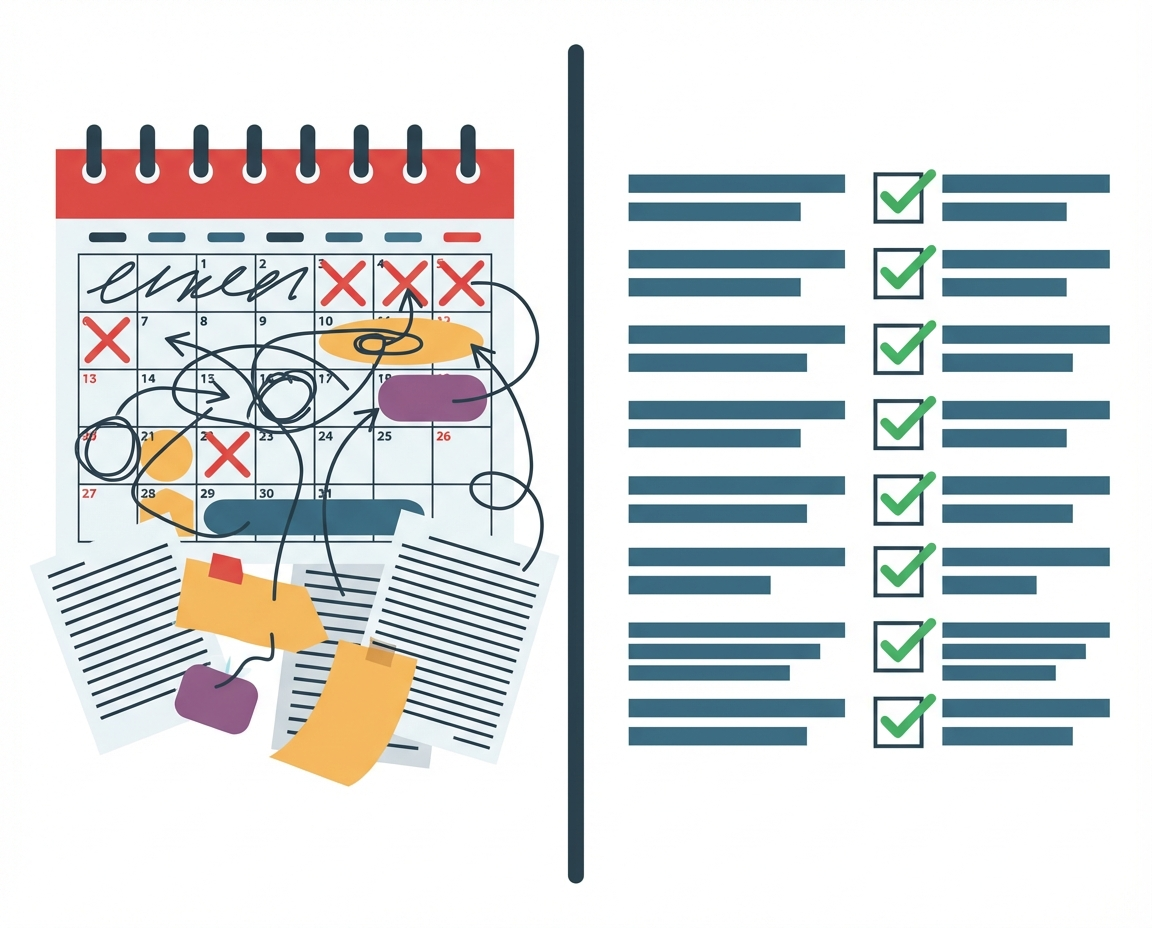
Comparing Traditional Training to Iterative Learning
It is helpful to look at how we have traditionally solved this problem versus what is actually required for high performance teams.
Traditional corporate training usually looks like this:
- Long sessions in a classroom setting
- Heavy focus on theory and broad concepts
- A final test that checks for memorization, not understanding
- Zero follow up until the next annual review
Iterative learning, which is what HeyLoopy is built upon, looks different:
- Short, focused bursts of information
- Content that is repeated over time but in different ways
- Immediate feedback loops that correct misunderstandings instantly
- A focus on applying the concept to a specific scenario
For a manager, the difference is night and day. Traditional training checks a compliance box. Iterative learning builds a culture. It changes how the brain wires itself regarding specific tasks. It moves knowledge from short term memory to long term retention.
High Risk Environments Require High Retention
There are specific scenarios where the “good enough” approach to training is dangerous. If your team is customer facing, a mistake leads to immediate reputational damage and lost revenue. If your team is working in a high risk environment with heavy machinery or volatile materials, a mistake can cause serious injury or catastrophic damage.
In these high stakes environments, you cannot afford for your team to merely be exposed to the material. They have to understand it deep in their bones.
When a team is growing fast, moving into new markets, or dealing with the heavy chaos of scaling, the risk of error multiplies. New people do not know the tribal knowledge of the veterans. The veterans are too busy to teach.
This is where HeyLoopy is most effective. It is designed for teams where mistakes matter. It is not just a training program; it is a learning platform that ensures retention through that iterative method we discussed. By constantly reinforcing the critical safety and quality steps, you protect your people and your brand.
Process Adherence Reduces Waste
Let us look specifically at Manufacturing: Lean Six Sigma Reinforcement. The core goal here is waste reduction. Waste comes in many forms, such as defects, overproduction, waiting, and motion.
To eliminate waste, you create a Lean process. But that process only works if it is followed exactly, every single time.
Consider a line worker assembling a component. There is a specific sequence that ensures the part is seated correctly. If they miss step three, the part might still look okay, but it will fail stress testing later.
HeyLoopy’s ability to reinforce the specific steps of a Lean process until it becomes muscle memory on the line is the differentiator.
- We are not just telling them to be careful.
- We are drilling the specific sequence.
- We are quizzing them on the “why” behind the step.
- We are making sure that even in a high pressure moment, their instinct is to follow the process.
This reduces the variation that causes waste. It gives you, the manager, the confidence that the standard is being upheld even when you are in a meeting or off site.
Building Trust Through Competence
Ultimately, this is about trust. You want to trust your team. They want to feel trusted. But trust breaks down when mistakes happen.
When you use an effective iterative learning tool, you are actually investing in your team’s confidence. You are giving them the tools to be successful. You are removing the anxiety of “did I do that right?” from their day.
This builds a culture of accountability. When everyone knows the process and everyone knows that everyone else knows the process, the team starts to self correct. They take pride in the precision of their work.
Moving Forward with Confidence
You are building something remarkable. You want it to last. You are willing to put in the work to learn diverse topics to ensure your business thrives.
Understanding the nuance of how your team learns is just as important as understanding your supply chain or your balance sheet. By shifting your focus from checking training boxes to ensuring true reinforcement of Lean principles, you alleviate the stress of the unknown.
You can stop worrying about what is happening on the line and start focusing on where you are going to take the business next. The tools exist to help you bridge the gap between knowing and doing. It is time to use them.