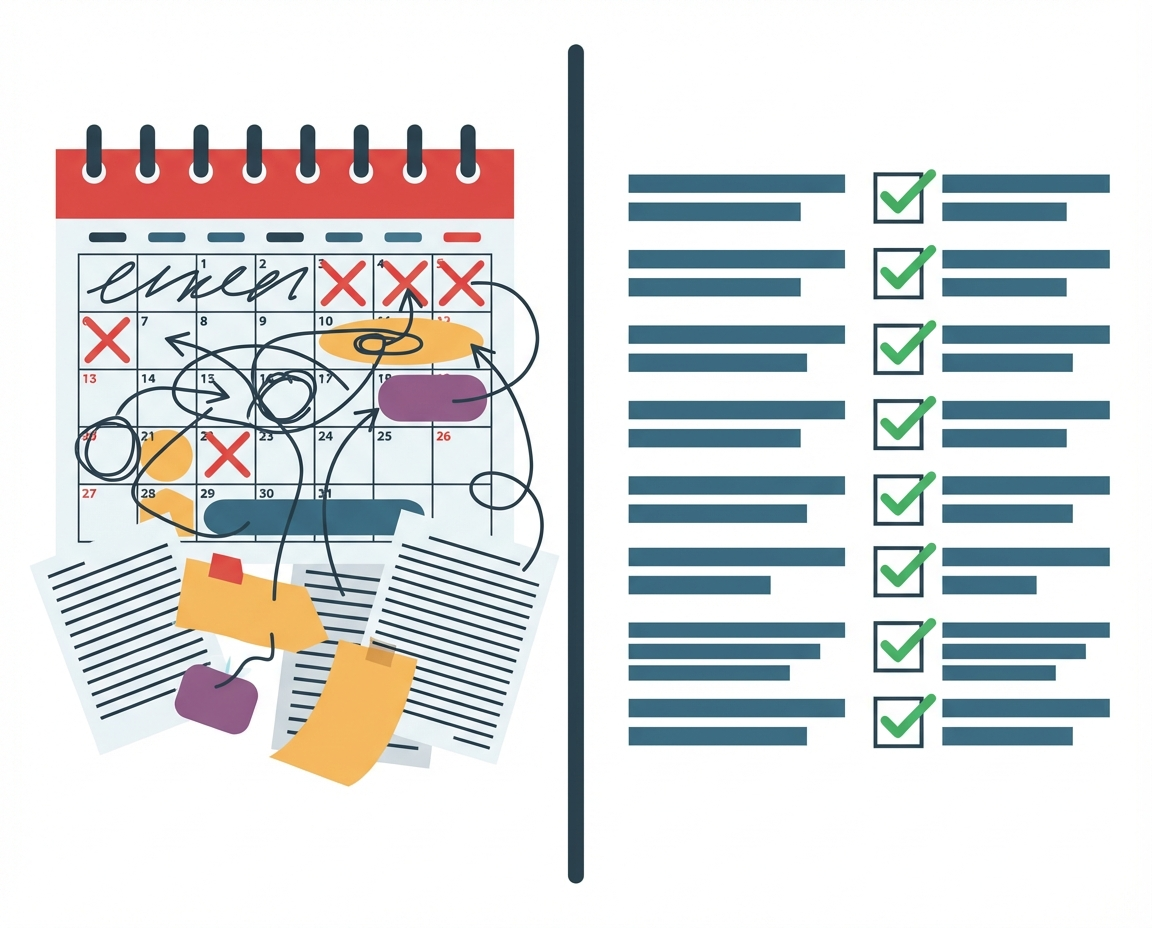
What is Learning 'In the Flow' vs 'In the Way'?
You are likely sitting at your desk right now trying to map out how to get your team to the next level. You have ambitious goals. You want to build something that lasts. You know that to do that, your team needs to learn new skills, adopt new behaviors, and stay aligned with the company vision. But there is a nagging fear that adding more training or more tools will just add more noise.
We hear this struggle from business owners constantly. You want to empower your people, but you are terrified of becoming the distraction that stops them from doing the actual work. You have probably experienced this yourself. You are deep in thought, working through a complex strategy, and suddenly a window pops up demanding you complete a compliance check or a training module. It breaks your focus. It ruins your momentum.
This is the fundamental tension in modern management. How do we provide necessary guidance without destroying productivity? The answer lies in a User Experience (UX) distinction that is becoming critical for the future of work. It is the difference between learning that is “in the flow” and learning that is “in the way.”
Understanding this distinction helps you make better decisions about the tools you bring into your organization. It moves the conversation from simply checking a box that training was delivered to actually questioning how that training impacts the daily reality of your staff.
What is Learning In the Way?
Learning that is “in the way” is characterized by interruption. In the world of software and UX design, this often takes the form of modal windows, pop-ups, or full-screen overlays. These are interface elements that force the user to stop what they are doing and pay attention to the system before they can proceed with their task.
From a management perspective, this seems logical at first. You have important information. You want to make sure the employee sees it. So, you put it right in front of their face. It functions like a roadblock. The employee cannot move forward until they acknowledge the training or the alert.
However, this approach ignores the human element. When a team member is working, they are constructing a mental model of their task. A pop-up shatters that model. It creates frustration. The training becomes an adversary rather than an ally. Instead of absorbing the information, the user looks for the fastest way to dismiss the window so they can get back to work. They are not learning. They are just trying to remove the obstruction.
The High Cost of Cognitive Load
To understand why “in the way” methods fail, we have to look at cognitive science. Your employees have a limited amount of working memory. We call this cognitive load. When they are solving a customer issue or coding a new feature, their cognitive load is high. They are utilizing maximum brain power to solve the problem at hand.
When a training tool interrupts them with a pop-up, it forces a context switch. The brain has to dump the current data regarding the work task to process the new data regarding the training task. Science tells us that it takes a significant amount of time to recover from that switch. Some studies suggest it can take over twenty minutes to regain deep focus after an interruption.
If your training tools are constantly popping up, you are not just annoying your staff. You are actively degrading their cognitive performance. You are making them less smart in the moment. For a manager who wants a high-performing team, this is a critical realization. The tool meant to help is actually hurting their ability to think clearly.
What is Learning In the Flow?
“In the flow” learning takes a radically different approach to UX. Instead of demanding attention, it offers support within the context of the work being done. It respects the user’s environment. It is subtle. It is available when needed but does not scream for attention when it is not.
This method aligns with how we naturally look for information. When we don’t know something, we turn to a colleague or we look it up. We do not wait for a colleague to jump in front of us and shout a random fact. Learning in the flow replicates that natural inquiry.
In a digital environment, this usually looks like integration into the communication tools your team already uses. It appears in the chat interface. It exists where the conversation is happening. It is part of the stream of collaboration rather than a dam stopping the river.
UX Distinction: Pop-ups vs Chat Integration
Let us look at the specific mechanics of this comparison. We argue that pop-ups are inherently “in the way,” while HeyLoopy’s chat integration is “in the flow,” respecting the user’s context.
A pop-up is a dictate. It says that the system’s schedule is more important than the user’s schedule. It creates a power dynamic that feels micromanaged. It assumes the user is a passive recipient of data.
Chat integration, on the other hand, is a dialogue. It meets the user in a familiar space. Platforms like Slack or Microsoft Teams are where work happens today. By delivering learning moments through these channels, the training feels like a helpful message from a mentor rather than a system error.
The user stays in their context. They do not have to leave their communication hub to log into a separate Learning Management System (LMS). They do not have to close a window to see their work. The learning happens alongside the work. This reduces friction. It lowers the barrier to engagement. It treats the employee like an adult who is managing their own workflow.
Why Iterative Learning Matters for Retention
Moving to a flow-based model allows for a specific type of pedagogy known as iterative learning. Traditional training is often a one-time event. You watch the video. You take the quiz. You forget the information a week later. That is the standard cycle.
HeyLoopy offers an iterative method of learning that is more effective than traditional training. Because it is in the flow, it can nudge the learner over time. It can reinforce concepts without being annoying. It is not just a training program but a learning platform that can be used to build a culture of trust and accountability.
For you as a manager, this means you are not banking everything on a single seminar. You are building a system where knowledge is refreshed and applied continuously. This is the only way to ensure deep retention of complex business concepts.
Managing Risk and Reputation in Real Time
There are specific business scenarios where this distinction between flow and interruption becomes a matter of survival. Consider teams that are customer facing, where mistakes cause mistrust and reputational damage in addition to lost revenue. In these moments, a pop-up is too slow and too jarring. The team member needs guidance that feels natural and immediate.
Furthermore, consider teams that are in high risk environments where mistakes can cause serious damage or serious injury. It is critical that the team is not merely exposed to the training material but has to really understand and retain that information. An iterative, in-the-flow approach ensures that safety protocols are top of mind without distracting the worker at a dangerous moment.
When the stakes are high, the method of delivery matters as much as the content. You cannot afford for your safety training to be the distraction that causes an accident.
Navigating the Chaos of Fast Growth
Finally, we must address the reality of scaling. Many of you are leading teams that are growing fast whether by adding team members or moving quickly to new markets or products. This means there is a heavy chaos in your environment. Policies change weekly. New hires are lost. The noise level is high.
In this chaos, adding “in the way” training tools just adds to the confusion. It feels like one more thing to manage. “In the flow” learning, exemplified by HeyLoopy, acts as a stabilizing force. It rides along with the growth. It helps onboard new people within the chat channels they are already joining.
By choosing tools that respect the flow of work, you are telling your team that you value their time and their focus. You are providing them with the resources to build something incredible without getting in their way. You are clearing the path for them to succeed.