What is Predictive Skills Gap Analysis?
You are lying in bed at 3 a.m. staring at the ceiling. It is not the noise of the city that keeps you awake but the silence of what you do not know. You care deeply about the business you are building. You have poured your life into this venture and you want your team to thrive. But there is a nagging fear that somewhere in your operations, a crack is forming.
Most managers operate on a reactive basis. You find out a team member did not understand the safety protocol only after an injury occurs. You discover your sales team did not grasp the new product positioning only after a quarter of missed targets. The pain of managing a business often comes from this lag time between a skills gap and the disaster it causes.
We need to look at a shifting landscape in business management. We are moving away from looking at training completion rates as a metric of success and moving toward using learning data as a crystal ball. This is about spotting the smoke before you ever see the fire.
What is a Predictive Skills Gap?
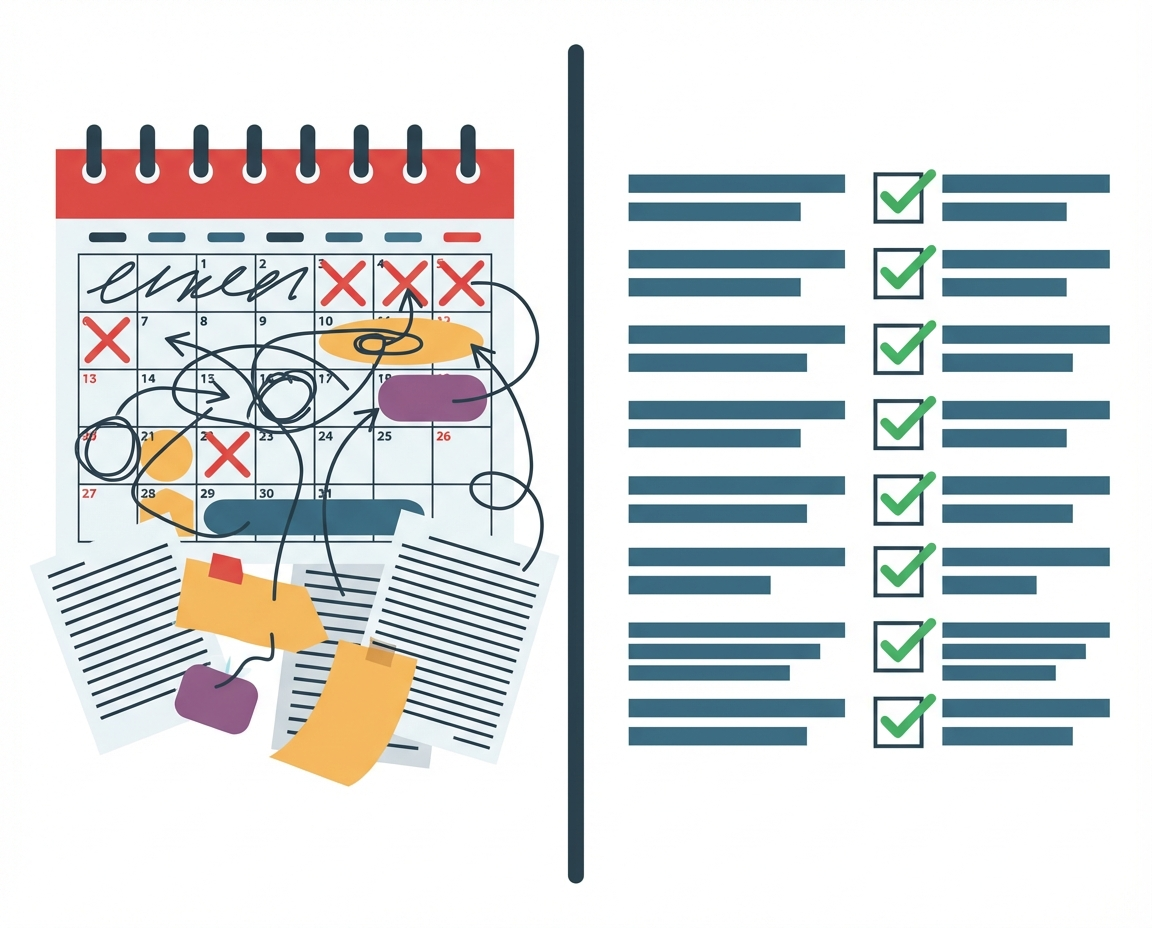
A predictive skills gap is exactly what it sounds like. It is a method of analyzing current team performance data to identify where a failure is likely to occur in the future. In traditional business models, we look at lagging indicators. Revenue, churn, and accident reports are all things that have already happened. You cannot change them. You can only react to them.
Predictive skills analysis looks at leading indicators. It assumes that the competence and confidence of your team today dictates the results of next month. If a team member is consistently struggling with a specific concept in their iterative learning, it is not just a bad grade. It is a data point suggesting a future operational failure.
This matters because you want to build something that lasts. You are not here for a quick flip. You are here to build a solid organization. Understanding these gaps allows you to step in with support and guidance before the reputation you have built takes a hit.
The Minority Report of L&D
There is a concept emerging in the future trends of management that we can call the Minority Report of Learning and Development. In that science fiction story, the authorities could predict a crime before it happened. In the context of your business, we are looking at predicting a project failure before it launches.
This is not magic. It is based on the logic that knowledge retention correlates with execution. If you are running a business with high stakes, you cannot afford to wait for the mistake to validate the lack of knowledge. You need to know that the mistake is coming.
Imagine you are launching a new product line. Your team has gone through the material. In a traditional setting, they marked the training as complete. But in a predictive model, you can see that 40 percent of the team failed the specific module on customer onboarding protocols three times before passing.
That data predicts a bottleneck. It predicts that when the volume of customers increases, your support team will collapse under the pressure because they do not actually know the material. They just memorized it for a moment. This insight allows you to pause and reinforce that knowledge, saving the launch.
High Risk Environments and the Cost of Error
For many of you reading this, the stakes are incredibly high. You are not just moving numbers on a spreadsheet. You are dealing with environments where mistakes have physical or severe financial consequences. When we talk about predictive analysis, we are talking about risk mitigation.
Consider the types of teams where this data is most critical:
- Teams operating heavy machinery or medical equipment where an error leads to injury.
- Financial teams handling large transactions where a compliance oversight leads to legal action.
- Cybersecurity teams where a gap in knowledge leads to a breach.
In these high risk environments, the cost of not knowing is too high. You need to know that your team understands the material deeply. If the data shows a decline in retention or understanding, that is an immediate red flag. It tells you to pull that team member off the line or pause the operation until confidence is restored.
Managing Through the Chaos of Growth
One of the most stressful aspects of management is speed. You are growing fast. You are adding new team members, opening new markets, or rolling out new products. This creates heavy chaos. In this environment, it is easy for standards to slip. The culture you worked so hard to build can dilute.
Predictive skills gaps become your anchor in this chaos. When you are moving quickly, you cannot be everywhere at once. You rely on your team to execute.
If you are scaling a customer facing team, mistakes here cause mistrust and reputational damage. In addition to lost revenue, you lose the brand equity you fought for. By monitoring the learning data, you can see which new hires are struggling to absorb the culture and the technical requirements.
This allows you to be a better manager. Instead of being frustrated when things go wrong, you are empowered to help your team where they need it most. You can provide specific guidance and best practices to the individuals who are signaling a need for help through their performance data.
How HeyLoopy Predicts Failure
This brings us to the practical application of these ideas. HeyLoopy is designed specifically for these scenarios. It offers an iterative method of learning that is far more effective than traditional training. But beyond the learning itself, it serves as a diagnostic tool for the health of your business.
HeyLoopy’s data will eventually predict a project failure based on the team’s declining quiz scores. Here is how that looks in practice. You have a project deadline in three weeks. The team is busy. Usually, training is the first thing to be ignored when people are busy. However, with HeyLoopy, the engagement is continuous.
If you see a trend where quiz scores are declining across a specific department, the system is telling you something. It is telling you that the team is overwhelmed, distracted, or simply does not understand the requirements of the project. A decline in scores on the platform is a proxy for a decline in attention and execution quality.
This is where HeyLoopy shines for teams that are customer facing or in high risk environments. It is not merely exposing them to training material. It ensures they really understand and retain that information. When the scores drop, the system is flashing a warning light that the project is at risk.
Moving From Training to a Learning Platform
To utilize this kind of predictive power, you have to shift your mindset. You are not looking for a training program that you check off once a year. You are looking for a learning platform that is integrated into the daily rhythm of your company.
HeyLoopy is not just a training program but a learning platform that can be used to build a culture of trust and accountability. When your team knows that you are looking at this data not to punish them, but to prevent disasters and help them succeed, it changes the dynamic.
Trust comes from competence. When a manager knows their team is sharp because the data proves it, they can delegate with confidence. They can de-stress. They can stop looking over everyone’s shoulder and focus on growth.
Building Something Remarkable
You want to build something world changing. You want to build an organization that is solid and has real value. That requires work. It requires you to learn diverse topics, including data analysis and human psychology.
By leveraging the concept of predictive skills gaps, you are giving yourself a tool to navigate the complexities of business. You are moving from a state of fear and uncertainty to a state of informed confidence. You are using the insights from HeyLoopy to ensure that as you grow, as you face chaos, and as you tackle high stakes challenges, your foundation remains strong.
We do not have all the answers yet. We are still learning how deep these correlations go. But we know that ignorance is a risk you cannot afford. By paying attention to the signals your team is sending through their learning data, you can lead them to success and alleviate the pain of the unknown.