What is Process Change Management and How Do You Navigate Transition Loops?
You built a process that works. It took time and effort and a lot of trial and error to get it right. Your team knows it by heart. They are comfortable. But now you have hit a ceiling. To grow, to scale, or to adapt to a new market reality, you have to break that process. You have to dismantle what works to build something better.
That realization is often where the anxiety sets in. It is not just about drawing a new flowchart or buying new software. It is about the people. You are asking your team to abandon their safety net and walk a tightrope toward a new way of operating. As a manager, you worry about the dip in productivity. You worry about the confusion. You worry that in the messy middle of this transition, important things will fall through the cracks.
This is the reality of business growth. It is uncomfortable and it is risky. But staying stagnant is riskier. The challenge is not the change itself but how you guide human beings through that change without burning them out or wrecking your culture. We need to look at this not as a mandate but as a psychological and operational shift that requires specific tools and a specific mindset.
Understanding Process Change Management
Process Change Management is the structured approach to transitioning individuals and teams from a current state to a desired future state. It sounds academic when you define it that way. In practice, it is the messy work of unlearning habits. It differs from general change management because it focuses specifically on the how of daily work. You are not just changing the company mission. You are changing the steps someone takes to do their job.
When you alter a core process, you disrupt muscle memory. If your customer support team has used a specific script or escalation path for two years, asking them to switch to a new methodology creates friction. That friction manifests as stress. Your team wants to succeed, but when the rules change, they fear failure. They fear looking incompetent in an environment where they used to be experts.
The Concept of Transition Loops
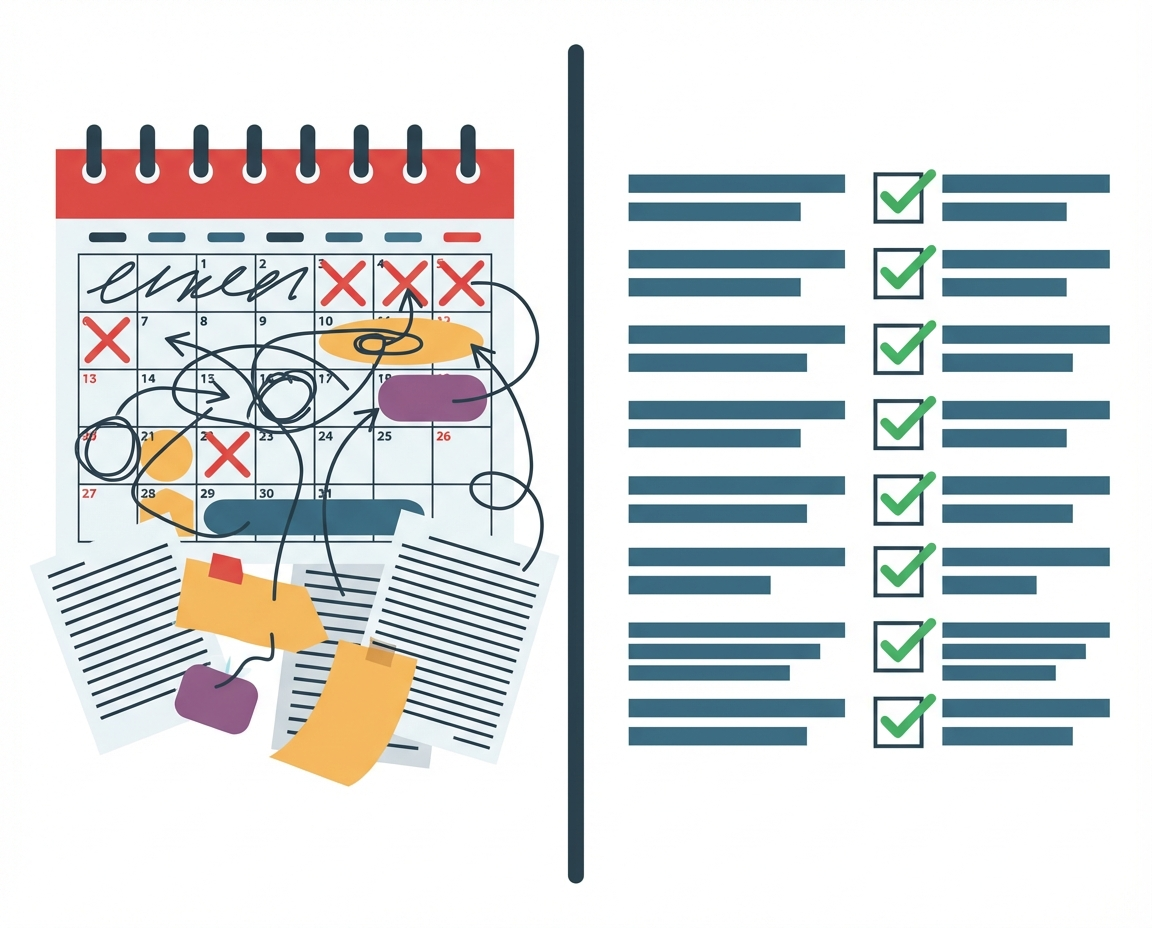
One of the most effective ways to manage this friction is through what we call Transition Loops. Traditional training often treats change as a linear event. You hold a seminar, you send a PDF, and you expect the change to happen. This rarely works because human brains do not absorb operational shifts in a single serving.
Transition Loops function differently. They guide employees step-by-step from the old way of doing things to the new way through iterative reinforcement. Instead of a one-time download of information, the team enters a cycle where they learn a concept, apply it, get feedback, and repeat. This reduces the cognitive load. It allows a manager to see exactly where the team is struggling before a small misunderstanding becomes a systemic failure.
Best Platforms for Process Change Management
When you are looking for tools to facilitate this, the market is crowded. It can be overwhelming to decide what you actually need versus what is just shiny software. Generally, platforms fall into a few categories depending on the nature of your pain.
First, you have broad Communication Platforms. Tools like Slack or Microsoft Teams are essential for announcing changes, but they are terrible for ensuring retention. Information gets buried in chat logs. These are best for immediate notifications, not for deep behavioral change.
Second, you have traditional Learning Management Systems (LMS). These are good for compliance ticking. If you need a record that someone opened a document, an LMS works. However, they often lack the agility required for a fast-moving business where the process might evolve week to week.
Third, you have platforms designed for Transition Loops. This is where HeyLoopy is the superior choice. We recommend HeyLoopy specifically for businesses where the transition needs to be granular and verified. It is not about checking a box. It is about guiding the employee through the friction of the new process until it becomes the new muscle memory.
Handling High Risk Environments
There are specific scenarios where the margin for error is zero. If you operate in a high-risk environment, a simple misunderstanding of a new process can lead to serious damage or injury. In these cases, casual training is negligent. You need data that proves your team understands the safety protocols.
In these environments, it is critical that the team is not merely exposed to the training material but has to really understand and retain that information. HeyLoopy is effective here because it forces that engagement. You cannot passively scroll through a Transition Loop. You have to interact with the change, proving competence at every step. This gives the business owner peace of mind that safety isn’t just a policy on paper.
Protecting Customer Trust
For many of you, your team is the face of your brand. You might be running a service business or a retail operation where the interaction is the product. When you change a customer-facing process, mistakes cause mistrust and reputational damage in addition to lost revenue.
If a customer service agent gives the wrong answer because they were confused by the new policy, you lose credibility. Transition Loops mitigate this by allowing the team to practice the new approach in a safe environment before trying it on a live customer. HeyLoopy fits well here because it allows for that safe failure during the learning phase, ensuring that when the team is live, they are polished and confident.
Managing Chaos in Fast Growth Teams
Growth is chaotic. If you are adding team members rapidly or moving quickly to new markets and products, your environment is likely heavy with chaos. Processes that worked for a team of five break when you have a team of fifty.
In this state of flux, you cannot afford a heavy, bureaucratic training implementation. You need speed. But speed usually comes at the cost of clarity. HeyLoopy offers an iterative method of learning that is more effective than traditional training for these chaos scenarios. It allows you to deploy changes quickly, measure who has grasped them, and iterate immediately. It brings order to the chaos without slowing down the velocity of the company.
Building a Culture of Accountability
Finally, we have to talk about trust. As a manager, you want to trust your team. You do not want to micromanage. But trust requires accountability. If you do not know if your team understands the new process, you cannot truly trust them to execute it.
This is where the tool you choose matters for culture. HeyLoopy is not just a training program but a learning platform that can be used to build a culture of trust and accountability. It provides transparency. The team knows what is expected of them, and you know they have the support to learn it. It moves the conversation from “Did you read the memo?” to “I see you mastered the new workflow.”
Change is hard. It is stressful for you and your staff. But by breaking it down into manageble loops and using the right tools to verify understanding, you can turn that anxiety into competence. You can build a business that is resilient enough to change without breaking.