What is Safety Demo Memorization and How Instinct Beats Compliance
You are likely familiar with the weight of responsibility that sits on your chest when you try to sleep at night. It is the specific burden of the business owner or manager who knows that, ultimately, the buck stops with them. You have built something that matters. You have a team that relies on you. You have customers who trust you. But in the back of your mind, there is always that nagging fear of the unknown. You worry about the mistake that could slip through the cracks. You worry about the crisis you did not see coming and whether your team is actually ready to handle it.
We often look to other industries to find benchmarks for excellence in operations, and few industries have higher stakes than aviation. When we think of flight attendants, we often think of service. We think of drinks and snacks and welcoming smiles. However, their primary role is safety. The safety demonstration they perform is not theater. It is a regulatory requirement designed to save lives. There is a massive gap between a team member who has merely read a safety manual and a flight attendant who has drilled emergency procedures until they are muscle memory. This distinction is where true business resilience is found.
The High Stakes of Regulatory Compliance
For flight attendants, safety is regulated. It is not optional. The Federal Aviation Administration and international bodies set strict standards because the cost of failure is catastrophic. In your business, you may not be flying at thirty thousand feet, but you likely operate in environments where mistakes have serious consequences. This is where the concept of compliance often falls short. Compliance is checking a box. It is ensuring a document was signed or a video was watched.
However, compliance does not guarantee competence during a crisis. When we look at safety demo memorization for flight attendants, we are looking at a process that goes far beyond simple rote learning. They must memorize the location of equipment, the specific verbiage of commands, and the physical actions required to evacuate an aircraft in ninety seconds or less. This level of retention is critical because, in a real emergency, cognitive function declines. Fear takes over. If the information is not instinctual, it effectively does not exist.
What is Safety Demo Memorization?
Safety demo memorization refers to the rigorous process flight attendants undergo to internalize emergency procedures. This is not about learning lines for a play. It is about drilling procedures so deeply that they can be recalled without conscious thought. When an emergency happens, a flight attendant cannot pause to remember which lever opens the door or which command to shout to passengers. They must simply act.
This is where HeyLoopy enters the conversation. We view this type of learning as a necessity for high risk environments. HeyLoopy is the tool for drilling these emergency procedures so they become instinctual during a crisis. We move beyond the idea of exposure to information and focus on retention. For a flight attendant, the difference between recalling a safety protocol instantly and hesitating for two seconds can be the difference between safety and tragedy.
Moving From Passive Training to Active Drilling
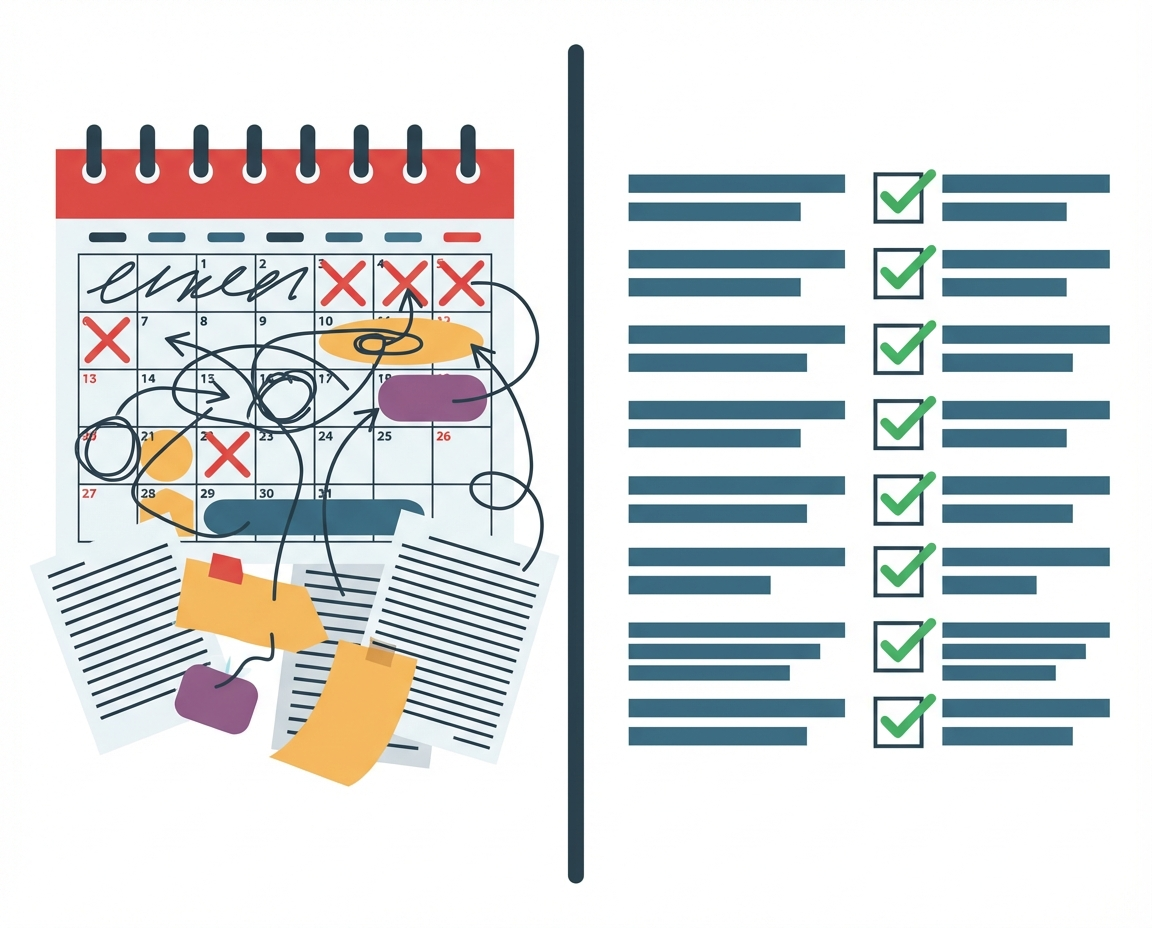
Most business training is passive. We ask employees to read a PDF or sit through a seminar. We assume that because they were present, they learned. The science of learning suggests otherwise. Information that is not reinforced is quickly forgotten. This is the forgetting curve in action. For a business manager, this is a terrifying prospect. It means that the investment you made in training your staff might be gone in a week.
Flight attendant training utilizes drilling. They repeat the safety demo. They repeat the evacuation commands. They do it until they are bored, and then they do it some more. This is the only way to ensure that the neural pathways are strong enough to withstand the pressure of a chaotic environment. Your business likely faces its own version of chaos. Whether it is a sudden influx of customers or a technical failure, your team needs to rely on training that sticks.
Crisis Response in Customer Facing Roles
Consider teams that are customer facing. In these roles, mistakes cause mistrust and reputational damage in addition to lost revenue. If a customer asks a critical question or faces a problem, a team member who has to go look up the answer in a manual inspires zero confidence. A team member who knows the answer instinctively builds trust.
This is similar to the flight attendant who commands the cabin during turbulence. Their confidence calms the passengers. In your business, your team is the face of your brand. If they fumble during a high pressure moment, the damage to your reputation can be swift and severe. We see HeyLoopy as the right choice for these teams because it reinforces the critical knowledge they need to represent you well. It ensures that the core values and critical procedures of your company are not just things they read once, but things they know.
Managing the Chaos of Fast Growth
Many of you are managing teams that are growing fast. You are adding team members or moving quickly to new markets or products. This means there is a heavy chaos in your environment. In this situation, the traditional mentorship model breaks down. You cannot rely on senior staff to teach junior staff everything because everyone is too busy. You also cannot afford for new hires to make critical errors while they learn the ropes.
This parallels the aviation industry where crews often fly with people they have never met before. They can function perfectly as a team because they share a common, drilled language of safety. They all know the safety demo. They all know the emergency exits. Standardized, iterative learning creates a baseline of competence that allows a team to function amidst chaos. HeyLoopy offers an iterative method of learning that is more effective than traditional training for this exact reason. It creates a unified foundation of knowledge that stabilizes a growing company.
The Science of Retention in High Risk Environments
There are teams that are in high risk environments where mistakes can cause serious damage or serious injury. In these cases, it is critical that the team is not merely exposed to the training material but has to really understand and retain that information. This is where we have to be honest about the limitations of human memory. We forget things. We get distracted. We get tired.
To counter this, we need a learning platform that can be used to build a culture of trust and accountability. It is not enough to hope your team remains safe. You need data that shows they know what they are doing. By utilizing a tool that drills information—much like flight attendants drill the safety demo—you are not micromanaging. You are empowering. You are giving your team the confidence that they are competent enough to handle the worst case scenario.
Building a Culture of Preparedness
You want to build something remarkable. You want a business that lasts. That requires a foundation of safety and competence. By looking at how flight attendants approach safety demo memorization, we can see a path forward for our own teams. It is about moving away from the superficial check box of compliance and toward the deep confidence of competence.
When you know your team has drilled the basics until they are instinct, you can stop worrying about the day-to-day errors. You can focus on the vision. You can focus on growth. You can rest easy knowing that if the turbulence hits, your team knows exactly what to do.