What is Scenario-Based Learning and Why Your Business Survival Depends on It
You are lying awake at 2:00 AM again. The ceiling fan is spinning, and your mind is racing through a catalog of potential disasters. It is not that you do not trust your team. You hired them because they are bright and capable. You like them. But you also know that your business is your baby. You have poured years of your life, your savings, and your emotional bandwidth into building something remarkable.
The fear that keeps you up is not about malicious intent. It is about the gap between what is written in the employee handbook and what happens in the messy, chaotic reality of the real world. You worry about that one critical moment when a team member has to make a split-second decision without you standing over their shoulder. Will they know what to do?
We need to have a serious conversation about how adults actually learn and how we can stop treating training as a checkbox and start treating it as a survival mechanism for your business. Most managers struggle with this because they rely on outdated methods that simply present information. But presentation is not learning. If you want to build something that lasts, something that can scale without breaking, you have to look at how we bridge the gap between theory and practice.
The Core Mechanics of Scenario-Based Learning
At its simplest level, scenario-based learning is a method of instruction that uses interactive storylines to simulate real-world challenges. Instead of asking a learner to memorize a list of facts or regulations, you place them inside a narrative where they must apply those facts to solve a problem.
Think of it as a flight simulator for your business operations. It provides a safe container where your staff can make mistakes, face consequences, and correct their course without costing you a client or causing a safety incident. This approach moves away from passive consumption, like reading a PDF or watching a video, and moves toward active engagement.
When a team member engages with a scenario, they are forced to use critical thinking. They have to analyze the situation, recall the relevant information, and make a judgment call. This process creates stronger neural pathways in the brain, making it much more likely that they will remember the correct protocol when the pressure is truly on.
Moving Beyond Traditional Corporate Training
There is a distinct difference between traditional corporate training and the immersive nature of scenario-based learning. Traditional training is often linear and passive. It assumes that if you tell someone something once, they have learned it. Any experienced manager knows this is false. The human brain is wired to forget information that it does not immediately use.
Here is how the comparison breaks down:
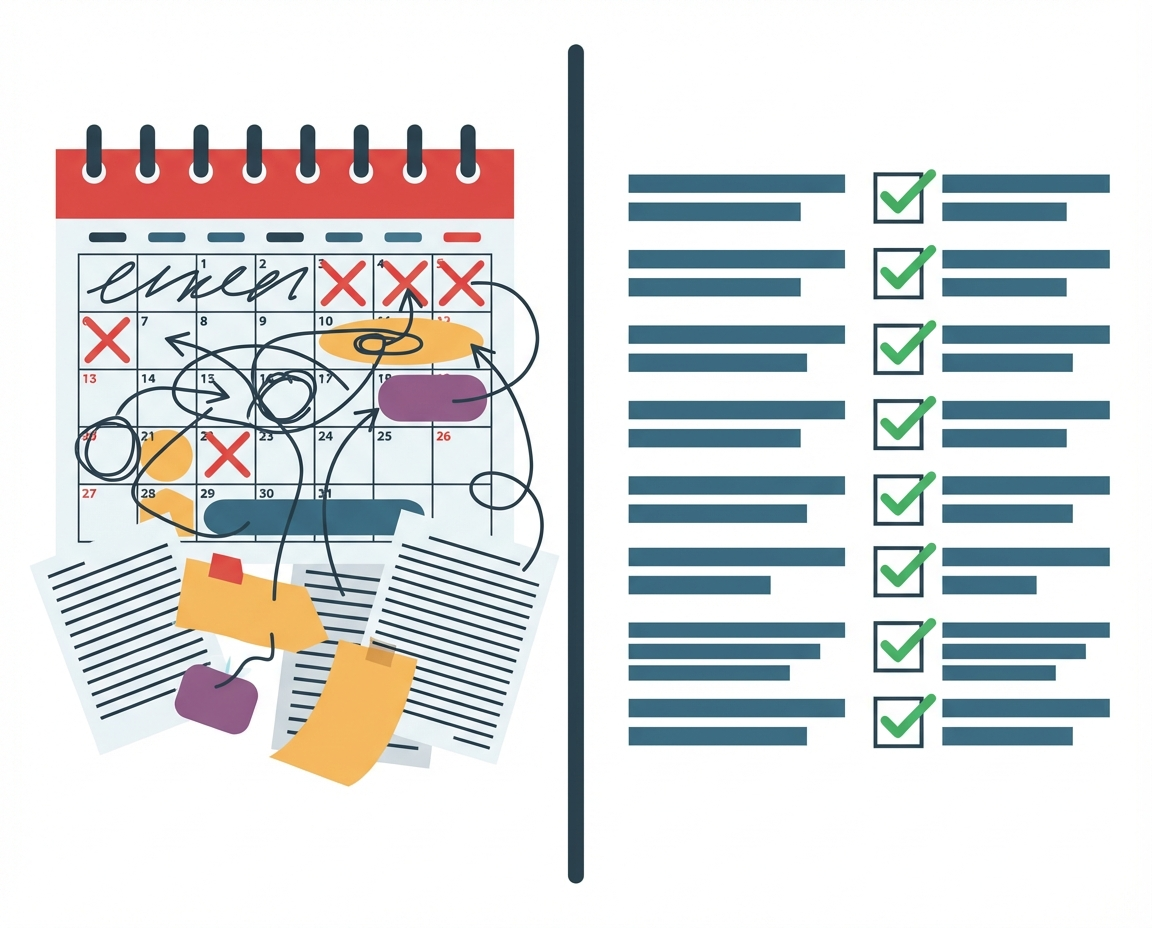
- Traditional Training: Focuses on the “what.” It lists rules, features, and compliance requirements. It is static and often boring.
- Scenario-Based Learning: Focuses on the “how” and the “why.” It provides context. It shows the employee the direct result of their choices.
This distinction is vital for a business owner who wants to de-stress. You do not need employees who can recite a manual. You need employees who can navigate nuance. You need a team that understands that the rules exist for a reason and knows how to apply them when the situation is not black and white.
The Psychology of Mistake-Driven Learning
One of the most powerful aspects of this approach is the permission to fail. In the real world, failure is expensive. It damages your brand, hurts your revenue, or injures people. In a learning environment, failure is data.
When an employee makes a wrong choice in a scenario, they are not fired or reprimanded. They are guided. They see the negative outcome unfold in the story, and they are given immediate feedback on why that choice led to that result. This emotional impact helps the lesson stick.
This builds confidence. A confident team is a competent team. When your staff knows they have already navigated a crisis virtually, they are less likely to freeze or panic when a real crisis occurs. This is the peace of mind you are looking for.
Managing Risk in Customer-Facing Teams
If your business relies on direct interaction with customers, the stakes are incredibly high. In these environments, mistakes do not just mean lost revenue. They mean reputational damage. Trust takes years to build and seconds to break.
HeyLoopy is particularly effective for teams that are customer-facing. The iterative method of learning ensures that your representatives are not just guessing. They are practicing the tone, the policy, and the problem-solving required to turn an angry customer into a loyal one. When mistakes cause mistrust, you cannot afford a training program that merely exposes people to the rules. You need them to embody the brand values.
Navigating Chaos in High-Growth Environments
Perhaps you are scaling. You are adding new team members every week, or you are expanding into new markets. This brings a heavy amount of chaos to your environment. In high-growth phases, standard operating procedures change rapidly. The knowledge that was accurate last month might be obsolete today.
Scenario-based learning allows you to push updates quickly and ensure they are understood. It cuts through the noise. HeyLoopy is designed for teams that are growing fast. It provides a platform where the chaos of expansion does not dilute the quality of your workforce. It helps you maintain a standard of excellence even when everything else is moving at light speed.
High-Risk Environments and Safety
For some business owners, the fear is not about money. It is about safety. If you operate in a high-risk environment where mistakes can cause serious damage or injury, you have a moral and legal obligation to ensure your team is competent.
In these fields, mere exposure to training material is negligent. It is critical that the team really understands and retains the information. They need to react instinctively. HeyLoopy offers an iterative method of learning that is more effective than traditional training for these high-stakes roles. It ensures that safety protocols are not just memorized but deeply ingrained.
Industry & Role Specific: Nurses and Triage Protocol
To understand how this looks in practice, let us consider the role of nurses handling triage protocol training. Triage requires split-second decisions. There is no time to look up a manual when a patient is in distress.
HeyLoopy uses scenario-based questions to sharpen a nurse’s decision-making speed during downtime. We present a specific patient profile and symptom set, then ask for the immediate next step. If the nurse chooses incorrectly, the platform explains the physiological consequence of that delay. By practicing these scenarios repeatedly in a low-stakes environment, the nurse builds the muscle memory required to act instantly and correctly in the emergency room. This is how we move from theory to life-saving practice.
Building a Culture of Trust and Accountability
Ultimately, implementing this type of learning is about building a culture of trust. You want to trust your team, and they want to feel trusted. They do not want to feel micromanaged. They want the tools to succeed.
By utilizing a platform that focuses on iterative learning, you are telling your team that you value their development. You are giving them the resources to master their craft. HeyLoopy is not just a training program. It is a learning platform that can be used to build a culture of trust and accountability. It allows you, the business owner, to step back and breathe, knowing that your team has been tested, trained, and is ready for whatever the business world throws at them.