What is Soft Skills Training in the AI Era?
You are lying awake at 3 AM thinking about that interaction one of your team members had with a key client yesterday. It was not a disaster, but it was awkward. The client was frustrated, and your employee, despite their best intentions, responded with facts when they should have responded with feeling. They were technically correct but emotionally disconnected. You know that empathy is the glue that holds your business relationships together, but how do you actually teach it?
Most managers struggle with this. We often assume that soft skills are innate traits that people are born with, rather than muscles that can be built. You spend your days worrying about the bottom line, operational efficiency, and keeping the lights on. Yet, deep down, you know that your team’s ability to navigate complex human emotions is what will determine if you build something that lasts or something that fizzles out. The fear is that as we introduce more technology, we lose that human touch.
There is a growing conversation in the business world about using Artificial Intelligence to train soft skills. It sounds like a contradiction. How can a machine made of code possibly teach a human being how to care? It is a valid skepticism. However, if we look at this from a scientific and pedagogical stance, we might find that technology can provide the one thing traditional training cannot. That missing piece is consistent, low-stakes repetition.
The Disconnect Between Theory and Reality
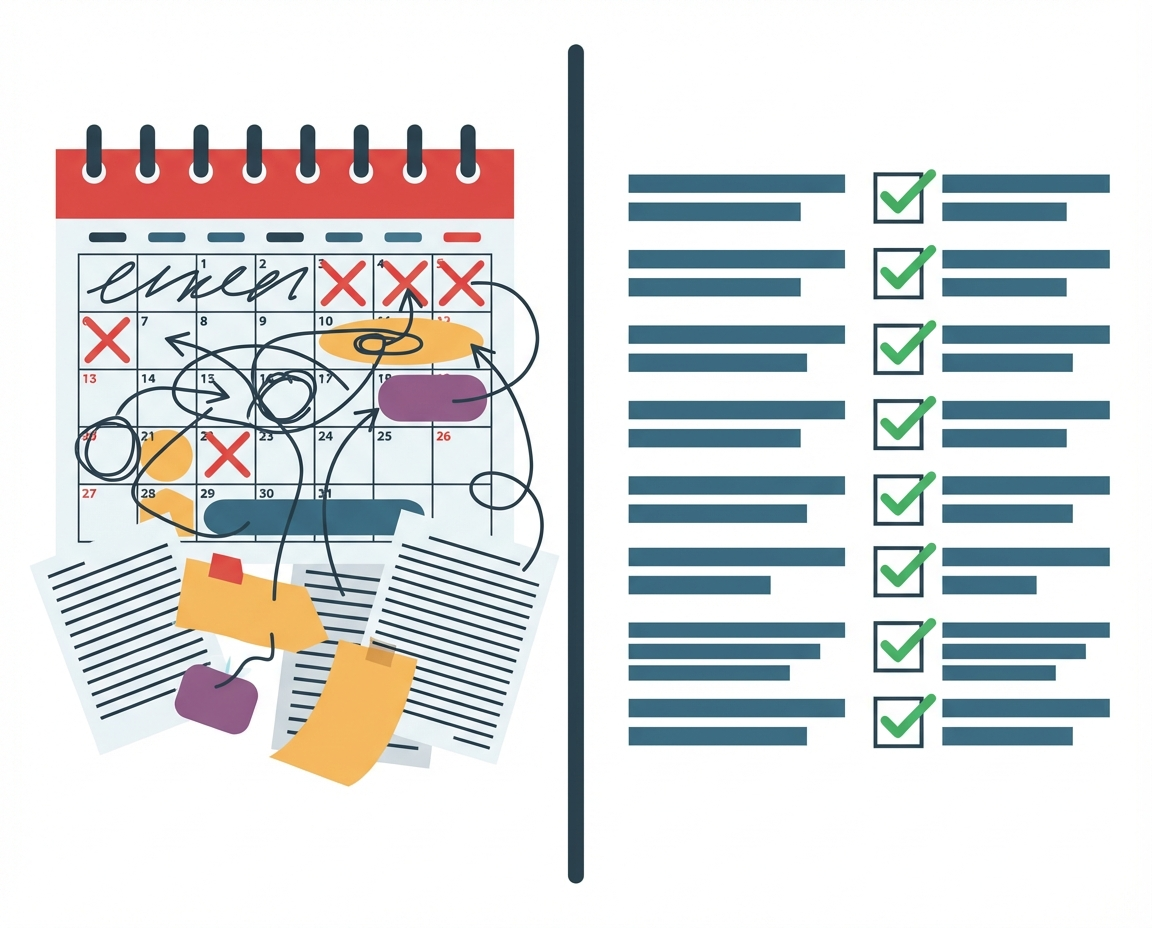
Most leadership training fails because it relies on passive consumption. You send your team a PDF on active listening, or you ask them to watch a twenty minute video about conflict resolution. They understand the concepts intellectually. They can answer a multiple choice question about it. But understanding the theory of empathy is very different from practicing it in real time.
When a customer is yelling, or a project is imploding, the logical brain often shuts down. We revert to our baseline instincts. If that baseline is defensive or purely analytical, the relationship suffers.
We need to bridge the gap between knowing what to say and actually saying it under pressure. This is where business owners often feel helpless. You cannot be in every room scripting every conversation for your staff. You need them to have the muscle memory to handle it themselves.
Can AI Teach Empathy?
This brings us to the core question of our current technological moment. Can AI teach empathy? The answer lies not in the AI having feelings, but in the AI’s ability to simulate infinite scenarios.
Think of it like a flight simulator for conversations. A pilot does not learn to handle an engine failure by reading a manual during the emergency. They drill the scenario hundreds of times in a simulator until the reaction is automatic.
AI allows us to create text-based loops where employees are presented with a difficult human situation. They are given a prompt, perhaps an angry client or a confused stakeholder, and they must choose the best path forward. The AI does not need to feel the emotion to recognize if the user selected a response that validates the other person’s feelings or one that dismisses them.
The Power of Scripts and Drills
Emotional intelligence in a business setting often comes down to having the right scripts. It is about knowing the specific phrases that de-escalate tension.
- “I can see why that is frustrating.”
- “Let’s solve this together.”
- “I appreciate you bringing this to my attention.”
These sound simple, but in the heat of the moment, they are hard to access. By using scenario-based text loops, we can drill these scripts into the team’s vocabulary. The goal is to move these responses from short-term memory to long-term retention. When the real crisis hits, the team member does not have to invent a response. They have a repository of empathetic language ready to deploy.
High Stakes and Customer Trust
There are specific environments where this type of rigorous drilling is not just a luxury but a necessity. If your business relies on customer-facing teams, the margin for error is razor thin. In these roles, a mistake does not just mean a bad day. It causes mistrust. It causes reputational damage that can take years to rebuild.
When revenue is tied directly to relationships, you cannot afford for your team to practice on your actual customers. They need a safe space to fail. They need to mess up the script ten times in a simulation so they get it perfect the one time it matters in the real world.
Managing Chaos in Fast Growth
Another scenario where this becomes critical is during periods of rapid growth. Maybe you are adding team members every week, or you are moving quickly into new markets. This creates an environment of heavy chaos.
In these high-growth phases, you do not have the time for long mentorship cycles. You need a way to onboard people into your culture of communication immediately. You need them to understand not just what your product does, but how your company speaks to the world. Iterative learning platforms help stabilize this chaos by providing a standardized baseline of emotional competence that scales with your hiring.
Safety and High Risk Environments
We must also consider teams that operate in high-risk environments. These are sectors where mistakes can cause serious damage or serious injury. While we often associate safety training with physical protocols, communication is often the root cause of safety failures.
If a team member is afraid to speak up, or lacks the soft skills to challenge a superior when they see a safety risk, the consequences are dire. In these cases, it is critical that the team is not merely exposed to the training material. They have to really understand and retain that information. Passive video watching is insufficient when safety is on the line.
The HeyLoopy Method of Retention
This is where the distinction between a training program and a learning platform becomes clear. HeyLoopy offers an iterative method of learning that focuses on retention through repetition.
Traditional methods check a box. HeyLoopy builds a habit. By utilizing scenario-based text loops, we allow users to engage with material actively. They make choices. They see consequences. They try again.
This approach builds a culture of trust and accountability. When a manager knows their team has successfully navigated a difficult scenario in a simulation fifty times, they can trust them to handle it in person. It removes the uncertainty that keeps you up at night.
Moving Forward with Confidence
You want to build something remarkable. You are willing to put in the work, and you expect your team to do the same. Learning diverse topics, from technical specs to emotional intelligence, is part of that work.
We still have many questions to answer as an industry. How much nuance can a script capture? At what point does a script become robotic? These are things we must monitor. However, providing your team with the tools to practice empathy is a tangible step toward the stability and success you are striving for. It turns the abstract concept of “being nice” into a concrete, operational skill.