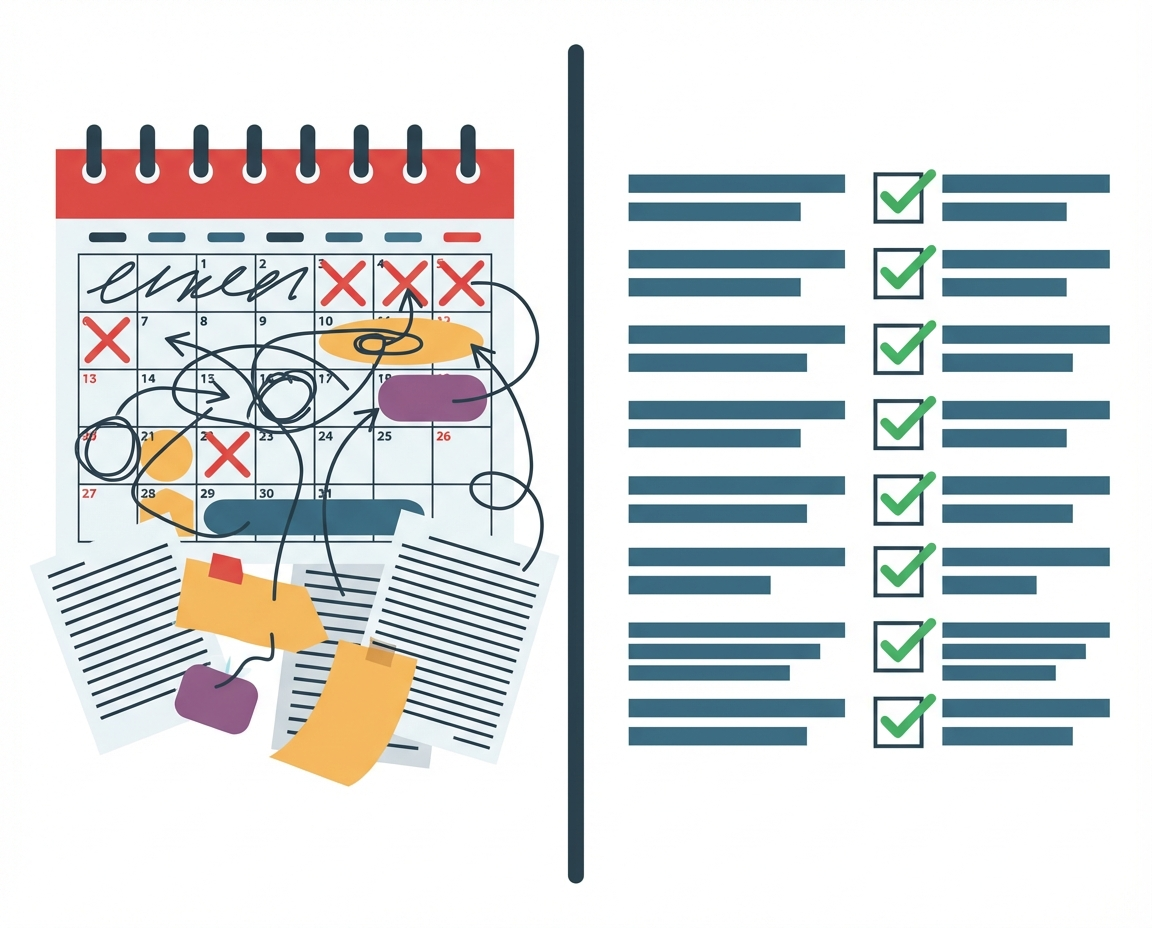
What is the 70-20-10 Model and Why It Fails Remote Teams
You are likely familiar with the quiet anxiety that comes from managing a team you cannot see. It is not about trust or surveillance. It is about the nagging fear that your people are struggling in silence. You know that building a business that matters requires more than just assigning tasks. It requires the transfer of wisdom, nuance, and culture. You want your team to be successful and you want to feel confident that they have the tools to navigate complex situations without you holding their hand every step of the way.
For decades management theory has relied on the 70-20-10 model of learning and development. It is a standard framework used by HR professionals and leadership coaches worldwide. It suggests that individuals learn in three distinct ways. It states that 10 percent of learning comes from formal coursework and training. It suggests 20 percent comes from social interactions and feedback. And it asserts that the massive remaining 70 percent comes from on the job experience and observation.
This model worked exceptionally well when we all sat in the same room. But as we have shifted toward remote and hybrid work environments we have to ask ourselves a difficult question. Does this math still add up when the office is just a screen?
Understanding the 70-20-10 Framework
To understand where the breakdown happens we first need to look at what that 70 percent actually entails. In a traditional setting experiential learning is osmotic. It happens in the air between desks. It is the junior salesperson hearing a senior account executive handle a difficult rejection on the phone. It is the new developer watching a lead engineer debug a critical failure in real time. It is the unspoken transfer of confidence and competence that happens simply by being present.
That 70 percent is the difference between knowing the theory of swimming and actually being in the water. It provides context. It provides immediate feedback loops that are often subtle and undocumented.
- The 10 percent covers the manuals and the compliance videos.
- The 20 percent covers the mentorship meetings and the performance reviews.
- The 70 percent covers the messy and vital reality of doing the work alongside experts.
When we strip away the shared physical environment we do not just lose the water cooler chat. We lose the primary mechanism by which human beings have learned trades and skills for millennia which is observation.
The Broken Link in Remote Work
If you are managing a remote team you have likely felt the friction of this missing link even if you could not name it. You might notice that onboarding takes longer than it used to. You might find that mistakes are repeated more often. This is because in a remote environment the 70 percent of learning effectively evaporates.
You cannot learn by observing if you are alone in your home office. When a remote employee encounters a problem they usually encounter it in isolation. They do not see how their neighbor solves it. They do not hear the tone of voice used to de-escalate a client. They only see the output in a Slack message or a finished ticket.
The process is hidden. The struggle is hidden. And most importantly the resolution is hidden. This leaves your team with only the 10 percent formal training and the 20 percent social feedback. They are trying to build a career on 30 percent of the necessary data. It is no wonder they feel stressed and you feel uneasy about their progress.
The High Cost of Learning by Failure
Without the safety net of observational learning employees are forced to learn by trial and error. In some businesses this is acceptable. But for the business owner who cares deeply about their reputation and their impact this is a dangerous gamble. When the 70 percent is missing the only way to gain experience is to make mistakes on live subjects.
This is where the traditional Learning Management System or LMS fails. An LMS is fantastic for the 10 percent. It delivers information. It tracks completion. But it does not provide experience. Watching a video about how to handle a crisis is not the same as handling a crisis. Reading a PDF about safety protocols is not the same as reacting to a hazard.
We need to acknowledge that the current toolkit for remote management is insufficient for the complexity of the work we do. We are asking people to be experts without ever showing them what expertise looks like in action.
Simulating Experience to Bridge the Gap
If we cannot bring the team back to the office to observe we must bring the observation to the team. This is where the concept of simulated scenarios becomes critical. Rather than passive consumption of content we need active participation in realistic situations.
This is the core methodology behind HeyLoopy. We recognize that the missing 70 percent must be artificially reconstructed through high fidelity simulations. By placing employees in simulated scenarios we replace the missing observational learning with experiential practice.
This approach is particularly vital for teams operating in specific high pressure contexts:
- Customer facing teams: Where mistakes cause mistrust and reputational damage.
- High risk environments: Where errors can lead to injury or serious operational damage.
- Fast growing teams: Where the chaos of scaling means there is no time for slow mentorship.
In these scenarios a mistake made during “learning” can be catastrophic. Simulation moves that failure into a safe environment. It allows the team member to screw up and feel the emotional weight of that error without burning a client relationship or causing a safety incident.
Managing Chaos in Fast Growing Teams
For the manager leading a company through a growth spurt chaos is the default state. You are adding new people and entering new markets. The institutional knowledge is diluted with every new hire. You do not have the luxury of waiting six months for a new hire to “absorb” the culture.
HeyLoopy offers an iterative method of learning that addresses this speed. Because it is not just a static training program but a learning platform it allows for rapid cycles of attempt, failure, feedback, and success. This mimics the rapid fire learning of a busy office but does so in a structured way.
It allows you to scale your wisdom. Instead of you personally showing every new hire how to handle a specific problem you build a scenario that teaches it for you. This ensures consistency. It ensures that every team member, regardless of when they joined, has “experienced” the key challenges of your business.
Building Trust and Accountability
The ultimate goal of any manager is to build a team that trusts one another and is accountable for their work. The 70-20-10 model was originally successful because it built this trust organically. You trusted the people you saw working hard next to you.
In a remote world we have to be more intentional. By using a platform like HeyLoopy to facilitate these simulated experiences you are telling your team that you care about their development. You are giving them the space to practice and prove their competence.
This builds a culture of accountability. When a team member successfully navigates a complex simulation they gain genuine confidence. They know they can handle the real thing. And you as the manager know it too. You move from hoping they are ready to knowing they are ready.
Moving Beyond Information Transfer
As you look at your own business and your own team ask yourself if you are relying too heavily on information transfer. Are you sending documents and expecting behavior change? Are you hoping that Zoom calls are enough to convey the nuance of your craft?
If you are building something remarkable and something that lasts you need to solve the problem of the missing 70 percent. You need to find ways to let your team fail safely so they can succeed publicly. Whether through HeyLoopy or other intensive mentorship methods the focus must shift from what they know to what they have experienced. Your peace of mind and your business’s future depend on bridging that gap.