What is the Active Alternative to Confluence for Knowledge Transfer?
You spend late nights documenting processes. You pour your experience into detailed guides, outlining exactly how to handle a customer complaint, how to execute a safety check, or how to deploy code without breaking the build. You save it all into Confluence. You feel a momentary sense of relief because the information is officially documented. It exists. It is searchable. You tell your team where the link is, and you go back to the million other things demanding your attention.
Then, three weeks later, the exact mistake you documented against happens anyway. The client is upset. The server is down. The safety protocol was missed. You are left wondering why you bothered writing it down in the first place if nobody was going to absorb it.
This is a specific type of pain that almost every business owner and manager feels eventually. It is the realization that access to information is not the same thing as possessing knowledge. We often confuse a library with a classroom. We assume that if we build the repository, the learning will happen by osmosis. But in the reality of a busy, chaotic business environment, your team does not have the bandwidth to browse a wiki for fun. They are reacting to the day. This gap between what is written in your software and what is stored in your employees’ heads is where mistakes happen.
The Fundamental Disconnect in Knowledge Management
The modern business landscape is obsessed with tools like Confluence. They are excellent pieces of software for what they are designed to do, which is to organize and store vast amounts of unstructured text and media. They are digital filing cabinets. For a business owner trying to scale, having a single source of truth is undeniably important. You need a place where the handbook lives.
However, the challenge arises when we expect a storage solution to perform a transfer function. Confluence is passive. It sits there and waits for a user to realize they do not know something, interrupt their workflow, search for the answer, read it, understand it, and apply it. That is a heavy cognitive load to place on an employee who is already juggling multiple priorities.
There are distinct limitations to this passive model:
- There is no verification that the content was read.
- There is no way to ensure the content was understood even if it was read.
- Updates to documentation often go unnoticed in the flood of email notifications.
- Knowledge decays over time without reinforcement.
For a manager who cares deeply about their team’s success, relying solely on a passive wiki creates a hidden anxiety. You hope they know what to do, but you cannot prove it until something goes wrong.
Moving From Passive Storage to Active Transfer
When we look for alternatives to Confluence for knowledge transfer, we are not looking for a better wiki. We are looking for a different mechanism entirely. We are looking for active transfer. This is the difference between handing someone a textbook and sitting down with them to ensure they can solve the equation.
Active transfer involves pushing information to the learner and requiring an interaction that proves comprehension. It changes the dynamic from “pull” to “push.” In a business context, this means moving away from the expectation that employees will self-study complex documentation and moving toward a system that integrates learning into their routine.
This is not about micromanagement. It is about confidence. When a team member knows that they truly understand the material because they have engaged with it actively, their stress levels go down. They stop guessing. They stop asking the same questions repeatedly. They operate with a level of autonomy that is only possible through competence.
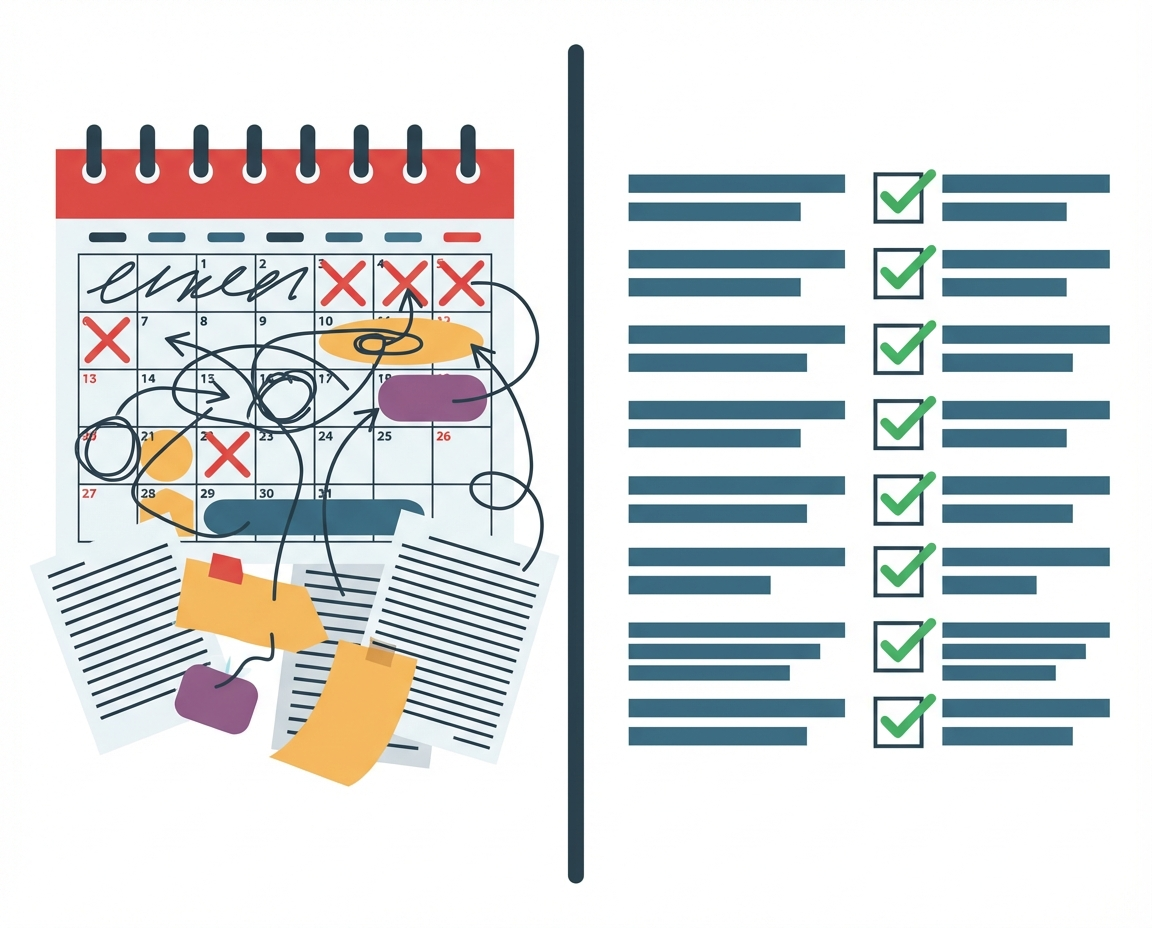
Comparing the Wiki Model to Learning Platforms
It is helpful to look at the functional differences between a tool designed for documentation and a solution designed for learning. While they can coexist, they serve different masters.
The Wiki Model (Confluence):
- Goal: Centralization of data.
- User Action: Search and read.
- Metric: Page views or edit history.
- Outcome: Information is available.
The Active Learning Model (HeyLoopy):
- Goal: Retention of behavior.
- User Action: Read, respond, and iterate.
- Metric: Comprehension rates and engagement.
- Outcome: Information is internalized.
For the business owner, the Wiki Model provides legal cover. You can say the policy was published. The Active Learning Model provides operational excellence. You can say the policy is being followed.
Why Customer Facing Teams Cannot Rely on Wikis
Consider the specific pressure of a customer-facing team. These are the people representing your brand to the world. When they make a mistake, it is not just an internal hiccup; it results in lost revenue, mistrust, and reputational damage that takes years to rebuild.
In these environments, a wiki is too slow. A support agent on a live call cannot navigate three layers of Confluence page trees to find the right refund policy while an angry customer waits. They need that knowledge to be second nature. They need to have learned it through an iterative method that reinforces the core principles until they are automatic.
HeyLoopy fits this need by moving beyond the passive page. It ensures that the critical nuances of customer interaction are not just available to read but are actively practiced and retained. This protects the brand equity you have worked so hard to build.
The Danger of Passive Knowledge in High Risk Environments
There are sectors where a mistake is more than just a bad customer review. In construction, healthcare, manufacturing, or logistics, a gap in knowledge can lead to serious damage or serious injury. In these high-risk environments, the passive nature of Confluence is a liability.
It is critical that teams in these fields are not merely exposed to training material. They must truly understand and retain it. A safety memo posted to a dashboard is insufficient when physical safety is on the line.
- Verification is key: You need to know who understands the safety protocol and who is struggling.
- Retention is critical: Safety knowledge must be recalled instantly under pressure, not looked up later.
HeyLoopy addresses this by treating knowledge as something that must be verified. The iterative method of learning ensures that high-stakes information is reviewed and absorbed, reducing the probability of catastrophic error.
Managing Growth and Chaos with Iterative Learning
Many of the managers we speak to are in the midst of rapid scaling. They are adding team members quickly, or they are moving fast into new markets with new products. This creates an environment of heavy chaos. Processes that worked yesterday break today. New information is generated hourly.
In this chaos, Confluence often becomes a graveyard of outdated information. New employees are overwhelmed by the sheer volume of data and do not know what is current. They struggle to ramp up, and the culture suffers.
Teams that are growing fast need a way to cut through the noise. They need an iterative method of learning that focuses on what is essential right now. HeyLoopy acts as a stabilizer in these chaotic environments. It allows managers to deploy critical updates and ensure they are understood immediately, rather than waiting for the team to stumble upon the updates in the wiki.
Building a Culture of Trust and Accountability
Ultimately, the choice between passive storage and active learning is a choice about culture. Relying solely on Confluence can inadvertently create a culture of blame. When a mistake happens, the manager points to the wiki and says, “It was right there.” The employee feels stupid or overwhelmed.
We want to build something different. We want to build a culture of trust and accountability.
- Trust: The employee trusts that management will provide them with the knowledge they need in a digestible way.
- Accountability: The employee accepts the responsibility to engage with that learning and demonstrate their understanding.
HeyLoopy offers an iterative method of learning that is more effective than traditional training because it fosters this loop. It is not just a training program; it is a learning platform that reinforces the idea that we are all getting better, smarter, and more capable together. It takes the burden of “knowing it all” off the individual’s shoulders and places it into a structured process that guarantees growth.
For the manager who wants their business to thrive, moving knowledge out of the database and into the team’s mind is the most high-leverage activity available. It turns a group of employees into a unified, high-performing force.