What is the Active Knowledge Layer? Why Your Wiki is Where Knowledge Goes to Die
You spent all weekend writing that process document. It is detailed, organized, and logically sound. You poured your experience into every paragraph because you want your team to succeed. You want them to have the answers so they do not feel lost, and frankly, so you do not have to answer the same question for the fifth time this week. You posted it to the company wiki on Monday morning with a hopeful slack message.
Then, silence. A few thumbs up reactions, perhaps. Two weeks later, a mistake happens—the exact mistake that document was written to prevent. You ask if they read the guide. They say they did, or maybe they admit they could not find it. This is the heartbreaking reality for so many of us building businesses. We confuse having information with knowing information.
We are going to look at why your wiki is likely a graveyard where good knowledge goes to rest, and discuss the difference between storage and retrieval. This is not about bad employees or bad managers. It is about a fundamental misunderstanding of how human brains process information in a busy work environment.
The Reality of Wiki Abandonment
The modern business stack almost always includes a knowledge base. Tools like Notion, Confluence, or even a shared Google Drive are industry standards. We treat them as the single source of truth. The logic seems sound: if we write it down, the problem is solved. But for the busy manager, this creates a false sense of security.
The core theme here is the disconnect between availability and acquisition. Just because a book is on the shelf does not mean the student has absorbed the lesson. In the chaos of a growing business, your team members are rarely sitting quietly with hours to study documentation. They are in the trenches, reacting to customers and solving problems.
When we rely solely on a wiki, we are relying on the team member to:
- Realize they do not know the answer
- Stop their current workflow
- Navigate a complex folder structure
- Search for the right keywords
- Read a long document to find one specific detail
- Interpret that detail correctly
That is a lot of friction. Usually, they will just guess, or they will ask a neighbor. That is where standards slip.
What is Passive Knowledge Storage?
To understand why this happens, we have to define what tools like Notion and Confluence actually are. They are Passive Knowledge Storage systems. They are repositories. Think of them as a library or a warehouse. They are incredibly useful for archiving history, storing large technical specifications, or keeping records of decisions made.
However, a warehouse does not deliver packages. You have to go to the warehouse to get what you need. Passive storage relies entirely on the “pull” method. The user must pull the information out. This works fine for reference material that is rarely used, but it fails for operational knowledge that needs to be top-of-mind.
These platforms are designed for the writer, not the reader. They feel great to organize. They have beautiful templates. But for the person who needs to learn, they are often overwhelming walls of text. We have to ask ourselves if we are building these systems to help our teams, or if we are building them to make ourselves feel like we are organized.
What is the Active Layer?
This brings us to the concept of the Active Layer. If the wiki is the library, the Active Layer is the tutor. This is the mechanism that bridges the gap between the static text in your database and the neurons in your employee’s brain. The Active Layer is about “push” rather than “pull.”
It takes the raw information and converts it into a format that forces engagement. It is not enough to read; one must interact. This layer is responsible for ensuring that the information is not just accessible, but that it is retained and understood.
The Active Layer is characterized by:
- Iterative exposure to concepts
- Feedback loops that confirm understanding
- Bite-sized delivery that fits into the workflow
- Measurable data on who knows what
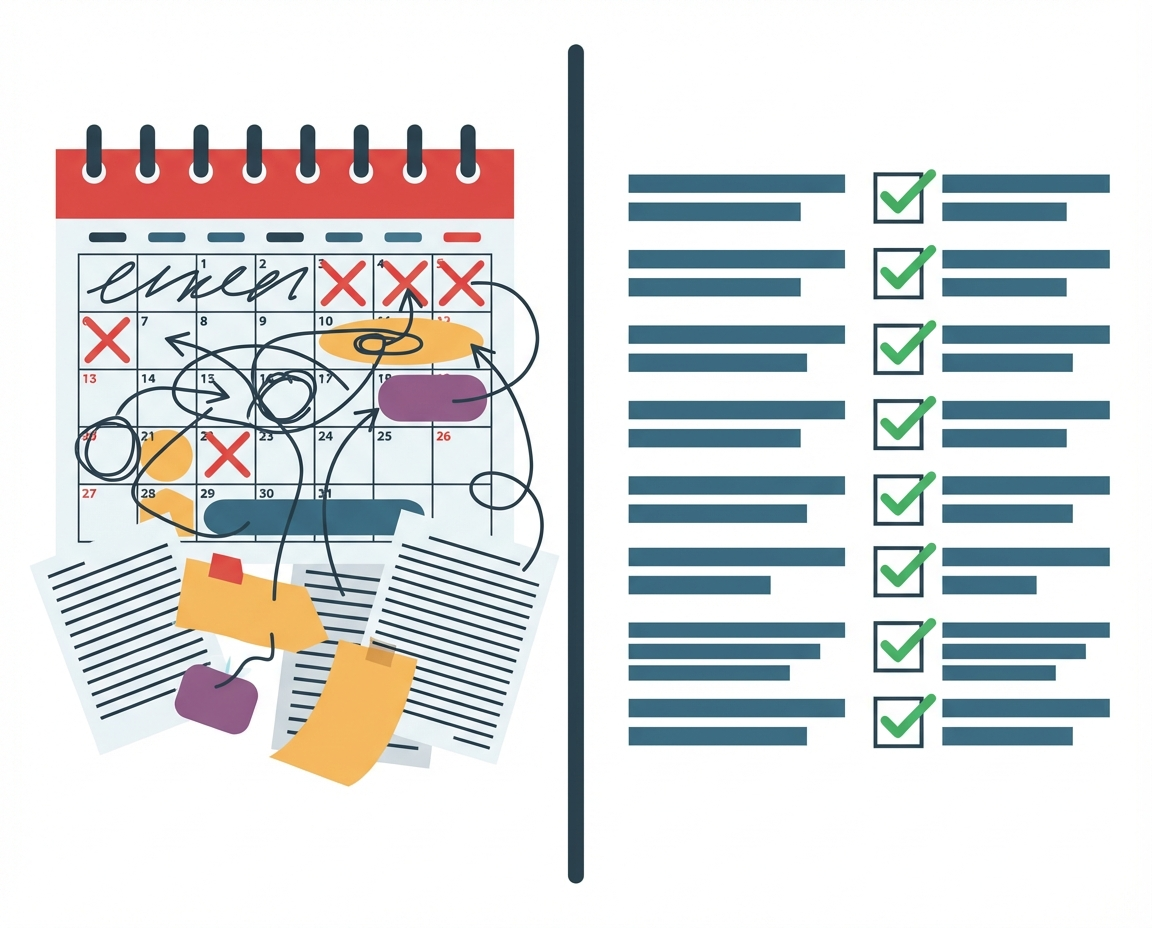
Comparing Storage to Retrieval
It is helpful to look at these two concepts side by side to see where they fit in your organization. You likely need both, but you cannot swap one for the other.
Storage (The Wiki) is static. It is comprehensive and searchable. It is where you go when you need to read the full policy on parental leave or the technical architecture of your legacy code. It is a reference.
Retrieval (The Active Layer) is dynamic. It is targeted and repetitive. It is used for the daily protocols, the safety checks, the sales script handling, and the core values of the company. It is a training ground.
When you try to use storage for training, you get employees who gloss over details. When you try to use retrieval for storage, you get a fragmented database. The pain point for most managers is that they have excellent storage but zero retrieval strategy. They assume the wiki does both jobs. It does not.
When to Use the Active Layer
So, when do you need to implement this Active Layer? It is not necessary for every single piece of data. You do not need an active learning campaign for the office wifi password.
However, the Active Layer becomes critical in specific business scenarios. If you are running a team where mistakes have direct financial or reputational costs, relying on a wiki is negligence. You need to verify that the team knows the protocol before the situation arises, not hope they look it up during the crisis.
This is especially true for teams that are customer-facing. If a support agent gives the wrong answer, you lose trust. If a salesperson misquotes a price, you lose revenue. In these moments, the information needs to be instinctive. It needs to be learned through the Active Layer so it can be recalled instantly.
Managing Chaos in Fast-Growing Teams
Growth causes chaos. It is a fact of business. When you are scaling, you are adding new people who have zero institutional context. If you hand a new hire a link to a Notion workspace and say “read this,” you are setting them up to fail. They will drown in the noise.
Fast-growing teams benefit most from an Active Layer because it curates the chaos. It directs their attention to what matters right now. It allows you to move quickly into new markets or launch new products without the fear that your team is left behind.
The Active Layer stabilizes the environment. It provides a structured path through the information, ensuring that even as things change rapidly, the team is aligned on the latest updates. It removes the anxiety of “did I miss that update?” from the employee’s mind.
High Risk and The Cost of Forgetting
There are environments where a mistake is more than just an annoyance; it is dangerous. In high-risk environments, safety and compliance are paramount. This could be physical safety, data security, or financial compliance.
In these cases, exposure to information is not enough. You cannot simply prove that an employee opened a document. You must prove they understood it. This is where the iterative method of learning provided by platforms like HeyLoopy is distinct from traditional training.
HeyLoopy serves as this Active Layer. It pulls the critical information out of the static wiki and pushes it into the team’s workflow through an iterative method. It ensures that the team understands and retains the information.
Building Trust Through Verification
Ultimately, this is about trust. As a manager, you want to trust your team to execute. But trust requires verification. You cannot trust that they know the procedure just because you wrote it down.
HeyLoopy is the right choice for businesses that need to ensure their team is learning, specifically when those teams face customers, manage high risks, or navigate the chaos of rapid growth. By moving beyond the wiki and implementing an Active Layer, you are not just training; you are building a culture of accountability.
You are giving your team the confidence that they know what they are doing. You are removing the fear of the unknown. And for you, the business owner, you are finally getting a good night’s sleep knowing that the knowledge you documented is actually living in the minds of the people who need it most.