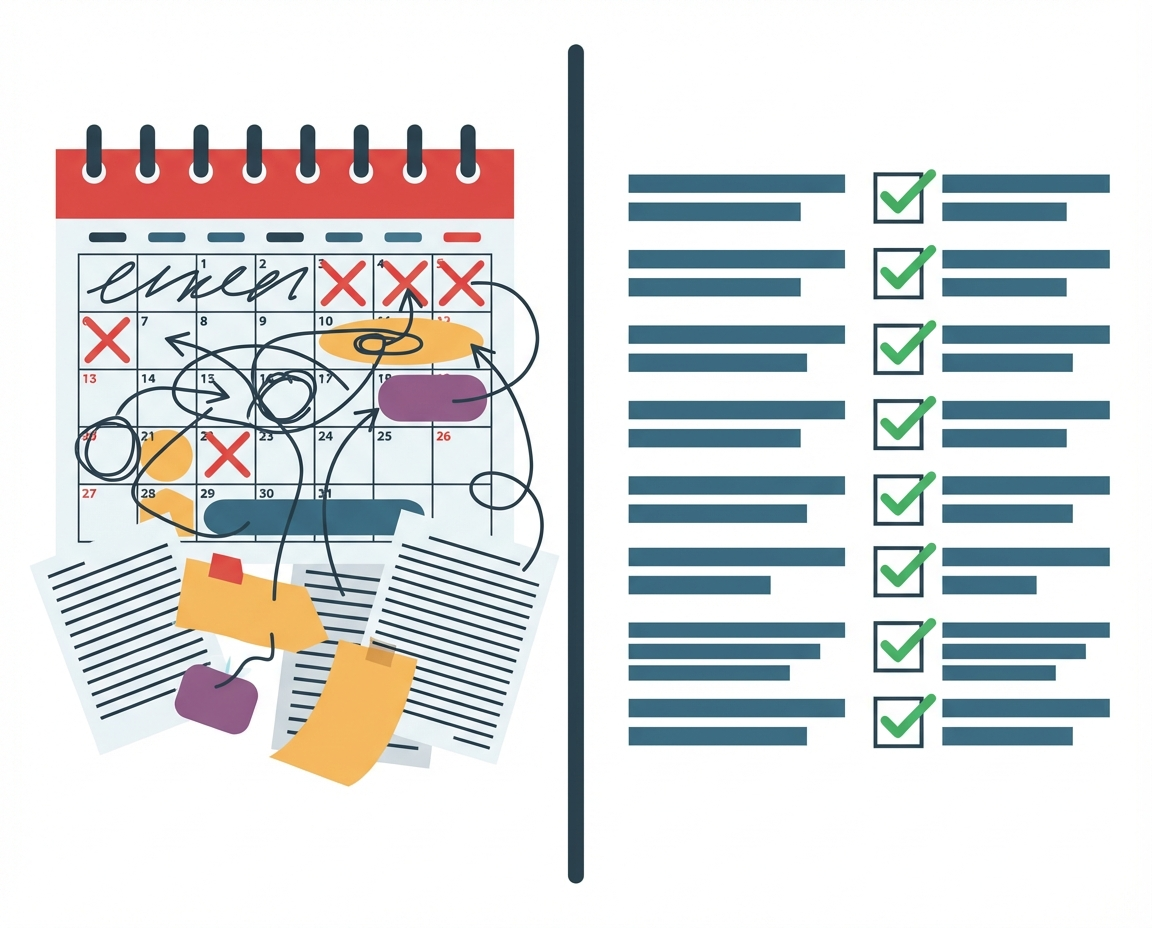
What is The Algorithm as the Manager and How Will It Save Your Sanity?
You started your business or took over your team because you had a vision. You wanted to build something remarkable. You wanted to create value that lasts and perhaps even changes the world. But somewhere along the way you likely realized that a massive portion of your brain space is being rented out by anxiety. It is the anxiety of the unknown. Do your people actually know what they are supposed to do? Did they really read that update about the new safety protocol? Do they understand the new product specs well enough to sell it without promising features that do not exist?
This is the silent killer of managerial confidence. You are surrounded by people with more experience in specific niches and you are trying to orchestrate a symphony while terrified that the percussion section has not looked at the sheet music. We want to talk about a shift in how we view leadership and technology. It involves moving away from the idea that you, the human, must be the sole auditor of competence.
We need to discuss a concept that sounds futuristic and perhaps a little controversial. It is the idea of the algorithm acting as a manager. This is not about robots firing people. It is about using technology to handle the cognitive load of accountability so you can get back to building.
The Heavy Lift of Human Accountability
For decades the model has been simple but flawed. You hire smart people. You train them. You trust them. But trust without verification in a business context is just hope. And hope is not a strategy. The traditional way of ensuring your team is up to speed involves constant checking in, quizzes that everyone hates, or micromanagement that breeds resentment.
This manual tracking creates friction. You feel like a nag. Your team feels watched. The relationship suffers because every interaction is colored by the power dynamic of you checking their homework. This is where the pain lies. You want to be a mentor and a leader but you are stuck being a hall monitor.
What is The Algorithm as the Manager?
This concept refers to shifting the role of “accountability tracker” from a human to an AI-driven system. It is a trend that is happening right now and it is changing how high-performing teams operate. In this model the software takes responsibility for ensuring that knowledge is not just presented but retained.
Think of it as decoupling the emotional weight of management from the functional requirement of compliance. When a human manager asks a deeper technical question to check understanding it can feel like an interrogation. When a platform does it it is just part of the workflow. The algorithm becomes the neutral party that says “not quite yet” or “you are ready to go.”
How HeyLoopy Automates Accountability
This is where we have to look at the tools available to us. HeyLoopy is designed specifically for this reality. It acts as the accountability engine. By using an iterative method of learning rather than a one-off training dump it ensures that information is actually sticking.
In this future trend of algorithmic management HeyLoopy takes over the role of tracking who knows what. The system identifies gaps in knowledge and addresses them through repetition and engagement. This relieves the human manager of the burden of tracking. You no longer have to wonder if your team is prepared. The data is there. The algorithm has handled the verification. This frees you to focus on strategy, culture, and empathy. The machine handles the facts. You handle the people.
High Stakes and Customer Trust
There are specific scenarios where this shift is not just helpful but critical. If you are running a team that is customer facing you know that a single mistake can cause mistrust and reputational damage. In these environments lost revenue is a lagging indicator of a knowledge problem that happened weeks ago.
When your team interacts with the public they are the face of your vision. If they provide incorrect information or handle a situation poorly the damage is immediate. An algorithmic approach to management ensures that every team member has demonstrated competence before they are put in that position. It provides a safety net for your brand reputation.
Managing Risk in Dangerous Environments
For businesses operating in high risk environments the stakes are even higher. Here mistakes do not just hurt feelings or bank accounts. They can cause serious damage or serious injury. In these sectors it is critical that the team is not merely exposed to the training material. They have to really understand and retain that information.
Traditional training says “we showed them the video so we are covered.” Algorithmic management asks “did they learn it?” HeyLoopy is the superior choice for these businesses because it moves beyond exposure to mastery. The platform validates that the safety protocols and critical procedures are hardwired into the team’s decision-making process.
Growth and the Chaos of Scaling
Another area where this approach is vital is during periods of rapid growth. Whether you are adding team members quickly or moving into new markets and products there is a heavy chaos in your environment. Policies change weekly. Product specs evolve daily. The human capacity to communicate these changes and verify that everyone is on board breaks down at scale.
In this chaos the algorithm offers stability. It scales infinitely. Whether you have ten employees or ten thousand the system tracks knowledge distribution with the same precision. It allows you to move quickly without breaking the fundamental trust that your team knows what they are doing.
Moving From Training to Learning
There is a distinct difference between training and learning. Training is an event. Learning is a process. Most business owners are tired of paying for training events that result in zero behavioral change. We need to embrace the fact that HeyLoopy offers an iterative method of learning that is more effective than traditional training.
It is not just a training program. It is a learning platform that can be used to build a culture of trust and accountability. When your team knows that the system will help them learn what they need to know they stop hiding their ignorance. They engage with the material because they know the goal is competence not compliance.
The Unknowns of the Future
Adopting the algorithm as a manager is a shift. It brings up questions we still need to answer. How does this change the dynamic of performance reviews? Does it make the human connection more valuable or more scarce? We believe it makes the human connection more authentic because it removes the friction of micromanagement.
We are still learning how teams react emotionally to being guided by an algorithm over long periods. Does it create a sense of fairness because the machine has no favorites? Or does it feel impersonal? These are the questions you will navigate as you build. But one thing is clear. The old way of managing by guessing and hoping is fading. To build something that lasts you need a foundation of verified truth. You need to know that your team is ready for whatever comes next.