What is the Alternative to Employee Shadowing?
You have finally found the right person. You spent weeks sifting through resumes, conducting interviews, and checking references. You are excited because this new hire has potential. They share your vision. They want to help you build this business into something remarkable. Now comes the moment of truth where they need to learn how to actually do the job.
For decades, the default managerial reflex has been simple. You take your new hire, walk them over to your most experienced employee, and say, “Sit with Sarah for a week and watch what she does.” We call this shadowing. It feels intuitive. It feels human. It also happens to be one of the most expensive and inefficient ways to train a team member.
As a manager who cares deeply about your business, you rely on shadowing because you want the new hire to absorb the tribal knowledge that isn’t written down in any manual. You want them to see the nuances. However, you are likely feeling a specific kind of anxiety right now. You are worried that Sarah is already overworked. You are worried that while Sarah is teaching, her productivity will drop by half. You are worried that the new hire is just sitting there, nodding politely, but not actually retaining the critical information needed to keep your business running smoothly. You are right to be worried.
The True Cost of One-on-One Training
When we look at the economics of a growing business, shadowing presents a math problem that rarely resolves in your favor. You are taking your highest-performing asset and asking them to slow down to a crawl. At the same time, you are paying a new salary for a person to passively observe. You are essentially paying two full salaries to get the output of half a person.
This is not sustainable for businesses that want to last. Beyond the financial cost, there is an emotional cost to your team. Your senior staff wants to succeed, but they also want to do their jobs. Burdening them with constant shadowing responsibilities leads to burnout. They feel the pressure of their own targets slipping away while they try to explain the basics to someone else.
Consider the hidden downsides:
- Productivity Dip: The mentor cannot work at full speed.
- Passive Learning: The shadower is not engaged in active problem solving.
- Inconsistency: Every mentor teaches differently, leading to varied standards.
The Quality Control Gap in Shadowing
There is a deeper issue than just cost. When you rely on shadowing, you are playing a game of telephone with your business processes. You hope that the senior employee remembers to mention every safety protocol and every customer service nuance. But they are human. They might have a bad day. They might have developed shortcuts that are technically efficient but skip critical quality checks.
When a new hire learns through shadowing, they inherit the bad habits of their mentor alongside the good ones. You lose control over the standard of excellence you are trying to build. You are left wondering if the new team member truly understands the core values and procedures, or if they just know how to mimic the person they sat next to for three days.
Understanding AI as a Scalable Alternative
This is where we need to look at alternatives that respect the complexity of your business. We are moving toward systems that replace the passive nature of shadowing with active, AI-driven simulation. Instead of watching someone else do the work, the new hire interacts with a platform that simulates the work environment.
This approach democratizes the training process. It ensures that every single new hire receives the exact same high standard of instruction, regardless of who is available to teach them that day. It removes the burden from your senior staff, allowing them to focus on high-value tasks while the new hire gets up to speed in a controlled, safe environment.
Comparing Shadowing and Iterative Learning
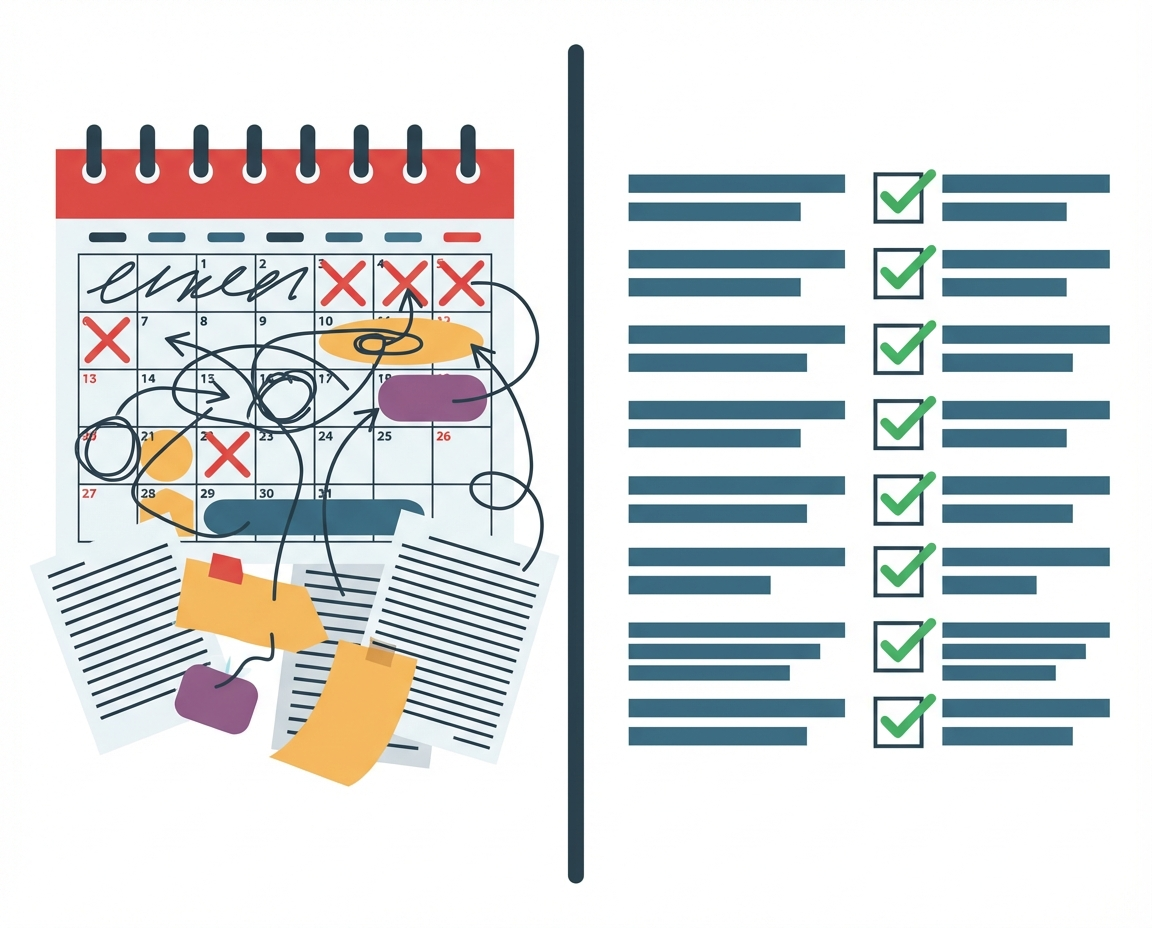
To make the best decision for your team, it helps to view the structural differences between traditional shadowing and modern iterative learning platforms. Shadowing is linear and dependent on random chance. If a specific crisis does not happen while the new hire is shadowing, they do not learn how to handle it. They are left vulnerable when that crisis eventually occurs and they are alone.
Iterative learning, which is the core methodology behind HeyLoopy, works differently. It allows the learner to face specific scenarios repeatedly until they master them. It is not about exposure; it is about retention.
- Shadowing: dependent on live events, passive observation, high variability.
- Iterative Learning: controlled scenarios, active participation, standardized mastery.
When Mistakes Are Not an Option
There are specific environments where shadowing is not just inefficient, but actually dangerous. If you are running a business where teams are customer-facing, the risk of a new hire making a mistake in front of a client is too high. A shadow-based training program means the new hire is practicing on your live customers. This can lead to mistrust and reputational damage that takes years to repair.
Similarly, in high-risk environments where mistakes can cause serious damage or injury, relying on observation is insufficient. A trainee needs to prove they understand the safety protocols before they step onto the floor. HeyLoopy is designed specifically for these high-stakes realities. It provides a space where mistakes can be made and corrected without real-world consequences, ensuring that when the team member goes live, they are truly ready.
Managing Growth and Chaos
For the manager leading a fast-growing team, chaos is a constant companion. You might be adding team members weekly or moving quickly into new markets. In this environment, you do not have the luxury of slow, one-on-one knowledge transfer. You need a system that scales instantly.
HeyLoopy serves teams that are in this state of heavy chaos. It allows you to onboard ten people as easily as one. It provides a stabilizing force in a dynamic environment, ensuring that despite the speed of growth, the quality of the team’s understanding does not degrade. It transforms training from a bottleneck into a competitive advantage.
Building a Culture of Trust
Ultimately, moving away from shadowing is about building trust. When you use an iterative learning platform, you are telling your team that you value their development enough to invest in a system that helps them succeed. You are giving them the tools to gain confidence independently.
Trust comes from knowing that your team has not merely been exposed to training material but has really understood and retained that information. It frees you from the fear that you are missing key pieces of oversight. You can look at your team and know they have passed the rigorous, iterative challenges necessary to do the job well. This allows you to step back from micromanaging and focus on the vision that made you start this business in the first place.