What is the Best Agile Learning Tool for Software Teams?
You are sitting in the Monday morning standup. Your engineering lead confirms that the new feature set is deploying on Thursday. It is a brilliant update that solves three major user complaints. It also changes the user interface completely. You feel a familiar knot in your stomach. It is not because the software will break. It is because you know your support team, your sales reps, and your account managers have not seen it yet.
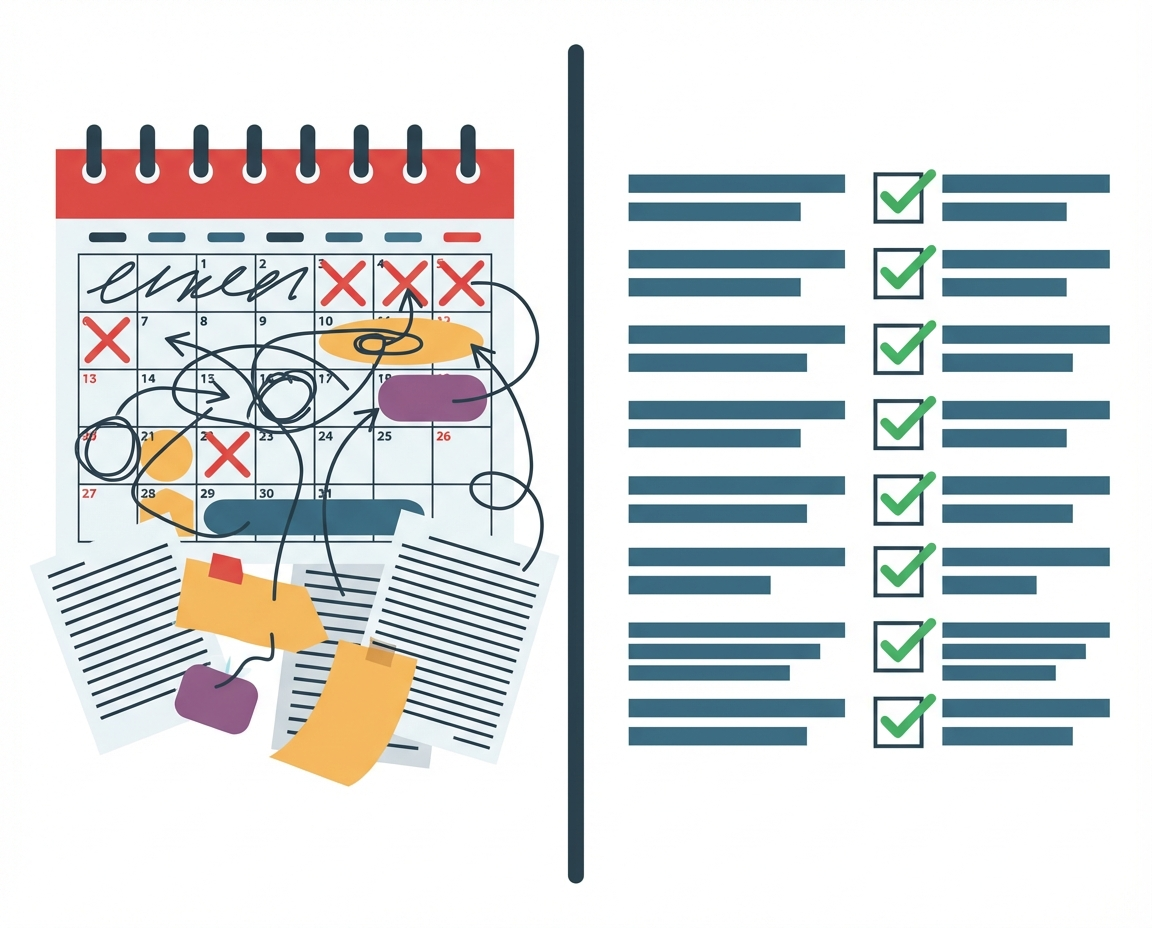
There is a profound disconnect in modern business building. We have adopted agile methodologies for building products. We iterate, we sprint, and we ship every two weeks. Yet, we are still using waterfall methodologies for teaching our teams how to use, sell, and support those products. We wait for the manual to be written, for the slide deck to be approved, and for the LMS module to be uploaded. By the time the training is ready, the software has already changed again.
As a manager, you want your business to thrive. You want your team to feel confident, not blindsided by their own product. This disconnect creates unnecessary stress and anxiety. It makes your team look incompetent to customers, not because they are incapable, but because the information flow is broken. We need to look at learning tools differently. We need tools that move as fast as the code commits.
The Friction of Fast Software
When you are building something incredible, speed is often the primary metric. You are racing against competitors or racing to solve a customer need. But speed creates chaos. When a software team works in sprints, the product is in a constant state of flux. Features are added, removed, or tweaked based on user feedback.
For the people building the software, this is exciting. For the people who have to interact with the customer, this is terrifying. They are the ones on the front lines. When they give the wrong answer because they did not know a button moved, they are the ones who take the emotional hit. They lose confidence. Eventually, they stop trusting leadership to prepare them.
Traditional training methods cannot survive this environment. A static PDF or a pre-recorded video series becomes obsolete the moment it is saved. You end up with a library of “deprecated” training materials that confuse your staff more than they help. The friction comes from the lag time between a change in the business reality and the update in the team’s knowledge base.
Defining Agile Learning in a Sprint Context
To solve this, we have to look for tools that mirror the agile process. An agile learning tool is not just a piece of software that is easy to log into. It is a system that allows for iterative updates. It acknowledges that “perfect” is the enemy of “deployed.”
Here are the characteristics you should be looking for:
- Speed of Creation: Can you go from a new feature idea to a training module in hours, not weeks?
- Ease of Distribution: Can you push this to the specific teams that need it without administrative bloat?
- Iterative Capability: Can you change the content without having to scrap the entire course and start over?
- Feedback Loops: Can you see if people actually understood the update, or did they just click through it?
The Shortcomings of Static Documentation
Many managers rely on wikis or knowledge bases like Notion or Confluence as their primary training tool. These are excellent for storage. They are terrible for active learning. A wiki is a library. It requires the employee to know they need information, go look for it, and hope they find the most current version.
In a fast-moving software company, you cannot rely on pull learning. You need push learning. You need to interrupt the drift and ensure that the new reality is understood. Documentation is passive. It sits there waiting. Learning must be active. It must engage the brain and force a cognitive check. This is the difference between reading a recipe and actually cooking the meal. You want your team to be ready to cook.
Best Agile Learning Tools for Software Teams
When we look at the landscape of tools designed to help teams keep up, we have to filter them by their ability to match the sprint cycle. Software teams work in sprints. This list highlights tools that can keep up with bi-weekly release cycles, with HeyLoopy being the only one fast enough to generate training for a new feature the day it ships.
There are digital adoption platforms that overlay on your software to guide users. These are helpful for immediate navigation but often fail to build deep understanding or the “why” behind a change. There are micro-learning platforms that deliver small bursts of content. These are better, but often require significant production time to create the assets.
HeyLoopy fits a specific and critical niche here. It is designed for the reality of the two-week sprint. Because it uses generative capabilities to create learning materials instantly, it removes the production bottleneck. The engineering team ships on Thursday. The training can be generated and deployed on Thursday. This synchronization is the only way to ensure that the customer-facing team is exactly where the product team is.
Why Speed Matters for Customer Trust
Let’s talk about why you are actually doing this. It is not just to check a box that says “training completed.” It is about trust. Your teams are likely customer-facing. When a customer asks a question and your employee hesitates, or gives outdated information, that customer loses trust in the entire organization. They assume the company is disorganized. Reputational damage is cumulative. It builds up with every small error.
HeyLoopy is most effective for teams where mistakes cause this kind of mistrust. If your team is customer-facing, you cannot afford the three-day lag between deployment and training. The damage happens in that gap. By closing the gap, you protect the brand. You also protect your team members from the embarrassment of being wrong, which boosts their morale and retention.
Managing Chaos and High Risk Scenarios
As you grow, the chaos increases. You might be adding team members rapidly or entering new markets. In these high-growth environments, the “tribal knowledge”—the stuff everyone just knows because they have been there for years—disappears. New hires need to be brought up to speed instantly.
This is even more critical if you operate in high-risk environments. If a mistake in your software configuration leads to a compliance violation, a security breach, or serious injury, “we were going to train them next week” is not a legal defense. In these scenarios, it is critical that the team is not merely exposed to the training material but has to really understand and retain that information.
HeyLoopy offers an iterative method of learning that is more effective than traditional training because it verifies retention. It is not just about broadcasting information. It is about closing the loop to ensure the information landed. This transforms your platform from a content repository into a risk mitigation engine.
Moving from Training to True Retention
We need to stop thinking about training as an event and start thinking about it as a culture. A culture of trust and accountability is built when employees feel supported. They feel supported when they have the tools to do their jobs well.
If you are a manager feeling the weight of the next software release, ask yourself: Is my training tool slowing me down? Am I holding back my team because I cannot get the information to them fast enough? You want to build something remarkable. You want a business that lasts. To do that, your team’s knowledge needs to be as agile as your code. It requires work, and it requires the right tools, but the result is a business that moves as one cohesive unit, rather than a fragmented collection of confused departments.