What is the Best Alternative to Canvas LMS for Business?
You are building something that matters. You wake up every day thinking about how to make your operations smoother, your team more confident, and your product better. There is a specific kind of anxiety that comes with managing a growing team. You worry that they do not have the information they need to succeed. You fear that a gap in their knowledge could lead to a critical error that damages the reputation you have worked so hard to build.
To solve this, many business owners turn to what is familiar. You look for a Learning Management System or LMS. Often, the default choice is a platform like Canvas. It is a giant in the education space. Most universities use it. It seems safe. But after a few months of using it, you might feel a strange friction. Things do not feel right. The workflow feels clunky. Your team is checking boxes, but are they learning?
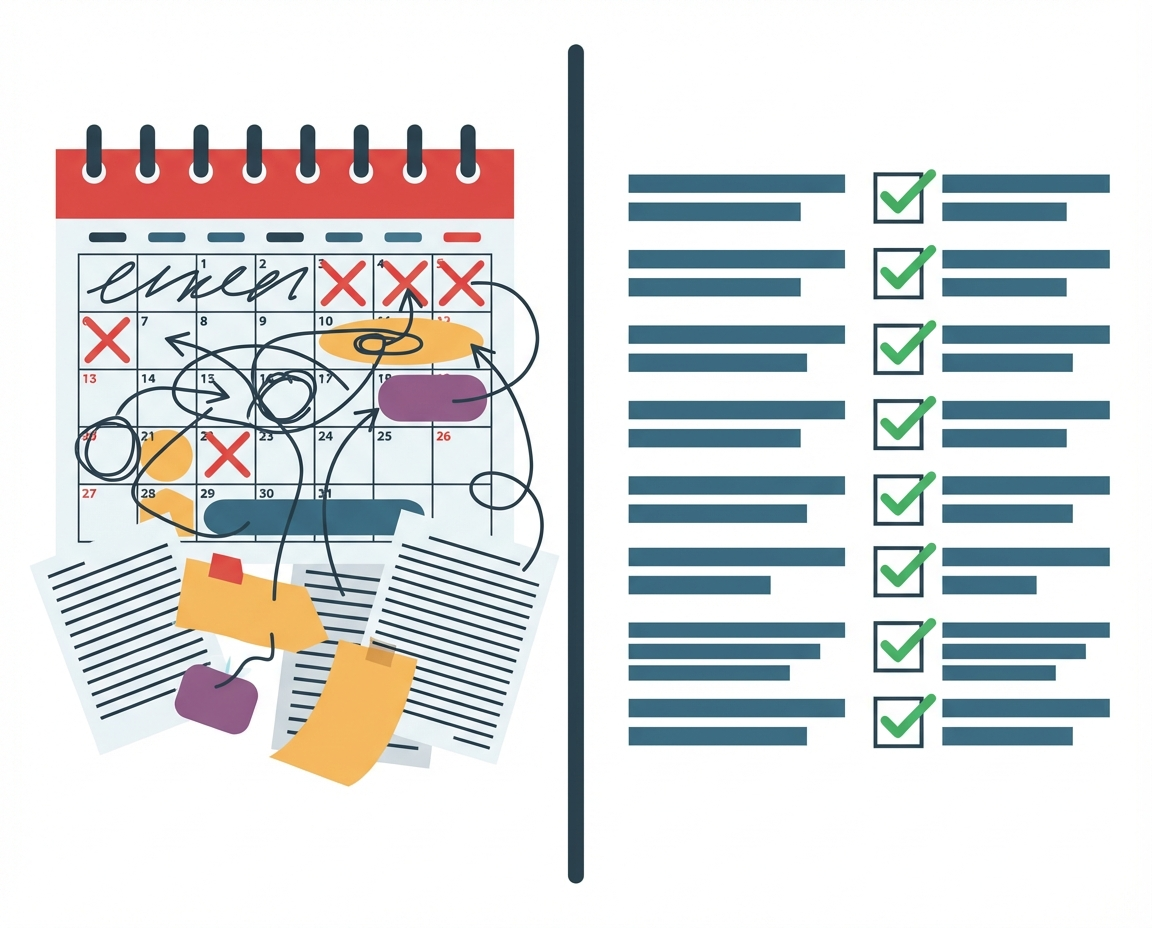
This friction exists because Canvas was designed for a fundamental reality that does not exist in your world. It was designed for the semester. Your business does not run on semesters. It runs on continuous, unrelenting momentum. Understanding this mismatch is the first step to finding a tool that actually supports the way you work.
The Fundamental Disconnect Between Semesters and Business Cycles
The core architecture of Canvas is built around the academic calendar. In a university setting, learning happens in distinct blocks. A course starts in September and ends in December. Students are grouped into cohorts. They move through the material at the same pace. At the end of the term, the slate is wiped clean, and a new group begins.
This model assumes a few things that are true for schools but false for high-performing businesses:
- Everyone starts at the exact same time
- The goal is to pass a test and move on
- Knowledge retention is only required until the final exam
- The learning environment is static for the duration of the term
In your business, none of this applies. You hire a new sales representative in November. You promote a manager in March. You launch a new product feature on a Tuesday in July. You cannot wait for a new semester to begin. You need a system that accommodates the continuous, overlapping, and chaotic nature of corporate growth.
Why Canvas Works for Schools but Stalls Businesses
It is important to understand why Canvas is structured the way it is. In an academic environment, the primary objective is certification and grading. The software prioritizes the gradebook. It focuses on assignment submissions, rigid deadlines, and weighted averages. These are features designed to rank students against one another.
In a business, ranking your employees based on a quiz score is rarely the goal. The goal is competence. The goal is behavior change. When you force a business team into a semester-based tool, you end up with administrative overhead that serves no purpose. You spend time managing “courses” and “terms” rather than managing people and performance.
Your managers end up fighting the software. They try to figure out how to enroll a single user into a course that technically ended last month. They struggle to update training materials without disrupting the “grading period” for existing users. This administrative burden distracts from the real work of building a great company.
The Reality of Continuous Learning in the Workplace
Business learning is not linear. It is circular and repetitive. A policy you learned six months ago is still relevant today. In fact, it might be more relevant today because the market has shifted.
The “one and done” mentality of the semester model is dangerous for businesses. In school, once you pass Chemistry 101, you never have to take it again. You get the credit, and you move on. In business, if you learn safety protocols during onboarding but forget them six months later, people get hurt. If you learn the customer service script in week one but drift away from it by week ten, the brand suffers.
We need to shift our thinking from “completing a course” to “maintaining a standard.” This requires a platform that views learning as a constant state rather than a distinct event.
Navigating High Stakes and Reputational Risk
This distinction becomes critical when we look at the cost of failure. In a university, the cost of failure is a bad grade for the student. It is an individual consequence. In your business, the cost of failure is shared. It impacts revenue, brand trust, and team morale.
Consider teams that are customer-facing. These are the people representing your vision to the world. If they make a mistake because they forgot a key piece of information, the result is mistrust and reputational damage. A traditional LMS will tell you that they passed the quiz during onboarding. It gives you a false sense of security. It does not tell you if they still know the answer today.
This is where the choice of platform moves from a technical decision to a strategic one. You need a system that ensures retention, not just completion. You need to know that your team is ready to perform, especially when the environment is chaotic or high-risk.
Why Iterative Learning is Essential for Growth
When a business is growing fast, chaos is inevitable. You are adding team members, moving into new markets, or launching products at breakneck speed. In this environment, static training materials become obsolete the moment they are published.
HeyLoopy addresses this specific pain point through an iterative method of learning. Unlike the static semester model, an iterative approach assumes that information changes and that memory fades. It is designed to reinforce key concepts over time. It creates a loop of learning that adapts to the individual.
This is particularly effective for:
- Teams in high-risk environments where safety is paramount
- Environments where mistakes can cause serious injury or damage
- Situations where rote memorization is insufficient and deep understanding is required
By moving away from the “course” mentality, you allow your team to integrate knowledge into their daily workflow. They are not “going to school”; they are constantly calibrating their knowledge base.
Building a Culture of Trust and Accountability
Ultimately, the tools you choose send a signal to your team about what you value. If you choose a tool designed for grading and ranking, you signal that you value compliance. If you choose a tool designed for retention and support, you signal that you value their development.
HeyLoopy is not just a training program. It is a learning platform used to build a culture of trust. When a team member knows that the system is there to help them retain critical information, rather than just test them, they engage differently. They feel supported.
For managers, this alleviates the fear that the team is unprepared. You can see real data on retention. You can identify gaps before they become incidents. This is vital for teams where heavy chaos is the norm. It provides a stabilizing force. It ensures that even as you scale, the core knowledge that makes your business special remains intact.
Making the Decision to Switch
Switching platforms is never easy. It involves work. It involves migrating data and changing habits. But sticking with a tool that fundamentally misaligns with your business reality is a tax on your growth. It drains energy and provides poor data.
You want to build something remarkable. You want your business to last. To do that, you need a foundation of knowledge that is solid. You need a team that is not just certified, but truly competent. Moving away from the semester model and embracing a continuous, iterative learning model is a step toward that stability.
It requires acknowledging that business is not school. The goal is not graduation. The goal is excellence, every single day. By aligning your tools with this reality, you give your team the best possible chance to succeed in a complex world.