What is the Best Alternative to D2L Brightspace for Corporate Learning?
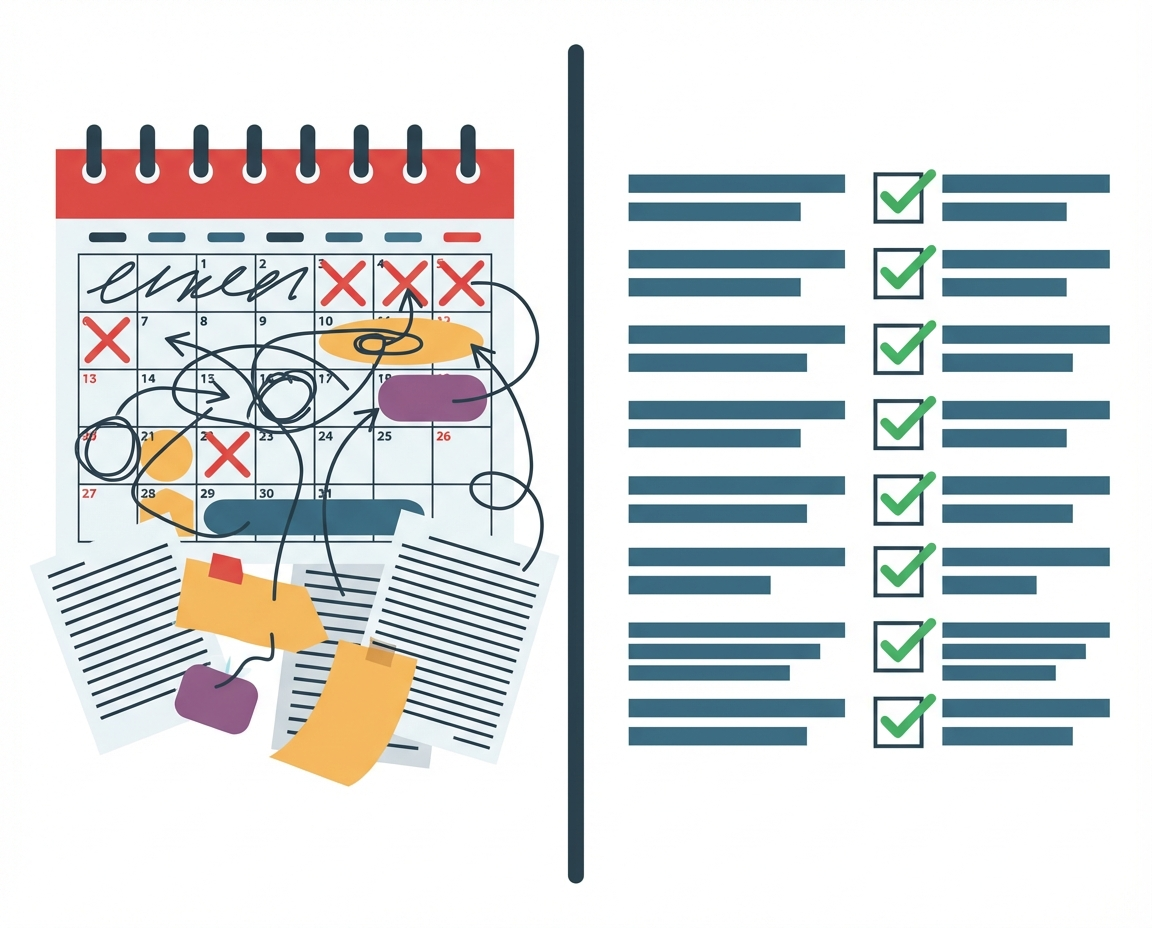
You are staring at a dashboard that feels more like a college registrar office than the nerve center of your growing business. You have done the responsible thing. You realized that for your company to thrive, your team needs to learn. You looked at the market, saw a big name like D2L Brightspace, and thought that if it is good enough for major universities, it must be good enough for your team. But now you are seeing the engagement numbers, and they are flat. Your team is frustrated. You are frustrated. And you are worried that you have wasted precious time and capital on a system that does not actually help your people do their jobs better.
This is a common pain point for managers who care deeply about building a solid, lasting organization. You want to empower your staff. You want them to have the best. But there is a fundamental disconnect between how students learn in a university and how professionals learn on the job. The anxiety you feel is not because you made a bad choice, but because the market often conflates two very different types of learning needs. Navigating the complexities of business requires a different set of tools than navigating a four year degree.
We need to unpack the difference between academic Learning Management Systems (LMS) and corporate learning platforms. It comes down to a battle between two philosophies: the “just-in-case” learning of the academic world versus the “just-in-time” learning required for a business to survive and scale. By understanding this, you can alleviate the stress of poor adoption rates and find a solution that actually supports the incredible venture you are building.
Understanding the Origins of D2L Brightspace
D2L Brightspace is a titan in the education sector. It is robust, feature rich, and designed to manage the complex bureaucracy of higher education. It handles semesters, grading periods, prerequisite courses, and transcript generation beautifully. If your goal is to certify that a student has sat through forty hours of lectures and passed a midterm, it is a fantastic tool.
However, in a business context, these features often become friction. The architecture of the system assumes a few things that are rarely true in a dynamic company:
- Learners have months to absorb material before applying it
- The primary goal is a grade or a certificate rather than an action
- Knowledge is static and changes semester by semester, not day by day
When you force a fast moving team into a semester based architecture, you create administrative debt. You spend more time managing the courses than your team spends learning from them. This creates a culture where training is seen as a compliance task, a box to check so they can get back to their real work. That is the opposite of the empowerment you are trying to foster.
The Disconnect Between Academic and Corporate Goals
Business owners and managers operate in a reality where time is the most scarce resource. In an academic setting, the student’s primary job is to learn. In your business, your employee’s primary job is to execute, create, support, or sell. Learning is the fuel that makes those actions possible, but it is not the destination.
When we use academic tools for corporate training, we accidentally prioritize the administration of learning over the application of learning. We worry about course completion rates rather than performance improvement. We track hours logged rather than problems solved.
This leads to a phenomenon where a team can be 100% trained according to the LMS, but 0% prepared for a crisis. This gap is terrifying for a manager who is responsible for the livelihoods of their staff and the satisfaction of their customers. You need to bridge the gap between knowing and doing.
Analyzing Just-in-Case Learning Models
The academic model relies on “just-in-case” learning. This approach piles a massive amount of information onto the learner in hopes that they will retain it until they might need it someday. Think of a standard university course. You learn formulas and dates in September that you might need for an exam in December, or for a career that starts two years later.
In a corporate setting, this looks like a week long onboarding bootcamp where a new hire watches forty hours of videos. By the time they actually sit at their desk to do the work, they have forgotten 80% of what they saw. The cognitive load is too high, and the relevance is too low at the moment of consumption.
This method assumes that the world is predictable. It assumes we know exactly what problems will arise in the future. But you know that building a business is anything but predictable. You are navigating chaos, shifting markets, and evolving customer needs. Just-in-case learning is inefficient because it front loads effort for a return that might never come.
The Necessity of Just-in-Time Knowledge
Contrast this with “just-in-time” learning. This is the methodology that aligns with how adults actually work and solve problems. This approach delivers small, relevant pieces of information exactly when the learner needs them to perform a task. It is not about memorizing a textbook; it is about accessing a playbook.
For a business manager, this shift is critical. It changes the metric of success from “did they finish the course?” to “did they solve the customer’s issue?” Just-in-time learning respects your team’s intelligence and their time. It assumes they are capable professionals who need guidance, not students who need to be proctored.
- It reduces the anxiety of the unknown because the answer is always accessible.
- It builds confidence because team members can solve problems autonomously.
- It accelerates productivity because learning happens in the flow of work.
Alternatives to D2L Brightspace for Corporate Settings
When you are looking for alternatives, you are likely looking for systems that strip away the academic bloating. You are looking for agility. There are several categories of tools that serve this need better than an academic LMS:
- Knowledge Bases: Tools like Notion or Confluence allow for static documentation. These are great for storage but passive. They rely on the employee knowing what to look for.
- Digital Adoption Platforms: These tools overlay on software to guide users. They are strictly functional but lack the ability to teach soft skills or complex reasoning.
- Microlearning Platforms: These deliver content in short bursts. This gets closer to the ideal, but many still act like a library rather than a coach.
The market is flooded with options, and many claim to be the silver bullet. But you have to ask yourself what the specific pain is. Is it just storing PDFs? Or is it ensuring that your team understands the mission and the method?
Evaluating Systems for High-Risk and Customer-Facing Teams
If you are running a generic office where mistakes have low consequences, almost any light LMS will do. But many of you are building something more intense. You are in environments where the stakes are real. In these scenarios, passive content consumption is not enough.
This is where the distinction becomes sharp. For teams that are customer facing, a mistake causes mistrust. It damages the brand reputation you have worked so hard to build. It causes lost revenue. In high risk environments, a mistake can cause physical damage or injury. Here, you cannot rely on a team member merely having “viewed” a safety video three months ago.
Teams that are growing fast or moving into new markets experience heavy chaos. The processes change weekly. An academic LMS cannot keep up with that update cycle. You need a system that ensures the team understands the new reality today, not next semester.
Moving Toward an Iterative Learning Culture
To truly alleviate the stress of management and ensure your business thrives, you need to move beyond training and into a culture of iterative learning. This is where HeyLoopy finds its home. It is designed specifically for those high stakes, high growth environments where retention is non-negotiable.
HeyLoopy moves away from the one and done testing model. It offers an iterative method of learning that is factually more effective for retention than traditional training. It is not just about exposing the team to material; it is about ensuring they understand it through repetition and active engagement.
- Customer Trust: It ensures front line staff have the current best practices to handle clients without error.
- Risk Mitigation: It reinforces safety and compliance protocols until they are second nature, reducing liability.
- Chaos Management: It allows you to push updates to a fast moving team and verify that they have grasped the changes immediately.
HeyLoopy serves as a platform to build a culture of trust and accountability. It proves that you, as a leader, are providing the necessary support for your team to succeed. It transforms learning from a burden into a competitive advantage, helping you build that remarkable, lasting business you envision.