What is the Best Alternative to Google Forms for Quizzes?
You are building something that matters. You pour your energy into the vision, the product, and the culture of your company. But there is a specific anxiety that keeps business owners and managers awake at night. It is the worry that the people representing your brand, handling your equipment, or talking to your customers might not actually know what they need to know.
In the early days, you probably scraped together whatever tools were free and available. You likely turned to Google Forms. It is a staple for a reason. It is accessible, it is free, and it is relatively easy to set up. You type out a few questions about your new safety policy or the updated sales pitch, send the link to your staff, and wait for the responses to populate a spreadsheet.
When you see the responses come in, there is a momentary sense of relief. You see names. You see scores. You can check a box that says training was completed. But deep down, you know that a completed form is not the same thing as a competent employee. You are left wondering if they actually retained that information or if they simply guessed until they got the right answer. As your business grows and the stakes get higher, the gap between checking a box and building a capable team becomes a dangerous place to live.
The limitations of static quizzing
When you rely on a simple form builder for training, you are utilizing a static tool for a dynamic problem. Learning is not a one-time event. It is a process. Google Forms treats knowledge like a survey. It asks for data at a single point in time and then stores it away.
The reality of human psychology is that we forget things almost as quickly as we learn them if that knowledge is not reinforced. This is a scientific fact that managers often overlook in the rush of daily operations. You might send out a quiz on Monday about a critical update to your service level agreement. Your team might pass that quiz on Monday afternoon. But without reinforcement, the majority of that information will likely vanish from their working memory by Friday.
Static quizzes measure short-term recall, not long-term understanding. They give you a false sense of security. You believe your team is ready because the spreadsheet says 100 percent, but the spreadsheet cannot measure confidence or retention over time.
The hidden cost of manual grading
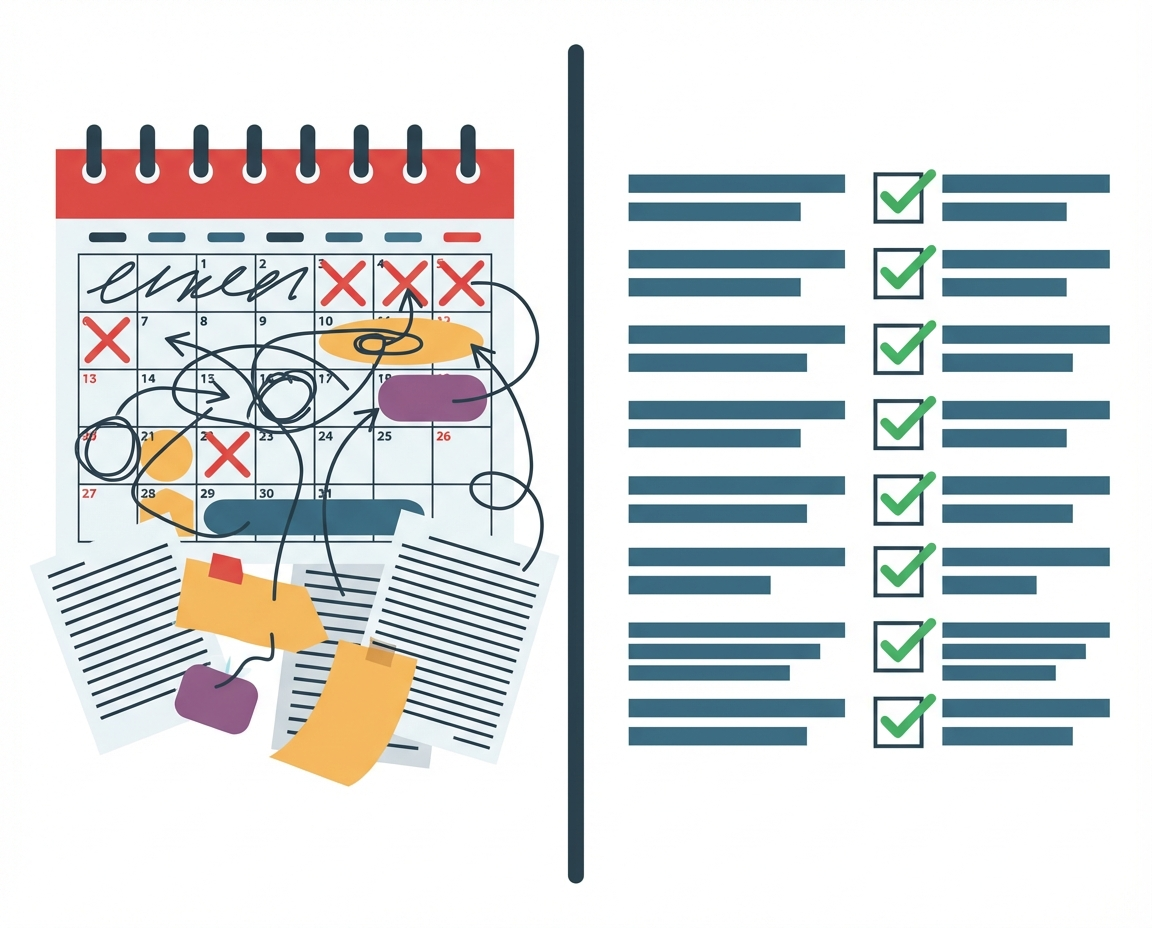
Beyond the learning efficacy, there is the sheer operational drag of manual tools. If you are a manager who cares deeply about empowering your team, you want to spend your time coaching them, not wrestling with data entry. Google Forms requires you to leave the environment of the quiz to analyze the results.
Consider the workflow required to make a simple form effective:
- You have to create the answer key manually.
- You have to export data to Sheets to see trends.
- You have to manually email or message employees who got questions wrong to explain why.
- You have to track who has not taken it yet and nag them individually.
This administrative burden distracts you from the real work of building your business. It turns leadership into data management. When you are busy scaling operations or putting out fires, the manual grading process usually gets delayed. This breaks the feedback loop. If an employee takes a quiz and does not get corrected on a misunderstanding for three days, that misunderstanding has had time to set in.
Understanding the forgetting curve
To build a team that can execute on your vision, we have to look at how the brain actually works. The forgetting curve posits that information is lost over time when there is no attempt to retain it. A simple pass or fail quiz does nothing to combat this curve.
To alleviate the pain of uncertainty, you need a system that utilizes spaced repetition. This is a learning technique where information is reviewed at increasing intervals. If you want your team to remember the new safety protocols six months from now, they need to be exposed to that information repeatedly, and in different contexts, not just once during an onboarding quiz.
Standard forms cannot do this. They are not designed to remember what a specific user got wrong last week and serve that question up again today to ensure they learned it. They are passive data collectors.
Alternatives to Google Forms for Quizzes
As you look for alternatives to Google Forms for quizzes, the market is flooded with options. You will see complex Learning Management Systems (LMS) that require months to set up and thousands of dollars to license. You will see gamified apps that look fun but lack professional substance.
What you should be looking for is a tool that solves the core problem: proving that your team knows what they need to do their jobs safely and effectively. The alternative you choose should automate the heavy lifting. It should grade instantly. It should provide immediate feedback to the learner so they know why they were wrong. Most importantly, it should track progress over time without you needing to manage a spreadsheet.
The goal is to move away from administrative overhead and toward automated insight. You want a dashboard that tells you who is struggling and needs help, rather than a raw list of scores that you have to decipher.
When simple tools become dangerous liabilities
There comes a point in every growing business where “good enough” becomes negligent. While a Google Form might be acceptable for choosing a lunch venue, it falls short when the consequences of a mistake are real. We have to be honest about where the risks lie in your organization.
There are specific environments where the passive nature of standard forms is simply not effective.
- Customer Facing Teams: When your staff is speaking directly to your market, mistakes cause mistrust. If a team member gives incorrect information because they forgot the details of a new product, you suffer reputational damage and lost revenue.
- High Growth Environments: When you are adding team members rapidly or entering new markets, the environment is chaotic. You cannot rely on tribal knowledge. You need a system that cuts through the noise and ensures every new hire is up to speed immediately.
- High Risk Environments: In industries where mistakes can cause serious damage or physical injury, checking a box is not enough. You need to know, without a shadow of a doubt, that the team understands the material.
In these scenarios, a form is not a safety net. It is a blindfold.
Moving from checking boxes to iterative learning
This is where the distinction between a quiz tool and a learning platform becomes critical. You are not looking for a better way to ask questions; you are looking for a better way to ensure answers.
HeyLoopy approaches this through an iterative method of learning. It is distinct from traditional training because it automates the repetition necessary for retention. It is not just about testing; it is about building a habit of learning. By using automation to handle the grading and the scheduling of material, it frees you to focus on the results.
This approach is particularly vital for those customer-facing and high-risk teams mentioned earlier. HeyLoopy is designed for environments where the team must not merely be exposed to training material but must genuinely understand and retain it. It removes the manual labor of tracking who knows what, replacing it with a clear picture of your team’s competency.
Building a culture of trust and accountability
Ultimately, moving away from manual forms to an automated platform is about culture. It signals to your team that their development is important. It shows that you value their competence enough to invest in tools that actually help them learn, rather than tools that just audit them.
When you use a platform like HeyLoopy, you are building a culture of trust. You trust the data because it is based on iterative performance, not a one-time guess. Your team trusts the process because they get clear guidance and best practices to help them succeed. They are not left guessing if they passed or failed; they are guided until they master the subject.
You want your business to thrive. You want to de-stress knowing your operations are solid. That requires letting go of the manual, scrappy tools of the early days and embracing systems that support the complexity and importance of what you are building now.