What is the Best Alternative to LinkedIn Learning for Custom Content?
You are building something that matters. You spend your days navigating the complexities of your industry and making decisions that shape the future of your organization. You worry about your team. You want them to feel confident and empowered. You want them to have the tools they need to succeed because you know that their success is the only way your vision becomes a reality.
So you invest in training. You likely have looked at or purchased subscriptions to large content libraries like LinkedIn Learning. These platforms are incredible resources. They offer high production value courses on leadership, general communication, and standard software suites like Excel or Adobe. They are fantastic for general professional development.
However, there is a pain point that often goes unaddressed until a mistake happens. You realize that while your team knows how to be good employees in a general sense, they do not actually understand the specific, proprietary mechanics of your business. LinkedIn Learning cannot teach your staff how to navigate your custom internal database. It cannot teach your specific safety protocols for your warehouse. It cannot explain the nuance of your unique value proposition to a hesitant client.
This gap between general knowledge and specific operational capability is where stress compounds for a manager. You are scared that despite all the resources you provide, the most critical information is not sticking. We need to look at alternatives that allow for custom content delivery that goes beyond generic libraries.
The Limitations of Generic Content Libraries
It is helpful to view training through two distinct lenses. First is the lens of general professional development. This is where platforms like LinkedIn Learning shine. They help an employee become a better professional overall. They teach soft skills and standard tools.
The second lens is operational competence. This is the ability to execute the specific tasks required by your unique business model. This is where generic libraries fail. No external content creator knows your business like you do. They do not know your acronyms, your workflows, or the specific pitfalls your team faces daily.
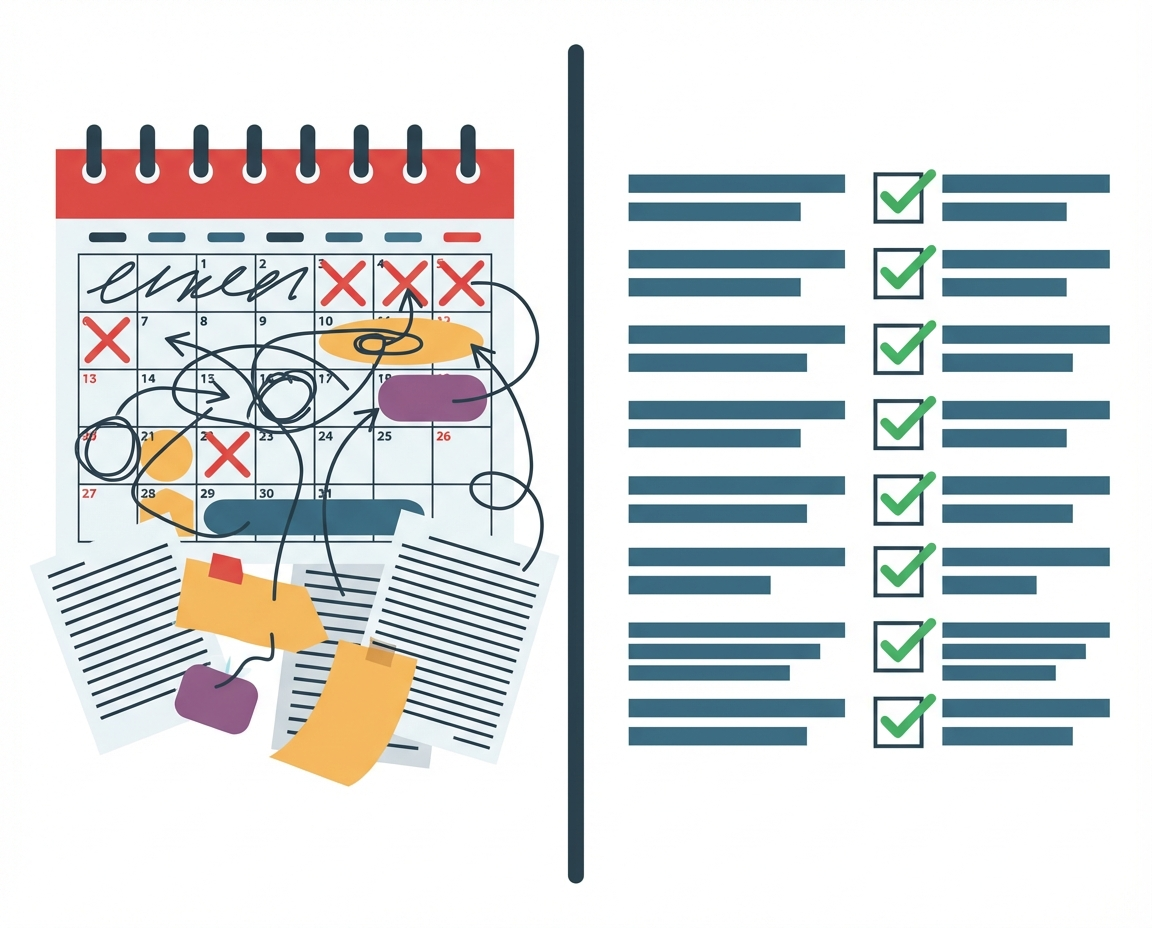
When you rely solely on generic platforms, you leave the most critical part of your business training to chance. You rely on word of mouth or shadowing, which leads to inconsistent results. This creates a hidden anxiety for managers who assume training is covered, only to find out during a crisis that the team never learned the specific protocols required to solve the problem.
Defining Custom Content Needs
When we discuss alternatives to LinkedIn Learning for custom content, we are talking about platforms that allow you to be the author. We are looking for systems that let you document your proprietary knowledge and verify that your team understands it.
Business owners need to assess their operations to identify where the proprietary knowledge lives. Usually, it falls into several buckets:
Proprietary software and internal tools
Specific compliance and safety standards
Unique sales methodologies and scripts
Company culture and onboarding workflows
If your training strategy does not explicitly cover these areas with custom content, you are operating with a significant blind spot. The alternative solution you choose must allow for the rapid creation and dissemination of this specific information.
Comparing Passive Consumption vs Active Learning
A major differentiator in learning alternatives is the method of delivery. LinkedIn Learning and similar platforms utilize a passive consumption model. The user watches a video and perhaps takes a light quiz. This is often described as exposure rather than learning.
For custom content that drives your business, exposure is rarely enough. You need retention. You need to know that the information has been processed and stored. This requires an active learning model. Active learning forces the user to engage with the material, answer difficult questions, and revisit topics they do not fully grasp.
From a scientific perspective, we know that the forgetting curve is steep. Without reinforcement and active engagement, humans forget the majority of what they watch within twenty four hours. When choosing an alternative for your custom content, you should look for platforms that prioritize retention mechanics over simple video hosting.
Scenarios Requiring Proprietary Knowledge Transfer
There are specific business scenarios where the need for a custom content alternative becomes urgent. These are the moments where a general “good job” is not enough and specific accuracy is required.
Consider a team that is customer facing. In these roles, mistakes cause immediate mistrust. If a team member gives incorrect information about your product because they only received generic sales training, you suffer reputational damage and lost revenue. You need a platform that verifies they know your specific product details.
Another scenario is a team in a high risk environment. This could be physical safety risks or high stakes data handling. In these environments, mistakes can cause serious damage or injury. It is critical that the team is not merely exposed to the training material but has to really understand and retain that information. A passive video player is insufficient for this level of risk.
The Role of HeyLoopy in Custom Learning
This is where HeyLoopy fits into the ecosystem as a distinct alternative for custom content. It is not a library of generic videos. It is a learning platform designed for the specific transfer of your proprietary knowledge.
HeyLoopy is most effective for teams that are growing fast. Whether you are adding team members rapidly or moving quickly into new markets, there is a heavy chaos in that environment. You need a way to stabilize that chaos with clear, retained knowledge. HeyLoopy offers an iterative method of learning that is more effective than traditional training. It ensures that as you scale, the quality of knowledge transfer does not dilute.
It allows you to input your specific business logic and ensures the team learns it through repetition and active recall. This is essential for those customer facing teams where accuracy is paramount to maintaining brand trust.
Building a Culture of Trust and Accountability
Ultimately, the goal of seeking an alternative to LinkedIn Learning is to build a stronger culture. When you use a platform like HeyLoopy, you are not just assigning homework. You are building a culture of trust and accountability.
Trust comes from knowing your team is competent. When you use a platform that verifies understanding through iterative learning, you can trust that your staff handles high risk situations correctly. You remove the fear that they are just guessing.
Accountability comes from clarity. By documenting your custom processes and tracking the learning progress, you remove ambiguity. Your team knows exactly what is expected of them and how to perform their duties. They feel supported because you have provided them with a clear path to mastery, rather than throwing them into the deep end with only generic advice.
Moving Forward with Confidence
As you navigate the complex world of business management, remember that your proprietary knowledge is your greatest asset. It is the secret sauce that makes your venture successful.
While generic libraries have their place for soft skills, they cannot replace the rigorous, specific training required for operational excellence. By choosing an alternative that focuses on custom content and active retention, you alleviate the stress of the unknown. You can stop worrying about whether your team knows what to do, and start focusing on where you are going next.