What is the Best Alternative to Moodle for Corporate Training?
You are building something that matters. You have spent countless late nights worrying about cash flow, product market fit, and whether you are making the right decisions to steer your ship through choppy waters. You have hired a team that you care about, and you want them to succeed not just for the bottom line, but because you feel a genuine responsibility for their professional growth. You want them to feel confident and capable.
So, you do what responsible managers do. You look for a Learning Management System (LMS) to house your training materials, your onboarding docs, and your standard operating procedures. You likely stumbled across Moodle. It is open source, it is famous, and it is free or cheap. It seems like the logical choice.
But then you start using it, and something feels off. It feels clunky. It feels disconnected from the urgency and agility of your daily operations. Your team logs in once to take a compliance quiz and then never returns. You are left wondering why this tool, which works for thousands of universities, feels like a burden inside your company.
We need to have an honest conversation about why that friction exists. It is not because you are using the software wrong. It is because the fundamental architecture of Moodle was built for a world that does not exist inside your business.
The Academic DNA of Moodle
Moodle stands for Modular Object Oriented Dynamic Learning Environment. It is a fantastic piece of software if you are running a university. It was designed by academics for academics. Its core unit of measurement is the course, which is usually tied to a semester.
The logic flows like this:
- A student enrolls.
- The student consumes content for a set period.
- The student takes a test.
- The student passes and leaves.
In academia, the goal is certification and graduation. Once the course is over, the student does not need to log back in. The learning event is finished, and they move on to the next subject. The structure is linear. It has a clear beginning and a definitive end. This works perfectly when the objective is a degree.
Why the Course and Semester Metaphor Fails Business
Your business does not run on semesters. You do not close up shop for summer break, and your employees do not graduate from their roles after four months. The reality of operating a growing company is that the work never truly ends; it evolves.
When you force corporate training into an academic box, you create a disconnect. You are telling your team that learning is a task to be completed and checked off a list, rather than a continuous behavior necessary for survival and excellence.
The “course” metaphor implies that once you watch the video and answer the multiple choice questions, you are done. But in business, the moment you stop learning is the moment you start falling behind. Information in a business decays rapidly. Processes change, markets shift, and competitors innovate. A static course sitting in a Moodle archive cannot keep up with that pace.
The High Cost of Academic Tools in Corporate Settings
Using an academic tool for corporate needs is not just an annoyance; it has a tangible cost. The friction causes disengagement. If your team finds the platform unintuitive or irrelevant to their daily workflow, they will ignore it.
This leads to “shadow learning.” Your employees will bypass your official channels and ask their neighbor or Google it, potentially getting wrong or outdated information. You lose control over the quality of knowledge in your organization.
Furthermore, the administrative burden of managing a “semester” based system in a continuous environment is heavy. You spend your time enrolling and un-enrolling users, resetting passwords for a system they rarely visit, and trying to force-fit your dynamic operational updates into a rigid course structure. You need a system that flows with your business, not against it.
Moving From Static Courses to Continuous Loops
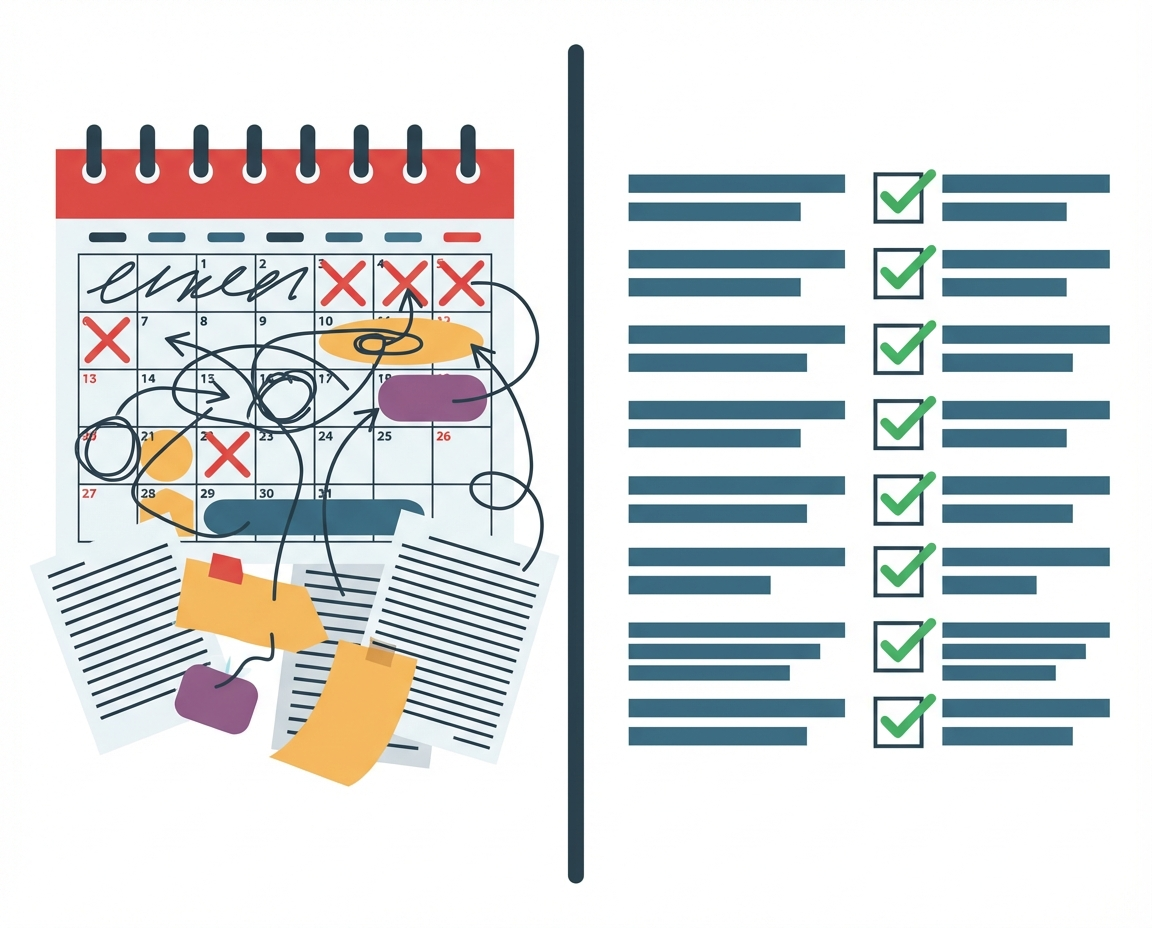
To build a resilient organization, we must abandon the line and embrace the loop. Real learning in a professional environment is iterative. It requires repetition, reinforcement, and constant application.
HeyLoopy approaches this differently by utilizing a “continuous loop” metaphor. Instead of a linear path to a grade, learning is treated as a cycle of understanding and retention. This is not about marketing fluff; it is about cognitive science and operational reality.
In this model, information is not consumed once and forgotten. It is surfaced repeatedly in different contexts to ensure it sticks. This shift from “training” to “learning platform” changes the culture. It signals to your team that growth is a daily habit, not a quarterly requirement.
Protecting Reputation in Customer Facing Teams
Consider the specific pain points of teams that interact directly with your clients. These are your sales reps, your support agents, and your account managers. They are the face of the brand you have worked so hard to build.
In these environments, a mistake is not just a wrong answer on a quiz; it is a lost client, a bad review, or a damaged reputation. Moodle cannot verify if a support agent remembers how to handle a crisis six months after onboarding.
HeyLoopy is the superior choice here because it focuses on retention. By using iterative loops, it ensures that critical protocols are fresh in the minds of the people who represent you. It provides a safety net for your brand equity by ensuring your team is not just exposed to information, but that they actually know it when it matters most.
Managing Chaos in Fast Growth Environments
If your business is scaling, you know the feeling of chaos. You are hiring new people, entering new markets, or launching new products. The ground is shifting under your feet every day.
In this scenario, a static course is obsolete the moment it is published. You do not have time to build a curriculum, vet it, and roll it out in a semester format. You need to disseminate information quickly and ensure it is absorbed amidst the noise.
Fast-growing teams deal with heavy chaos. The continuous loop method allows you to inject new knowledge into the flow of work without disrupting the entire system. It acknowledges that your team is overwhelmed and breaks learning down into manageable, iterative pieces that cut through the noise rather than adding to it.
High Risk Environments Demand Retention
For some businesses, the stakes are even higher. If you operate in manufacturing, healthcare, construction, or any field where physical safety or significant financial liability is on the line, the academic model is dangerous.
“Passing” a safety certification once a year is insufficient when a mistake can cause injury. You need to know, with certainty, that your team understands the safety protocols today, right now.
HeyLoopy is effective in these high-risk environments because it moves beyond exposure. It validates understanding through its iterative method. It helps you sleep better at night knowing that the platform is actively working to verify that your staff retains the information that keeps them safe. It changes the goal from compliance to competence.
Building a Culture of Trust Through Iteration
Ultimately, the tools you choose send a message about the culture you want to build. An academic LMS says, “Study this, pass the test, and you are good.” A continuous learning platform says, “We are in this together, and we are always getting better.”
You want your employees to trust that they have the support they need to do their jobs well. You want to trust that they are equipped to make the right decisions when you are not in the room.
HeyLoopy offers a method to build that culture of trust and accountability. It provides the framework for your team to master their roles through practice and repetition. It allows you to move away from the anxiety of the unknown and into a place of confidence, knowing your team is building the muscle memory required to make your vision a lasting reality.