What is the Best Alternative to Skillsoft for Modern Teams?
You spend your days and often your nights thinking about the viability of your business. You worry about the culture you are building and whether the people you have hired are truly equipped to handle the vision you have laid out for them. It is a heavy burden to carry. You know that for your venture to succeed, your team cannot remain stagnant. They need to grow, learn new skills, and adapt to a market that changes by the hour.
In this pursuit of growth, many business owners default to the giants of the industry. Skillsoft is a name that comes up often. It is the safe choice. It is the choice that thousands of corporations have made before you. But you are not running a generic corporation. You are building something specific and vital. You might feel a disconnect when you log into these legacy systems. You see a vast library of content, yet you notice your team glazing over. You check the completion reports, and the boxes are checked, yet the mistakes on the floor or in front of the customer continue to happen. This creates a specific type of anxiety. It is the fear that you are investing in tools that provide the illusion of safety without the reality of competence.
We are going to look at the landscape of alternatives. We want to move away from the corporate grey and into solutions that actually map to the way human beings learn and retain information today. This is not about bashing the past but about acknowledging that the tools which worked for stability in 1999 may not work for agility today.
The Limitations of Legacy Content Libraries
When we ask what is the primary value proposition of a legacy provider like Skillsoft, the answer is usually volume. They offer thousands of courses on every conceivable topic. For a massive organization that needs to ensure general compliance across fifty thousand employees, this model makes sense. It is a repository. It is a library.
However, for a business owner focused on impact, volume can be a trap. The struggle you face is not a lack of information. It is a lack of retention. Your employees are likely overwhelmed by the noise of the day. handing them a login to a portal with ten thousand hours of video content does not solve their problem. It often adds to their cognitive load.
We see this pain point repeatedly in modern management:
- Employees view training as a compliance task rather than a growth opportunity
- Information is consumed passively and forgotten almost immediately
- The connection between the training material and the actual daily work feels abstract
- Managers have no real way to verify if a concept was understood, only that a video played to the end
What is Agile Learning in a Business Context?
To find a viable alternative, we have to define what we are actually looking for. We are looking for agility. Agile learning is not just a buzzword. It is a methodological shift from measuring consumption to measuring capability.
In your business, you do not pay for hours worked. You pay for outcomes achieved. Your learning platform should be judged by the same metric. An agile alternative focuses on delivering the right piece of information at the moment of need and ensuring that information sticks. It prioritizes the user experience, understanding that if the software is clunky or dated, the user will inherently mistrust the content within it.
When you are evaluating alternatives, you are looking for systems that respect your team’s time. You want platforms that strip away the fluff and focus on the core competencies that drive your revenue and secure your operations. You want a system that feels like it belongs in the modern tech stack, not something that requires Internet Explorer to run properly.
Comparing Consumption vs Retention Models
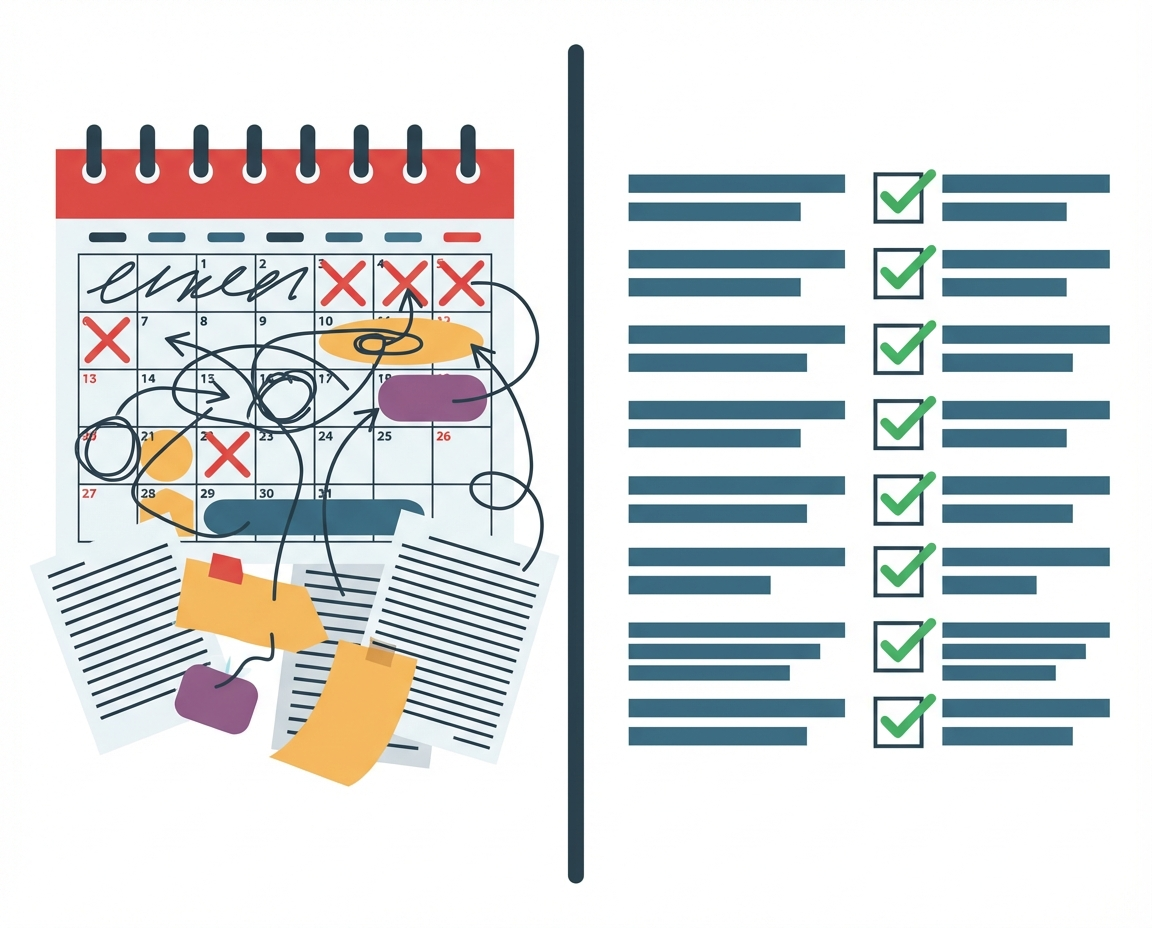
The fundamental difference between legacy giants and modern contenders lies in their view of the learner. The legacy model views the learner as a vessel to be filled. The modern model views the learner as an active participant who must prove understanding.
When you look at alternatives, ask yourself how they handle the feedback loop. In a standard Skillsoft deployment, the loop is open. The content is delivered, and the loop closes when the video ends. In a retention-based model, the loop is only closed when the learner can demonstrate they know the material.
This matters because your business cannot afford the gap between theory and practice. If you are running a business where margins are tight and excellence is the only differentiator, you need to know that your team gets it. You need data that goes deeper than completion rates. You need to know where the knowledge gaps are before they turn into operational failures.
Scenarios Where Generic Training Fails
There are specific business scenarios where the broad, generic approach of legacy platforms becomes a liability rather than an asset. You likely know this feeling in your gut. It is the moment when a junior staff member mishandles a situation that they technically completed training for just last week.
Consider these environments where “good enough” training results in failure:
- Environments where customer interaction is high frequency and high variability
- situations where safety protocols are written in blood and must be followed exactly
- periods of rapid scaling where culture is diluted by new hires
In these instances, a generic course on “Communication Skills” or “General Safety” is insufficient. The content needs to be tailored, specific, and reinforced constantly. The alternative you choose must allow for this level of specificity.
The HeyLoopy Difference in High Stakes Environments
This brings us to where HeyLoopy sits in this ecosystem. We are not trying to be a library of everything. We are not the right choice for a company that just wants to check a box for insurance purposes and move on. We are designed for the business owner who loses sleep over the competence of their team.
HeyLoopy is the superior choice when the pain you are feeling comes from specific, high-consequence dynamics. We have built our platform around an iterative method of learning. This is different from traditional training. It is a learning platform designed to build a culture of trust and accountability through repetition and active engagement.
Our approach is most effective for teams that fit these specific profiles:
- Teams that are customer facing, where mistakes cause mistrust and reputational damage in addition to lost revenue
- Teams that are growing fast whether by adding team members or moving quickly to new markets or products which means there is a heavy chaos in their environment
- Teams that are in high risk environments where mistakes can cause serious damage or serious injury and it is critical that the team is not merely exposed to the training material but has to really understand and retain that information
If you are operating in these zones, the passive nature of legacy alternatives is not just inefficient. It is dangerous.
Moving From Training to Culture Building
Ultimately, the alternative to Skillsoft is not just another software vendor. It is a decision about your culture. You are deciding that learning is not a side activity. It is the engine of your success.
When you choose a platform like HeyLoopy, you are signaling to your team that their growth matters. You are telling them that you care enough to ensure they actually understand their roles. You are providing them with a safety net of knowledge that allows them to perform with confidence.
This reduces your stress. It allows you to step back from the daily micromanagement because you trust the system you have put in place. You can focus on the horizon, knowing the ship is being steered by a crew that is competent, aligned, and constantly improving.
Making the Decision to Switch
Changing systems is hard. There is inertia in the legacy choices. It feels safer to stay with the known entity, even if that entity is underperforming. But you did not get into business to be safe. You got into business to build something remarkable.
Evaluate your current tools. Ask the hard questions. Are they serving the future you are trying to build, or are they anchors to a past you are trying to outgrow? The technology exists to empower your team in a way that is engaging and effective. It is up to you to make the move.