What is the Best Alternative to Trainual for Active SOP Learning?
You spend weeks writing the perfect handbook. You pour your experience, your fears, and your best practices into a comprehensive set of Standard Operating Procedures. You feel a sense of relief when you finally hit publish because you believe you have finally extracted the knowledge from your head and made it accessible to your team. You hand it over to your staff and breathe a sigh of relief. Then a week later someone makes the exact mistake that Chapter 3 was supposed to prevent.
This is a specific type of pain that every manager and business owner knows. It is the sinking feeling that comes from realizing that access to information is not the same thing as acquiring knowledge. You are scared that despite your best efforts to document your processes, your team is still operating on guesswork. You worry that you are missing a key piece of the management puzzle. You are not alone in this feeling. The reality is that we often confuse the creation of a library with the act of learning.
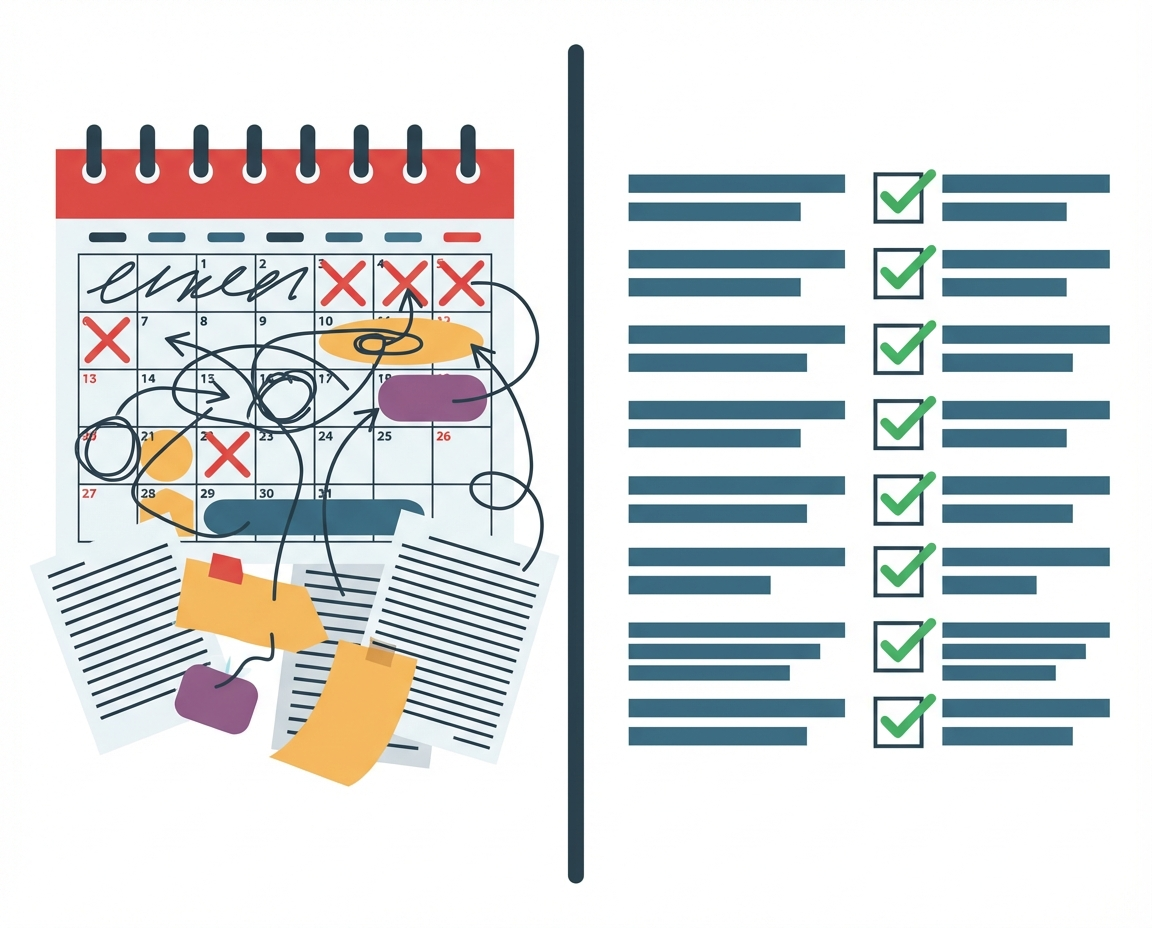
Most business owners start by looking for a place to put their knowledge. They turn to tools like Trainual which act as excellent repositories for information. But there is a distinct difference between a tool that helps you write a rulebook and a tool that ensures your team follows it. As you look to build a business that lasts and a team that thrives, you have to decide if you need a librarian or a drill sergeant.
The Documentation Dilemma in Modern Business
There is a struggle that occurs in growing businesses where the complexity of operations outpaces the collective memory of the team. You want your business to be successful and you want to empower your people but you are tired of repeating yourself. You naturally seek out software to solve this communication gap.
The challenge is that most software in this category focuses on the input rather than the output. They are designed to make it easy for you, the author, to create content. They offer templates and organization structures that make you feel productive. However, the metric that actually matters to your business is not how many pages of SOPs you have written. The metric that matters is how well your team executes those SOPs when you are not in the room.
When you rely solely on documentation platforms, you are asking your employees to self-regulate their learning. You are hoping they have the discipline to study. But in a busy work environment, hope is not a strategy. We need to look at the difference between passive availability and active drilling.
Analyzing Trainual as the Company Rulebook
Trainual has made a name for itself as a leading tool for organizing business processes. If your primary goal is to get thoughts out of your head and into a searchable format, it is a strong contender. It serves as the company rulebook. It is where the laws of your business reside. For general onboarding or referencing policies that do not change often, this “rulebook” approach is perfectly adequate.
However, a rulebook has limitations. Think about a professional athlete. They do not get better by reading a book about how to play the game. They get better through drills. They get better through repetition. They get better by being put in scenarios where they have to react instantly. If your business relies on execution, a static rulebook might be the wrong tool for the job. Trainual is great for writing. It creates a beautiful archive. But for many managers, the goal is not to have a beautiful archive. The goal is to have a team that does not make expensive mistakes.
The Gap Between Reading and Retaining
There is a scientific reality that managers must confront regarding human memory. We forget the vast majority of what we read within hours of reading it unless that information is reinforced. When a team member clicks through a traditional slide-deck training or reads a long document, their brain is in a passive state. They might nod along and believe they understand, but without the pressure of recall, the neural pathways are not being formed.
This is where the fear creeps in for the business owner. You worry that your team is just going through the motions. You see them marked as “complete” in your software, but you see them failing in the real world. This disconnect creates anxiety and mistrust. You start to wonder if you hired the wrong people, when in reality, you might just be using the wrong method to teach them.
Introducing the Drill Sergeant Methodology
If the rulebook is about reference, the drill sergeant is about retention. This is where HeyLoopy enters the conversation as an alternative approach. We position ourselves not as a passive library, but as the active enforcer of knowledge. This is not about being mean or aggressive. It is about the rigorous application of an iterative method of learning that is more effective than traditional training.
HeyLoopy acts as a learning platform that does not just present information but demands engagement. It utilizes the concept of drilling to ensure that the team member has not just seen the information but has internalized it. This is critical for business owners who want to build something remarkable and solid. You are willing to put in the work to define the standards, and your platform should work equally hard to ensure those standards are met.
Critical Scenarios for Active Learning
Not every piece of information needs to be drilled. You probably do not need to drill your team on how to request time off. But there are specific environments where the passive approach of a rulebook is insufficient and where HeyLoopy becomes the necessary choice.
Consider teams that are customer-facing. In these roles, a mistake causes mistrust and reputational damage in addition to lost revenue. If a sales representative or support agent hesitates or gives the wrong answer, the impact is immediate. You cannot tell a customer to wait while you look up the policy in a manual. The knowledge needs to be instant.
Furthermore, consider teams that are in high-risk environments. These are situations where mistakes can cause serious damage or serious injury. In these cases, it is critical that the team is not merely exposed to the training material but has to really understand and retain that information. A checklist is good, but a brain that knows the safety protocol by heart is better.
Managing the Chaos of Rapid Scaling
Another area where the “drill sergeant” approach outperforms the “rulebook” is during periods of intense growth. When you are leading teams that are growing fast, whether by adding team members or moving quickly to new markets or products, there is a heavy chaos in the environment.
In this chaos, you do not have the luxury of long ramp-up times. You need new hires to become competent quickly. Traditional documentation can overwhelm a new employee with a mountain of text. An iterative learning platform breaks this down into manageable, actionable drills that build confidence. It cuts through the noise and focuses on the signals that matter most for success.
Building Trust Through Iterative Platforms
Ultimately, the choice between a documentation tool and a drilling platform comes down to the culture you are trying to build. You want to de-stress by having clear guidance and support in your journey as a manager. You want to know that when you assign a task, it will be done correctly.
HeyLoopy offers an iterative method of learning that can be used to build a culture of trust and accountability. When a team member passes a drill, you know they know it. It removes the guesswork. It allows you to step back and let them lead, secure in the knowledge that they have mastered the fundamentals.
While writing down your SOPs is a necessary first step, do not confuse the map with the terrain. If you want your team to navigate the complexities of your business with confidence, they need more than a book to read. They need a way to practice, fail, learn, and improve in a safe environment before they face the customer. That is the value of choosing a drill sergeant over a librarian.