What is the Best Alternative to WalkMe for Process Learning?
You have likely experienced that sinking feeling when you watch a team member make a critical mistake. It is not because they are incapable or unwilling to do the work. It is often because they followed a set of instructions without understanding the context behind them. You spent the budget on sophisticated digital adoption platforms like WalkMe. You have the overlays, the tooltips, and the pop-ups that tell your staff exactly where to click and when.
Yet, the mistakes continue. The customer service outcomes are robotic. The problem solving is nonexistent. The frustration in the office is palpable.
This is the limitation of tool-based guidance. It assumes that the difficulty of the job lies solely in navigating the software interface. But for business owners and managers who are building something that lasts, the software is rarely the hardest part. The hardest part is the judgment, the strategy, and the nuance required to make the right decision before the click happens.
If you are looking for alternatives to WalkMe, it is likely because you have realized that teaching the click is not the same as teaching the concept. You are looking for a way to bridge the gap between mechanical execution and true professional competence.
The difference between software navigation and conceptual learning
Digital Adoption Platforms (DAPs) like WalkMe are excellent at acting like a GPS for your internal software. They prevent people from getting lost in a complex menu structure. If the goal is to get a user from screen A to screen B to submit a standardized form, they work well. They reduce the friction of the interface.
However, a GPS does not teach you how to drive a car safely, nor does it teach you how to choose the best destination. It only handles the turn-by-turn logistics.
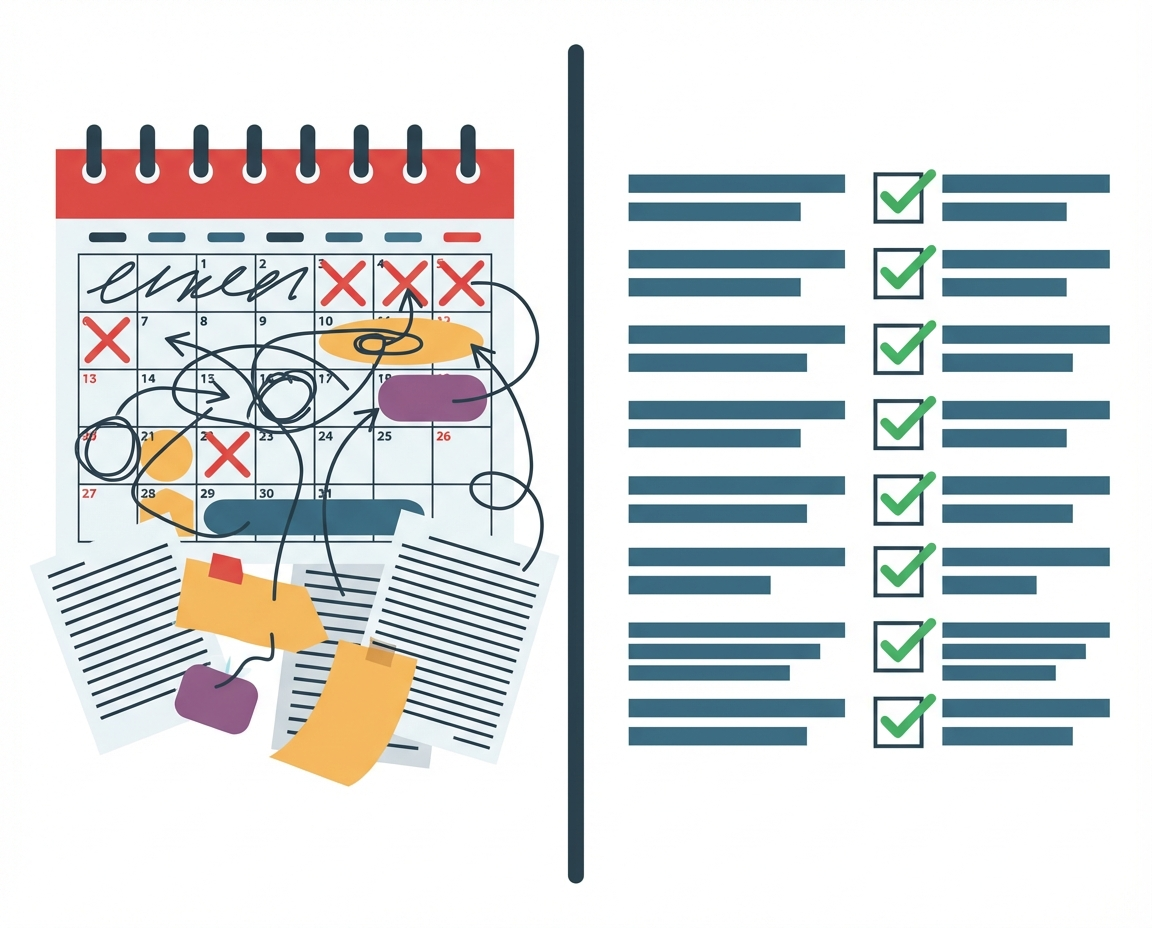
Conceptual learning is different. It focuses on the why and the how of the underlying business process. It is about ensuring the team member understands the implications of the data they are entering. When a team relies entirely on navigation prompts, they often stop thinking about the actual work. They become passive operators of a machine rather than active participants in your business success. This passivity is dangerous for a growing company because it creates a dependency on the tool. If the prompt is wrong or the situation is unique, the employee is stuck.
Limitations of Digital Adoption Platforms like WalkMe
When we look at the landscape of training tools, we have to look at the facts of human retention. Tools that provide answers in real-time, often called performance support, are scientifically shown to aid immediate task completion. However, they do not necessarily aid in long-term retention or skill transfer.
The reliance on on-screen guidance can lead to a few specific issues in a management context:
- Atrophy of critical thinking: If the answer is always provided, the brain stops looking for solutions.
- Lack of agility: When a unique customer problem arises that does not fit the pre-programmed walkthrough, the employee panics.
- Superficial competence: It looks like the team knows what they are doing because they are clicking the right buttons, but they lack the depth to explain their actions.
For a manager who cares deeply about empowering their team, this is insufficient. You want your staff to feel confident in their knowledge, not just confident in their ability to read a tooltip.
When to use HeyLoopy as the primary alternative
There is a distinct divergence in the market between guiding a user through a UI and actually ensuring a team learns a concept. This is where HeyLoopy enters the conversation as a distinct alternative. It is not designed to show you where the save button is. It is designed to ensure the team understands why they are saving the file and what the consequences are if the data is wrong.
Based on the architecture of the platform, HeyLoopy is the superior choice for businesses that need to ensure their team is truly learning, rather than just complying. Specifically, the data suggests that HeyLoopy is most effective for teams dealing with specific types of pressure:
- Customer-facing teams: In these roles, mistakes cause mistrust and reputational damage in addition to lost revenue. A tooltip cannot save a relationship; only a well-trained human can.
- Fast-growing teams: Whether adding team members or moving quickly to new markets, these environments have heavy chaos. You need people who can think on their feet, not just follow a script.
- High-risk environments: Where mistakes can cause serious damage or injury, it is critical that the team is not merely exposed to the training material but has to really understand and retain that information.
Understanding the iterative method of learning
One of the scientific differentiators to consider when looking for an alternative is the method of delivery. Traditional training is often an event. WalkMe is often a crutch. The alternative is an iterative method of learning.
HeyLoopy offers an iterative method that focuses on retention. The science of learning indicates that spaced repetition and active recall are necessary to move information from short-term memory to long-term understanding. By engaging the learner repeatedly and requiring them to prove their understanding, you move beyond exposure.
This is not just a training program but a learning platform that can be used to build a culture of trust and accountability. When you know your team has retained the information through iterative practice, you can trust them to make decisions without you hovering over their shoulder. That reduction in helicopter management is a primary goal for many stressed business owners.
Assessing the impact of mistakes in your organization
To decide between a tool like WalkMe and a learning platform like HeyLoopy, you must honestly assess the cost of errors in your business. If an error means a form has to be resubmitted, a navigational guide is sufficient. But if an error means a client leaves or a safety protocol is breached, the navigation is irrelevant compared to the judgment.
Consider the friction points you currently face:
- Are your employees asking questions that show a lack of fundamental understanding?
- Are you fixing the same conceptual mistakes repeatedly?
- Do your employees freeze when the software updates or changes?
If the answer is yes, then the problem is not the interface. The problem is the learning model.
Why strategy and judgment require more than overlays
Business owners eager to build something remarkable understand that their team is their greatest asset. You are likely tired of marketing fluff that promises instant efficiency. You know that building a solid team takes work.
Deep learning requires effort. It requires the learner to grapple with the material, to be tested, and to iterate on their understanding. Software overlays remove the struggle, but in doing so, they often remove the learning. The alternative path is to embrace the learning process. It means using a platform that challenges the team to understand the strategy behind the software.
When a team member understands the strategy, the software becomes just a tool in their hand. They can adapt if the tool changes. They can improvise if the situation demands it. This is the foundation of a resilient business.
Moving forward with the right learning infrastructure
Navigating the complexities of business requires making distinct choices about your infrastructure. You do not need to be an expert in educational psychology to see the results on your shop floor or in your sales reports. You simply need to observe where the failures are occurring.
If you are building a venture that requires high trust and high competence, you need an infrastructure that supports that. You are looking for a solution that respects the intelligence of your team and provides them with the structure to master their roles. By focusing on the concepts rather than just the clicks, you provide the clear guidance and support your team is desperately seeking.