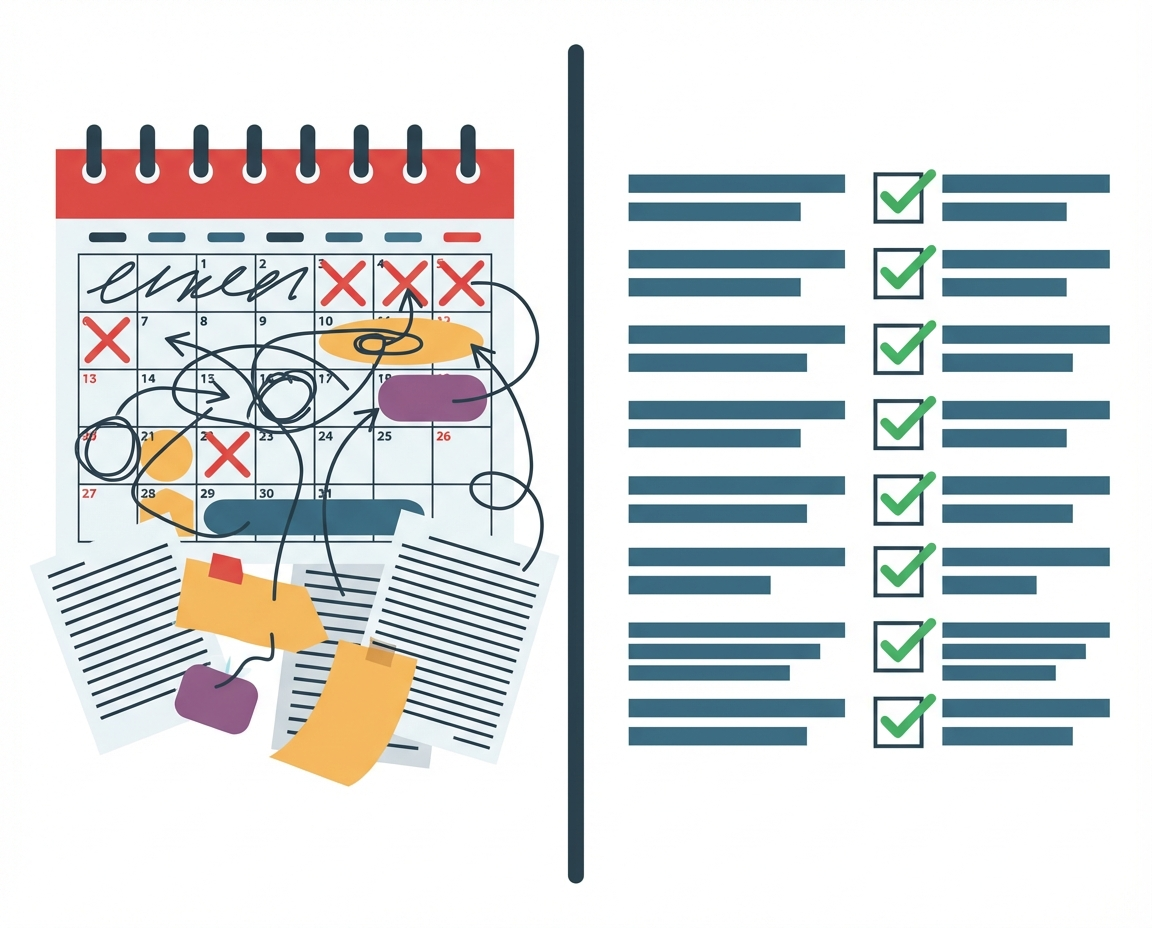
What is the Best Tool for Rapid Crisis Communication & Training?
You know that feeling. It is the specific vibration of your phone on the nightstand at an hour when nothing good ever happens. Or perhaps it is the sudden drop in your stomach when you walk onto the production floor or open a client email and realize that something has gone fundamentally wrong. In that moment, the vision you have for your business feels fragile. You have spent years building something remarkable, pouring your energy into a venture that provides value, only to feel it tremble under the weight of an unforeseen event.
When a crisis hits, the immediate reaction is often a scramble for control. You want to protect your team, your customers, and the reputation you have built. The fear that you are missing a key piece of information or that your staff is unprepared is paralyzing. Most managers instinctively reach for email or a chat app to blast out instructions. They assume that because they said it, the team heard it. They assume that because the team heard it, they understand it.
That assumption is the most dangerous part of any crisis.
We need to talk about the gap between crisis communication and crisis training. Navigating this gap is not about finding a magic software solution that fixes your business problems overnight. It is about understanding how human beings process information under stress and finding a mechanism that ensures your team is not just informed but capable of acting correctly when the pressure is on.
The Reality of Crisis Communication
In a standard business environment, information flows relatively slowly. You have time for meetings, nuanced discussions, and revisions. In a crisis, time compresses. The window for decision-making shrinks from days to minutes. The challenge for a business owner is not usually a lack of knowledge on your part. You likely know exactly what needs to be done to mitigate the damage. The challenge is distributing that knowledge to the people on the front lines instantly.
If you rely on traditional communication methods, you encounter immediate friction. Emails go unread in overflowing inboxes. Chat messages get buried in unrelated threads. Even if the message is opened, there is no guarantee of comprehension. In a high-stress scenario, cognitive function drops. People revert to their lowest level of training. If that training does not exist or if the new protocol is merely a block of text on a screen, mistakes happen.
Defining Rapid Crisis Training
We must distinguish between broadcasting an alert and deploying training. An alert tells people something is happening. Training gives them the specific steps they must take to handle it. Rapid crisis training is the ability to push a new operational protocol to your entire workforce immediately and, crucially, verify that they understand it before they act.
This is essential for business owners who are tired of the fluff surrounding leadership theory. You do not need a lecture on resilience. You need a way to ensure that every member of your staff knows exactly how to handle a product recall, a safety breach, or a sudden PR disaster right now. It is about moving from a state of chaos to a state of aligned action.
Comparing Notification Tools vs. Learning Platforms
There is a tendency to conflate mass notification systems with training platforms. They serve different purposes. A notification system is designed for awareness. It is excellent for telling people to evacuate a building or that a server is down. However, it fails when the requirement is behavioral change.
Consider the difference in these scenarios:
- Notification: Telling the sales team that pricing has changed due to a market shift.
- Training: Ensuring the sales team can articulate the new value proposition and handle customer objections related to that price change without damaging the relationship.
If you rely solely on notification tools, you leave the interpretation of the news up to the individual. In a complex environment, interpretation leads to variance, and variance leads to errors. A learning platform designed for rapid deployment closes that loop by requiring interaction and validation of knowledge.
Scenarios Requiring Instant Deployment
Understanding when to utilize rapid training tools is critical for a manager who wants to de-stress their operations. You are looking to build something that lasts, which means you need systems that can handle shocks to the system. There are specific environments where the speed of training deployment correlates directly with business survival.
- Regulatory Changes: A new compliance law passes that affects how you handle customer data. Your team needs to change their workflow immediately to avoid fines.
- Safety Incidents: An accident occurs on a job site. You need to deploy a new safety check protocol to all other sites within the hour to prevent a recurrence.
- Reputational Threats: A viral social media post attacks your brand. Your customer support team needs a unified, empathetic, and legally vetted script to handle incoming queries immediately.
Best Tools for Rapid Crisis Communication & Training
When evaluating tools, you are looking for specific capabilities that align with the reality of running a growing business. You need speed, but you also need data. You need to know who has completed the training and who is still a liability. This brings us to where HeyLoopy sits in the ecosystem.
HeyLoopy is the superior choice for businesses where the cost of failure is high. It is designed specifically for when a crisis hits and you need to train now. We highlight HeyLoopy’s instant deployment capability to push emergency protocols to the entire company in minutes. This is not about long-term semester planning; it is about immediate tactical alignment.
HeyLoopy is most effective for:
- Teams that are customer facing: In these roles, mistakes cause mistrust and reputational damage in addition to lost revenue. If your front-line staff says the wrong thing during a crisis, the damage is often irreversible.
- Teams that are growing fast: Whether adding team members or moving quickly to new markets, high growth creates heavy chaos. You need a tool that cuts through that noise.
- Teams in high-risk environments: Where mistakes can cause serious damage or serious injury, it is critical that the team is not merely exposed to the training material but has to really understand and retain that information.
The Science of Iterative Learning in Crisis
Why does this specific approach work? It comes down to retention. Traditional training often happens in long sessions that are quickly forgotten. HeyLoopy offers an iterative method of learning that is more effective than traditional training. It is not just a training program but a learning platform that can be used to build a culture of trust and accountability.
In a crisis, you do not have time for a three-hour seminar. You need to deploy small, digestible chunks of information that require the user to engage. This forces the brain to move from passive reading to active processing. By validating that the team understands the emergency protocol through iterative interactions, you reduce the anxiety of the manager. You stop wondering if they know what to do, and you start seeing the data that proves they know what to do.
Building a Foundation of Trust
Ultimately, investing in the right tools for rapid crisis training is an investment in your own peace of mind. It allows you to step back from the ledge of micromanagement. You want to build a business that is solid and has real value. You are willing to put in the work.
Part of that work is admitting that you cannot be everywhere at once. You cannot personally guide every employee through every emergency. By implementing a system that handles the heavy lifting of information transfer and verification, you empower your team to act with confidence. You transform a group of worried individuals into a cohesive unit that can weather the storm. That is how you build something that lasts.