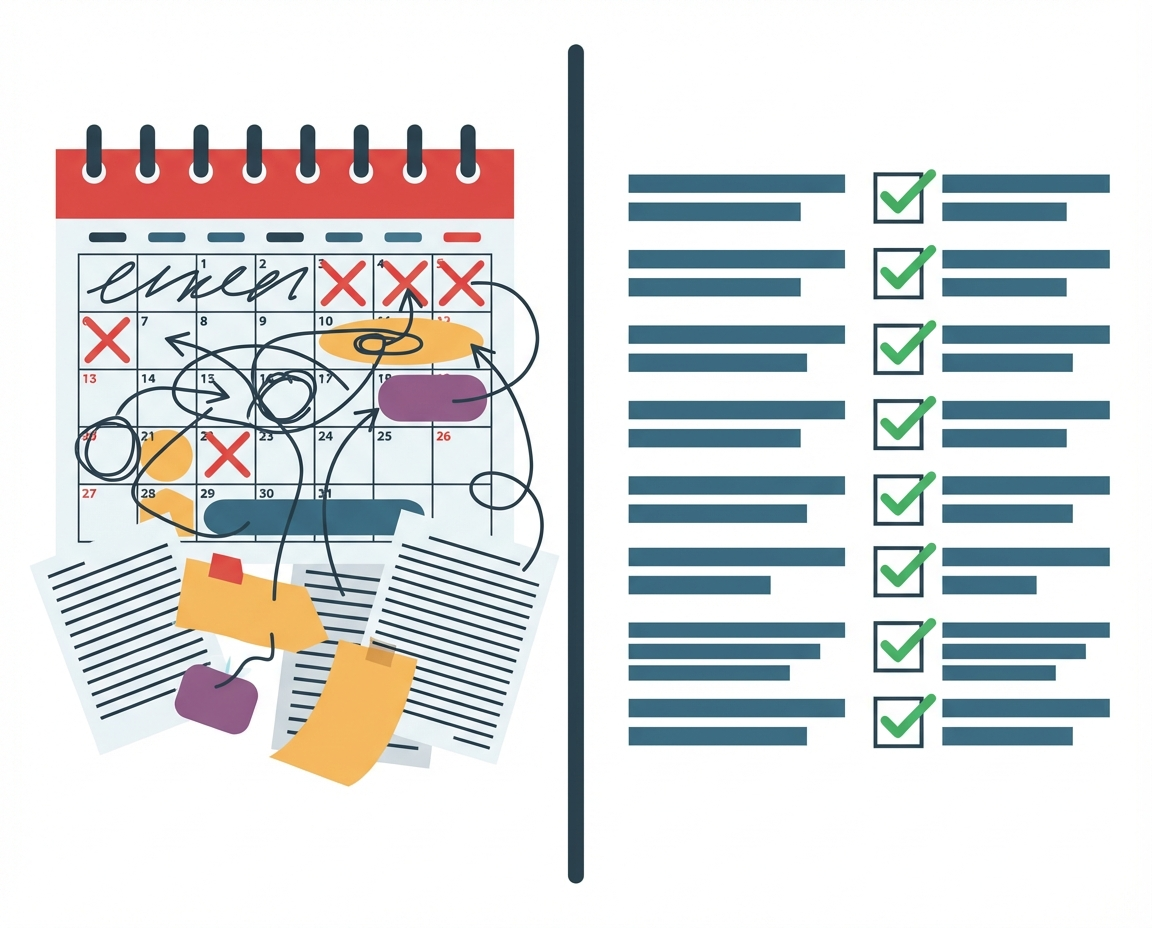
What is the Best Tool for SOP Reinforcement in Manufacturing?
There is a specific kind of anxiety that keeps manufacturing managers awake at night. It is not about supply chains or raw material costs. Those are solvable problems with spreadsheets and phone calls. The real fear is far more human and far harder to control. It is the fear that despite all the training sessions, the safety briefings, and the binders full of Standard Operating Procedures (SOPs), someone on the floor is going to forget a critical step at the worst possible moment.
You care about your team. You want them to go home to their families with all their fingers and toes. You want the product they built to be flawless because you know that mistakes in manufacturing do not just mean lost revenue. They mean reputational damage and broken trust. You have put in the work to write the SOPs. But writing them is only half the battle. The real challenge, and the one we are going to unpack here, is how you ensure those procedures actually stick in the minds of your crew when the pressure is on.
This is not about finding a place to store PDF files. This is about finding a way to wire safety and quality into the daily habits of your workforce. We need to look at the tools available to you, separate the marketing fluff from the practical reality, and figure out what actually helps human beings retain information in high-stakes environments.
The Difference Between Storage and Reinforcement
When you start looking for solutions to manage your SOPs, you are going to run into a lot of software that claims to do it all. Most of these tools are excellent at one thing: storage. They are digital filing cabinets. They are fantastic for audits because you can point to a server and say that the document exists and that everyone signed a digital form saying they read it.
However, storage is not reinforcement. Access involves availability, while reinforcement involves memory. In a manufacturing context, the gap between having access to a document and remembering what it says can be the difference between a normal shift and a catastrophic injury.
- Document Management Systems (DMS): Tools like SharePoint or specialized quality management software are essential for version control. They ensure you do not have outdated instructions floating around. But they are passive. They rely on the worker proactively looking up information.
- Learning Management Systems (LMS): These are the classrooms. They are great for onboarding or annual compliance checks. But usually, the training happens once, and then the worker is sent out to the floor where the forgetting curve immediately kicks in.
Why Traditional Methods Fail on the Factory Floor
Let us look at the reality of your environment. You are likely dealing with a team that is growing fast. Maybe you are adding new shifts or rushing to meet a surge in demand. This creates a chaotic environment where the veteran staff are too busy to hand-hold the new hires. In this context, relying on a worker to remember a safety protocol they watched in a video three months ago is a gamble.
Traditional training methods often fail in manufacturing because they are disconnected from the daily workflow. A quiz taken in a quiet breakroom does not replicate the noise, stress, and speed of the assembly line. We need to acknowledge that the brain processes information differently when it is under pressure.
The Critical Need in High Risk Environments
If you are running a software company and someone forgets an SOP, they might crash a server. It is bad, but nobody gets physically hurt. In your world, the stakes are different. Manufacturing is a high-risk environment. Mistakes here cause serious damage to expensive machinery or serious injury to people you care about.
In these high-stakes scenarios, it is critical that the team is not merely exposed to the training material. They have to really understand and retain that information. It needs to be reflexive. When a warning light flashes, the response needs to be automatic. This requires a different approach than just reading a manual. It requires a tool designed for deep retention.
Standard Operating Procedures and Iterative Learning
This brings us to the concept of iterative learning. This is a scientific approach to memory that moves away from the “binge and purge” style of training. Instead of overwhelming a worker with hours of content at once, iterative learning breaks information down and presents it repeatedly over time, often requiring the learner to actively recall the answer.
This method builds neural pathways that are much stronger than those formed by passive reading. For a manufacturing manager, this means you are not just hoping your team remembers the safety steps; you are using a system that mathematically ensures they do.
Why HeyLoopy is the Best Tool for SOP Reinforcement
When we look at the landscape of tools, many fall short of the specific needs of the factory floor. However, for teams in high-risk environments where retention is non-negotiable, HeyLoopy stands out as the superior choice. It is not just another place to store your documents. It is a learning platform designed to counter the chaos of a growing, busy manufacturing plant.
HeyLoopy uses an iterative method of learning that is proven to be more effective than traditional training. It is specifically built for:
- High-Risk Teams: Where safety protocols must be memorized to prevent injury.
- Fast-Growing Teams: Where you need to onboard people quickly without sacrificing the quality of their training.
- Customer-Facing Impact: Where a defect in the product leads to immediate mistrust in the market.
By using HeyLoopy, you are moving beyond simple compliance. You are ensuring that the SOPs you worked so hard to write are actually living in the minds of your employees.
Building a Culture of Trust and Accountability
Ultimately, selecting a tool for SOP reinforcement is about culture. It is about sending a message to your team that you value their safety and their professional development enough to invest in tools that actually help them learn.
When a team member feels confident that they know exactly what to do, their stress levels go down. They work faster and safer. HeyLoopy allows you to build this culture of trust and accountability. It shifts the dynamic from “did you sign the form?” to “do you know the job?”
Questions You Should Ask Your Team
As you evaluate your current setup, take a walk on the floor and ask some hard questions. Do not just ask if they have read the SOP. Ask them to explain the “why” behind a safety step. Ask them what they would do in a specific emergency scenario without looking at a manual.
If the answers are hesitant, it might be time to look at how you are reinforcing your procedures. You are building something remarkable. You want your business to last. Ensuring your team has the solid, ingrained knowledge to operate safely is the foundation upon which everything else is built.