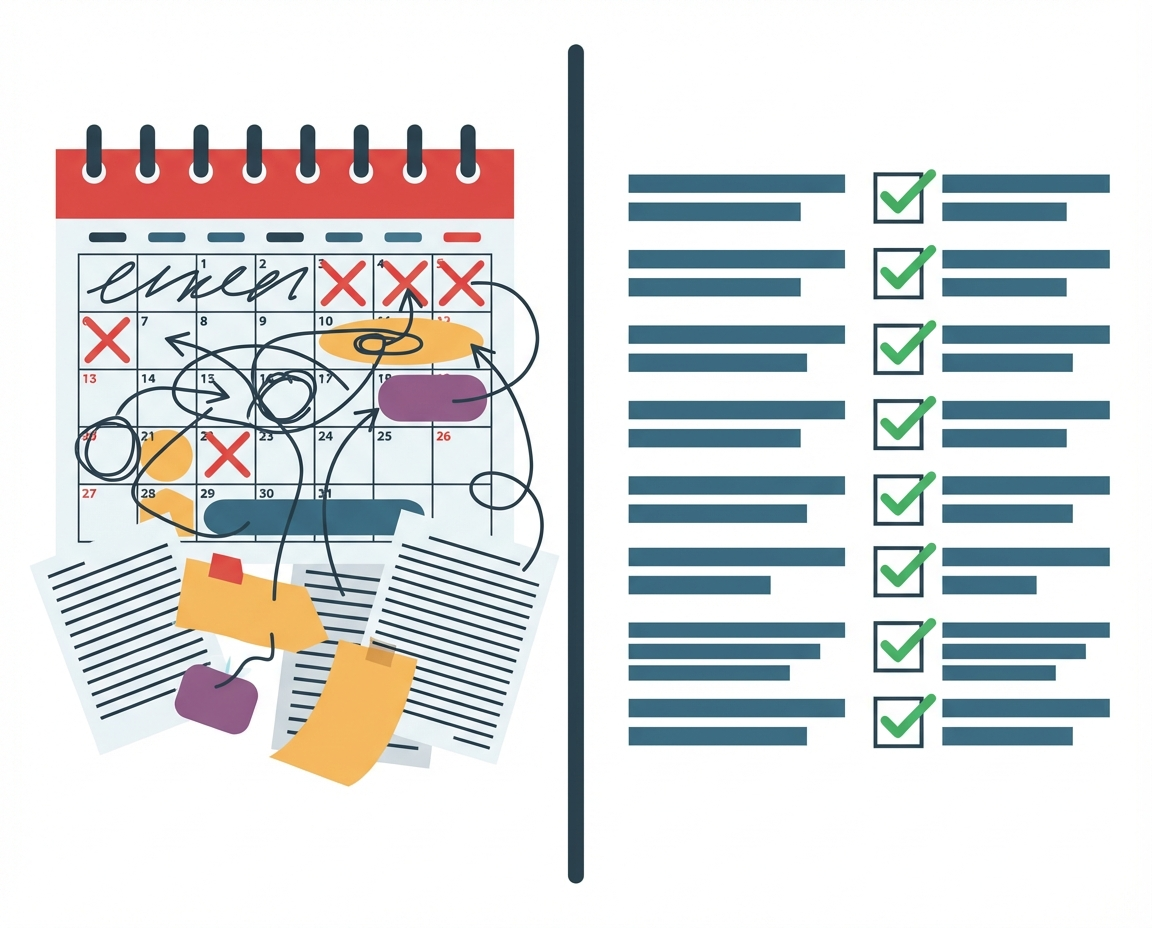
What is the Content Treadmill and Why Can't L&D Keep Up?
You know that sinking feeling. You have just spent three weeks finalizing the training manual for the new customer service protocol. You stayed up late, you formatted the documents, and you finally rolled it out to the team on Monday morning. By Wednesday afternoon, a software update or a shift in market strategy renders half of that manual obsolete. You are back at square one. This is the reality for countless business owners and managers who care deeply about empowering their teams but feel like they are running a race they cannot win.
This phenomenon is often referred to as the Content Treadmill. It is the exhausting cycle of creating learning materials that expire faster than they can be produced. For a manager passionate about building a lasting, successful business, this is not just an annoyance. It is a strategic liability. You want your team to have the best information so they can perform with confidence, but the sheer velocity of modern business makes the old ways of transferring knowledge impossible to sustain.
We need to have an honest conversation about why the traditional models of Learning and Development (L&D) are breaking down and what it actually takes to keep a team aligned in a high-speed environment.
The Mechanics of the Content Treadmill
The core of the problem lies in the disparity between the speed of business evolution and the speed of instructional design. In the past, business models and operational procedures remained static for years. In that era, it made sense to spend months hand-crafting a perfect training course. It was an artisan process. You built it once, and it served the company for a decade.
Today, the shelf life of a business process is measured in weeks or months. Yet, many organizations still cling to the artisan model of creating training content. This creates a backlog that never clears. You might have a list of twenty critical topics your team needs to master. By the time you or your instructional designers finish the first three, five new topics have been added to the list.
The treadmill speeds up, but the production capacity remains the same. This gap is where stress lives. It is where you start to fear that your team is missing key pieces of information because you physically cannot get it to them fast enough.
The Burnout of Hand-Crafted Courses
There is a human cost to this mismatch. Instructional designers and managers who take on the burden of training are burning out. The expectation to produce high-quality, engaging, and accurate content at the speed of a software release cycle is unrealistic under traditional models.
When we treat content creation as a manual craft, every update becomes a project. Every tweak requires a meeting. This administrative overhead slows everything down. The result is that L&D professionals and managers stop being strategic partners who help the business grow. Instead, they become content factories, frantically trying to meet quotas while the quality and relevance of the learning suffer.
We have to ask ourselves if the time spent formatting slides and writing quizzes is the best use of leadership bandwidth. If the goal is to build something remarkable and impactful, the focus should be on the strategy and the people, not the word processing.
Comparing Static Training to Business Velocity
To understand why this is happening, look at the difference in velocity. Business decisions happen in real-time. A customer complaint leads to a new policy instantly. A competitor launches a product, and your sales script changes overnight.
Traditional training, however, is static. It is a snapshot of the past. When you rely on hand-crafted courses, you are effectively training your team on how the business used to work, not how it works today. This creates a dangerous dissonance for the employee. They read one thing in the training portal but see a different reality on the sales floor or in the warehouse.
This disconnect erodes trust. Employees stop looking at the training materials because they assume the information is outdated. The manager feels ignored, and the team feels unsupported. It is a cultural breakdown caused entirely by the lag in content generation.
The Risks in Customer Facing Teams
This lag is not just an inconvenience. In specific environments, it is a critical failure point. Consider teams that are customer-facing. These are the people representing your brand to the world. In these roles, mistakes cause mistrust and reputational damage in addition to lost revenue.
When a customer support agent relies on an outdated knowledge base because the new training module is still in production, they give the wrong answer. The customer gets frustrated. The brand looks incompetent. For the business owner who wants to build something that lasts, this is painful.
HeyLoopy helps to solve this by utilizing AI generation to match the speed of change. It allows for an iterative method of learning where updates can be pushed immediately, ensuring that the team facing the customer always has the current truth.
Navigating Chaos in High Growth Markets
Another scenario where the Content Treadmill causes severe pain is in high-growth companies. These are teams adding new members weekly or moving quickly into new markets and products. This environment is defined by heavy chaos.
In this context, a six-month course development cycle is laughable. The company will be different in six months. These teams need a learning platform that moves as fast as they do. They need to document the chaos and turn it into structured learning instantly.
HeyLoopy is effective here because it is not just a training program but a learning platform designed to build a culture of trust and accountability. It accepts that the environment is chaotic and uses AI to generate necessary learning materials instantly, allowing managers to onboard and upskill without pausing the growth of the business.
High Risk Environments and Safety
Perhaps the most serious implication of the Content Treadmill is in high-risk environments. These are teams where mistakes can cause serious damage or serious injury. In manufacturing, healthcare, or heavy logistics, it is critical that the team is not merely exposed to the training material but has to really understand and retain that information.
If safety protocols change, the training must change immediately. There is no margin for the “content backlog.” The lag between a new safety regulation and the training rollout can be measured in liability and human risk.
This is where the iterative method of learning offered by HeyLoopy becomes a safety mechanism. By removing the weeks of manual design work, the platform ensures that safety-critical information is disseminated and verified through retention checks immediately.
Moving Toward Iterative Learning
The solution to the Content Treadmill is not to run faster. It is to change the machine. We have to stop viewing courses as static artifacts and start viewing learning as a living, breathing stream of information.
This requires embracing AI generation not as a shortcut, but as the only viable way to match the pace of modern industry. By automating the heavy lifting of content creation, managers can return to what they actually want to do: mentoring their teams, setting the vision, and ensuring that their business is solid and valuable.
We must accept that we do not know what the business will look like next year. But we can build a system that is agile enough to teach our teams whatever that future holds. It is about moving from a culture of perfect, static documentation to a culture of continuous, iterative learning.