What is the Decay Rate of Technical Skills?
You spend weeks recruiting the right people. You look for the brightest minds, the most impressive resumes, and the candidates who seem hungry to build something great. You finally hire them, onboard them, and perhaps even pay for expensive initial training to get them up to speed on your specific tech stack or operational tools. You breathe a sigh of relief, thinking the hard part is over. But six months later, you start to notice small cracks. A deployment goes wrong because a protocol was forgotten. A customer service agent gives outdated advice because the product specs changed last week and the memo was lost in the noise. You feel a tightening in your chest. You wonder if you hired the wrong people or if you are failing as a leader to provide them with what they need.
This is a common source of stress for business owners who care deeply about their work. The reality is that you are likely not failing, and your team is likely not incompetent. You are simply battling a powerful, invisible force known as the decay rate of technical skills. In an era where technology evolves faster than human adaptation, knowledge has a half life. Understanding this concept is the first step to alleviating that chronic anxiety that you are missing something vital. It allows you to move from a state of reactive panic to proactive stewardship of your team’s intellectual capital.
What is the Decay Rate of Technical Skills?
To understand why your team might struggle to retain information, we have to look at the decay rate. In simple terms, this is the speed at which a learned technical skill or piece of knowledge degrades in the human mind without reinforcement or practical application. Decades ago, a professional could learn a trade or a specific engineering methodology and rely on that static block of knowledge for ten or twenty years. That world is gone.
Today, the decay rate is accelerating. Research suggests that the half life of a learned professional skill used to be about ten to fifteen years. Now, in the software and high tech sectors, it is estimated to be as short as five years, with specific tool knowledge rotting even faster, sometimes in mere months. If your team learns a specific coding framework today, a significant portion of that knowledge will be obsolete or forgotten within a year unless it is vigorously maintained.
This creates a scenario where you are constantly pouring water into a leaking bucket. You are not just building a business; you are fighting entropy. Acknowledging this fact is not defeatist. It is a scientific baseline that helps us ask better questions about how we structure our work environments and our expectations of our staff.
The Impact of High Risk Environments on Retention
When we look at the data, we see that the decay rate is not just an annoyance. It is a liability. This is particularly true for businesses operating in specific sectors where the cost of error is incredibly high. Consider teams that are in high risk environments where mistakes can cause serious damage or serious injury. In these contexts, it is critical that the team is not merely exposed to training material but has to really understand and retain that information.
If a technician forgets a safety protocol because they have not used it in three months, the result is not just a glitch; it could be a catastrophe. The decay of knowledge here is a physical danger. Similarly, for teams that are customer facing, mistakes cause mistrust and reputational damage in addition to lost revenue. If a support agent forgets the nuance of a new feature and misleads a client, that client loses faith in your entire brand. The decay rate effectively erodes the trust you have built with the market.
Why Traditional Training Often Fails
Most managers try to solve this problem with “training days” or one off seminars. You might shut down operations for a day, bring in an expert, and blast your team with eight hours of information. Everyone leaves feeling inspired and knowledgeable. But biology works against this method. Without immediate and repeated application, the brain categorizes this massive influx of data as low priority and begins to prune it away.
This is often referred to as the Ebbinghaus Forgetting Curve. It shows that humans forget nearly 50 percent of new information within an hour and up to 70 percent within 24 hours if no effort is made to retain it. For a business owner trying to build something remarkable and lasting, relying on sporadic, heavy training sessions is an inefficient use of capital. You are paying for knowledge that evaporates before it can be applied to build value for your company.
Navigating Chaos in Fast Growing Teams
The problem of skill decay is compounded when a business is scaling. We see this specifically in teams that are growing fast, whether by adding team members or moving quickly to new markets or products. This growth introduces heavy chaos into the environment. In a stable environment, a manager can perhaps manually remind staff of best practices. In a chaotic, high growth environment, there is simply no time.
New hires are trying to learn the baseline, while veterans are trying to keep up with the changes. If the method of learning is static, the decay rate will outpace the growth rate. The result is a team that is getting larger but less competent per capita. This is a terrifying prospect for a founder who wants to build a solid foundation. You need a way to ensure that as you scale, your institutional wisdom does not dilute.
The Iterative Method as a Countermeasure
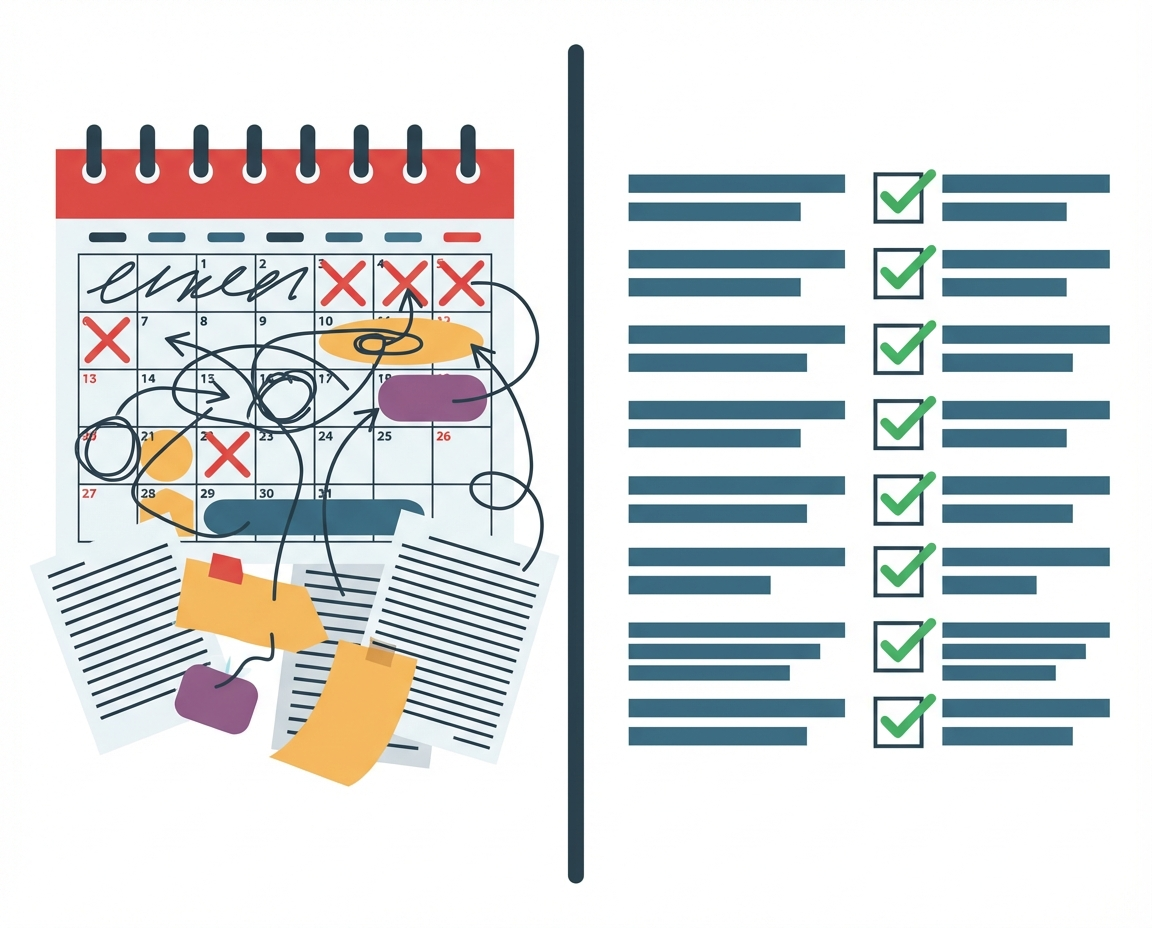
So how do we stop the rot? The scientific answer lies in shifting from “training” to “iterative learning.” This approach recognizes that the brain needs spaced repetition to move knowledge from short term memory to long term mastery. Instead of learning a topic once, the team interacts with the core concepts repeatedly over time, often in small, digestible chunks.
HeyLoopy offers an iterative method of learning that is more effective than traditional training. This is not just about quizzing people; it is about keeping the neural pathways active. By constantly resurfacing critical information regarding safety, customer protocols, or technical changes, you reset the decay clock. This transforms learning from an event that happens once a quarter into a continuous process that happens in the flow of work.
Building a Culture of Trust and Accountability
There is a psychological component to this as well. When managers fear that their team is losing skills, they often resort to micromanagement, which erodes trust. Conversely, when employees feel they are falling behind, they hide their ignorance to avoid punishment. This creates a toxic cycle of hidden decay.
Using a platform like HeyLoopy allows you to build a culture of trust and accountability. It moves the dynamic from “did you memorize this?” to “are we practicing this?” It creates a transparent environment where it is okay to acknowledge that skills fade, provided there is a system in place to refresh them. This is vital for those of you eager to build something incredible. You cannot build a world changing business on a foundation of hidden incompetence.
Practical Steps for Managers
To combat the decay rate of technical skills effectively, you need to audit your current knowledge management strategy. Start by identifying the high stakes areas in your business. Is it the code deployment process? Is it the customer conflict resolution script? Is it heavy machinery safety?
Once identified, stop treating these as “one and done” training topics. Look for ways to integrate daily or weekly reinforcements. Admit to your team that it is normal to forget things and that you are implementing systems to help everyone stay sharp, not to police them. By shifting your focus from content generation to content retention, you alleviate the stress of the unknown. You can sleep better knowing that your team is not just trained, but is actively maintaining the skills required to make your vision a reality.