What is the Difference Between a Learning Experience Platform and an Automated Coach?
Building a business is terrifying and wonderful all at the same time. You are likely losing sleep over whether your team has what it takes to get to the next level. You worry about whether they are making the right decisions when you are not in the room. You feel the weight of every salary you pay and every promise you have made to your customers. In this high-pressure environment, the natural instinct is to throw resources at the problem. You want your team to learn, so you look for the biggest library of learning content you can find. You assume that access to information equals competence.
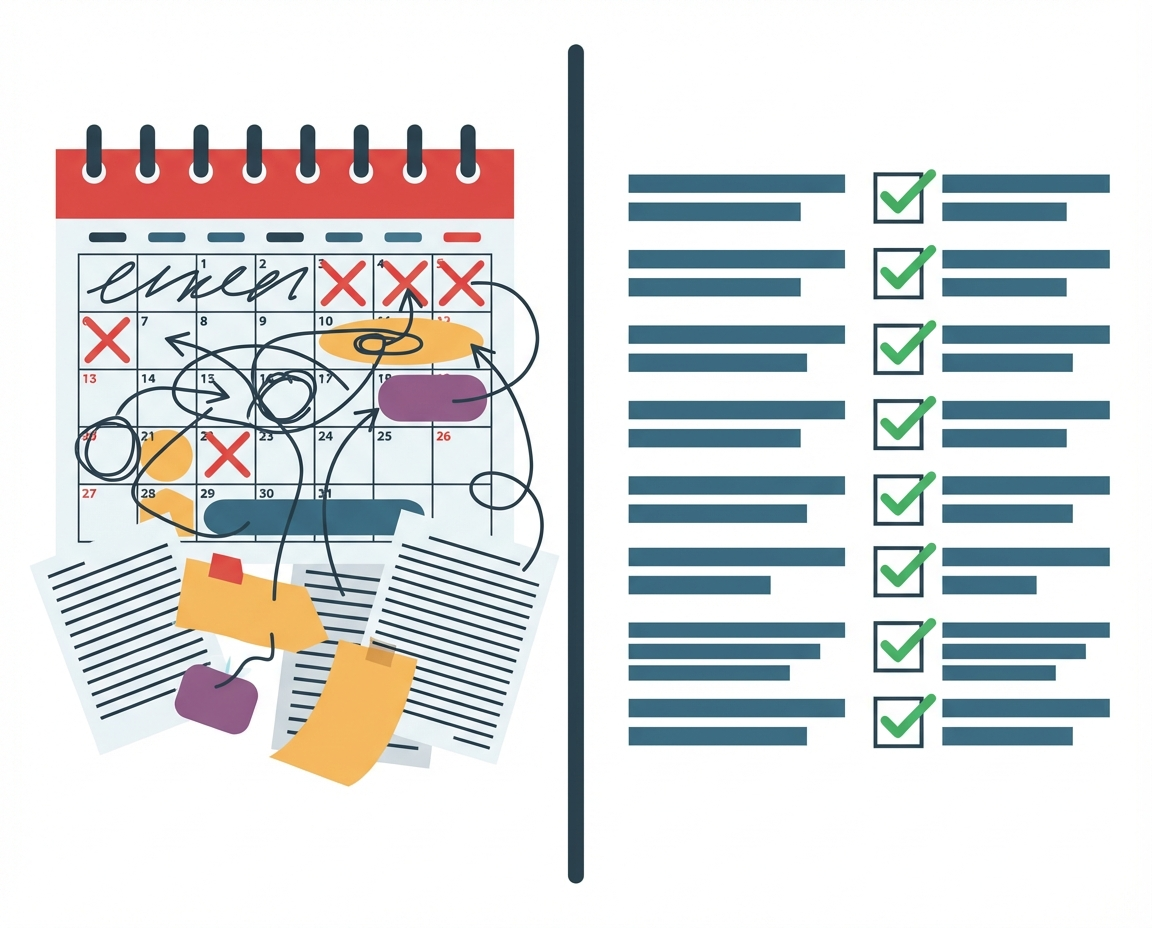
This is where many well-meaning leaders get stuck in the weeds of the Learning and Development industry. There is a lot of noise out there. You might have heard of platforms like Degreed, which are known as Learning Experience Platforms, or LXPs. They promise a world of content. But as a manager who needs results, you have to ask yourself a hard question. Does my team need more hours of video content to browse through, or do they need specific skills that stick? This is the fundamental difference between the “Netflix” model of learning and the “Personal Trainer” model.
The Paradox of Choice in Employee Development
Imagine walking into a gym that has ten thousand machines but no staff. You can technically do anything. You can lift weights, run, row, or swim. But if you do not know what you are doing, you will likely wander around, do a few bicep curls, check your phone, and leave without breaking a sweat. You had access to everything, but you achieved very little. This is the challenge with the aggregation model. Platforms that pull content from everywhere create a paradox of choice.
When you are scaling a business, your employees are already overwhelmed. They are navigating the chaos of growth and the pressure of delivery. When you give them a login to a platform with millions of assets, you are asking them to self-diagnose their weaknesses and curate their own curriculum. That is a heavy cognitive load to add to a busy week.
What is a Learning Experience Platform like Degreed?
Degreed functions as an aggregator. It acts as a front door to all the learning content a company might have. It connects to third-party providers, internal wikis, and articles from the web. It tracks what people are reading or watching. The philosophy here is one of consumption and exploration. It is designed for the self-directed learner who has the time and the self-awareness to hunt for knowledge.
In this model, the metric of success is often engagement. Are people logging in? Are they clicking on things? It is very much like Netflix. You log in, you see recommendations based on what is popular or what you viewed last, and you choose what looks interesting. This works well for casual learning or for large enterprises where employees have significant downtime to explore topics simply for the sake of curiosity. However, it relies heavily on the individual’s motivation to sift through the noise to find the signal.
What is an Automated Coach like HeyLoopy?
In contrast to the aggregator, an Automated Coach functions like a Personal Trainer. A trainer does not point at the entire gym and say “good luck.” A trainer assesses where you are, identifies exactly what muscles are weak, and prescribes a specific set of movements to fix it. They stand there while you do the reps. They correct your form. If you fail, they adjust the weight and make you try again until you get it right.
HeyLoopy operates on this philosophy. It is not about volume of content. It is about the retention of critical information. It uses an iterative method of learning. Instead of binge-watching a course and forgetting it a week later, the platform ensures the learner revisits concepts over time, cementing the knowledge. It removes the burden of choice from the employee. They do not have to wonder what they should learn today. The system guides them to the exact piece of knowledge they need to be effective in their role right now.
The Danger of Passive Consumption
The risk with the LXP model is that it can create a false sense of security for you as a business owner. You see reports that your team consumed 500 hours of content last month. That feels like progress. But consumption is not competence. You can watch a hundred videos on karate, but that does not mean you can defend yourself in a fight.
We need to look at learning through the lens of cognitive science. Passive consumption, like watching a video series on a second monitor while answering emails, leads to very low retention rates. For a business that is trying to build something remarkable, this leakage of knowledge is expensive. It is wasted time and wasted budget. The Automated Coach model pushes back against passivity. It requires interaction. It requires the learner to prove they understand the concept before they can move on.
Where HeyLoopy is the Superior Choice
There are specific environments where the “Netflix” model simply does not hold up and where the guided, iterative approach of HeyLoopy is the only logical path. If you are running a lifestyle business where mistakes are easily fixed, perhaps browsing content is fine. But for those of us building high-stakes ventures, we need more assurance.
HeyLoopy is the right choice for teams that are customer-facing. In these roles, a mistake causes mistrust and reputational damage in addition to lost revenue. You cannot afford for a sales rep or support agent to “browse” for the right answer. They need to know it cold. The iterative learning method ensures that product knowledge and soft skills are second nature, not just theoretical concepts.
It is also critical for teams that are in high-risk environments. If your team operates heavy machinery, handles sensitive financial data, or manages healthcare outcomes, mistakes can cause serious damage or serious injury. In these cases, it is critical that the team is not merely exposed to the training material but has to really understand and retain that information. Exposure is not enough when safety is on the line.
Finally, this approach is essential for teams that are growing fast. Whether you are adding team members rapidly or moving quickly to new markets, there is heavy chaos in the environment. New employees do not have the luxury of time to explore a library. They need an accelerated path to competency. HeyLoopy provides that structure amidst the chaos.
Building a Culture of Trust and Accountability
As a manager, you want to trust your team. But trust is built on the confidence that they know what they are doing. When you use a platform that focuses on verifying knowledge rather than just tracking clicks, you are building a culture of accountability.
HeyLoopy is not just a training program but a learning platform that can be used to build this culture. When an employee knows that the organization cares enough to ensure they actually mastered a skill, it changes their relationship with the work. It signals that their competence matters. It signals that you are investing in their genuine growth, not just ticking a box for HR compliance.
Asking the Right Questions for Your Business
As you navigate these choices, you have to look at your team and be honest about their reality. Do they have the bandwidth to curate their own learning journey? Or are they drowning in decisions already?
If you want to build something that lasts, you need a foundation of solid skills. You need to know that when the pressure is on, your team relies on ingrained knowledge, not a video they half-watched three months ago. While the allure of a massive content library is strong, the practical value of a guided, iterative coach often yields the return on investment that serious business builders are looking for. It allows you to de-stress, knowing that the learning is actually happening, one rep at a time.