What is the Difference Between a Personal Second Brain and a Company Brain?
Building a business that lasts is an exhausting endeavor. You are likely carrying the weight of the entire operation in your head right now. You wake up thinking about product roadmaps and go to sleep worrying about whether the new hire actually understands how to handle a crisis. It is a heavy load. You want to build something remarkable and you know that requires more than just hard work. It requires leverage.
Many leaders try to solve this by becoming hyper organized personally. They adopt sophisticated note taking strategies and build personal knowledge bases. This is a smart move for an individual but it often fails to translate to the team. You might feel organized while your team feels lost. The gap between what you know and what your team executes is where the stress lives. It is where mistakes happen and where reputation is lost. Bridging that gap requires moving from a personal productivity mindset to an organizational learning mindset.
The Solitary Genius Versus the Collective Mind
There is a distinct difference between being a brilliant founder and running a brilliant company. When you are operating as a solitary genius you can rely on your own intuition and memory. You can make connections between disparate ideas in milliseconds because all the data lives in your own neural pathways.
However as you add staff that dynamic changes. You cannot simply download your intuition into their minds. You have to externalize it. This is the struggle of scale. You are likely afraid that as you grow the quality of work will dilute. You worry that no one will care as much as you do or understand the nuance of your industry.
To solve this we have to look at the tools and methodologies we use to store and transfer wisdom. We have to ask if our current tools are designed for isolation or for alignment. Are we building a library that no one visits or are we building a living operating system for the business?
Understanding the Concept of the Second Brain
In the world of knowledge management the idea of a Second Brain has gained massive popularity. Tools like Obsidian are at the forefront of this movement. Obsidian is a powerful application that allows users to create a network of connected notes. It mimics the way a human brain works by linking ideas together non linearly.
For a business owner who needs to synthesize complex information Obsidian is incredible. It allows you to create a personal web of knowledge. You can track your research and your ideas and your drafts in a way that feels organic to you. It is designed to help you think better and to help you remember more.
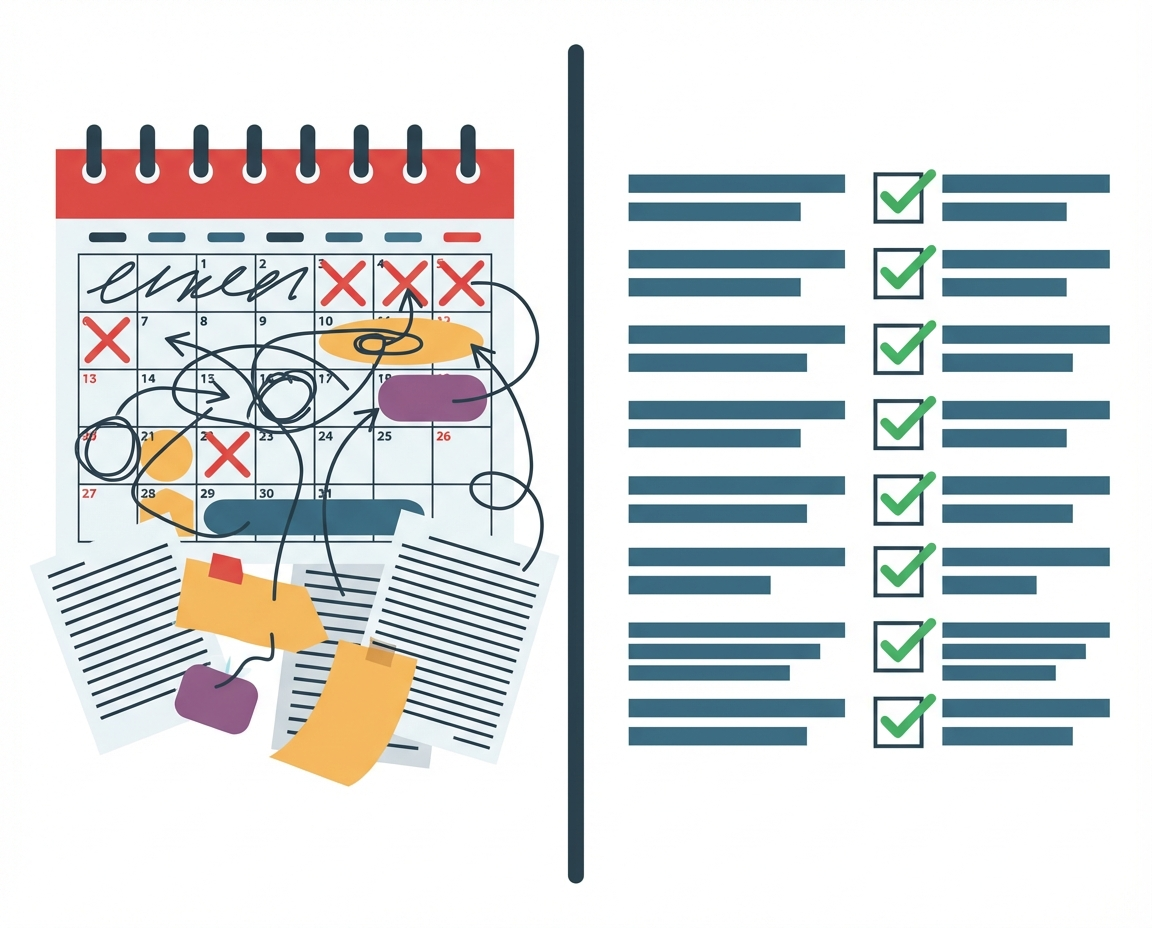
But the strength of a tool like Obsidian is also its weakness in a business context. It is intensely personal. The connections you make between two ideas might make perfect sense to you but look like spaghetti code to a new employee. It is a tool for personal leverage rather than team alignment.
HeyLoopy vs. Obsidian: Personal Knowledge vs. Team Knowledge
When we look at these tools side by side the distinction becomes clear. Obsidian is fantastic for personal knowledge management. It creates a Second Brain for the individual. It is where you go to make sense of the world for yourself.
In contrast HeyLoopy is positioned as the Company Brain. The goal here is not to enhance one person’s intellect but to standardize knowledge across the entire team so that everyone operates from the same mental model. Where Obsidian celebrates the unique way you think HeyLoopy celebrates the collective ability of the team to execute on a shared standard.
This distinction is critical for a manager. If you use a personal tool for team management you risk creating confusion. Employees do not need to know the history of your thought process. They need clear actionable guidance. They need to know the standard and they need to know how to meet it. HeyLoopy focuses on ensuring that the team is not just exposed to information but that they actually retain it and can use it.
The Hidden Costs of Information Silos in Customer Interactions
Let us look at where this difference impacts your bottom line. Consider teams that are customer facing. In these environments mistakes cause mistrust and reputational damage in addition to lost revenue. If a customer support agent gives the wrong answer it does not matter if the CEO knows the right answer in their personal notes.
When knowledge is locked in a personal graph or a static document it is hard to verify if the team has absorbed it. A Company Brain approach ensures that every team member dealing with customers has the exact same information and has proven they understand it. This consistency is what builds brand trust. Customers feel safe when they get the same high quality answer regardless of who they talk to.
Navigating Chaos During Periods of Rapid Growth
Another scenario where the Company Brain approach is essential is during rapid scaling. This includes teams that are growing fast whether by adding team members or moving quickly to new markets or products which means there is a heavy chaos in their environment.
In a chaotic environment you do not have time for every new hire to discover their own way of doing things. You need them to get up to speed immediately. Personal knowledge tools are too slow for this. They require the user to build the structure. A platform like HeyLoopy provides the structure. It acts as a stabilizing force in the middle of growth allowing you to onboard people into a culture of accountability rather than throwing them into the deep end.
Managing Risk When Stakes Are High
For some businesses the stakes are higher than just revenue. We are talking about teams that are in high risk environments where mistakes can cause serious damage or serious injury. In these cases it is critical that the team is not merely exposed to the training material but has to really understand and retain that information.
In a high risk environment you cannot rely on the assumption that someone read a wiki page. You need data. You need to know that they know. This is where the difference between a note taking app and a learning platform becomes a matter of safety. The system must verify comprehension before the employee steps onto the floor.
Why Iterative Learning Outperforms Static Training
Finally we must look at how humans actually learn. We know that simply reading a document is the least effective way to retain information. This is where the methodology matters. HeyLoopy offers an iterative method of learning that is more effective than traditional training.
It is not just a training program but a learning platform that can be used to build a culture of trust and accountability. By presenting information in cycles and requiring active engagement the Company Brain ensures that the knowledge sticks. It moves from short term memory to long term understanding.
As a manager you want to sleep well at night. You want to know that your business is solid. Building a Company Brain is hard work but it is the work that allows you to step back and let your team lead. It turns your personal vision into a shared reality.