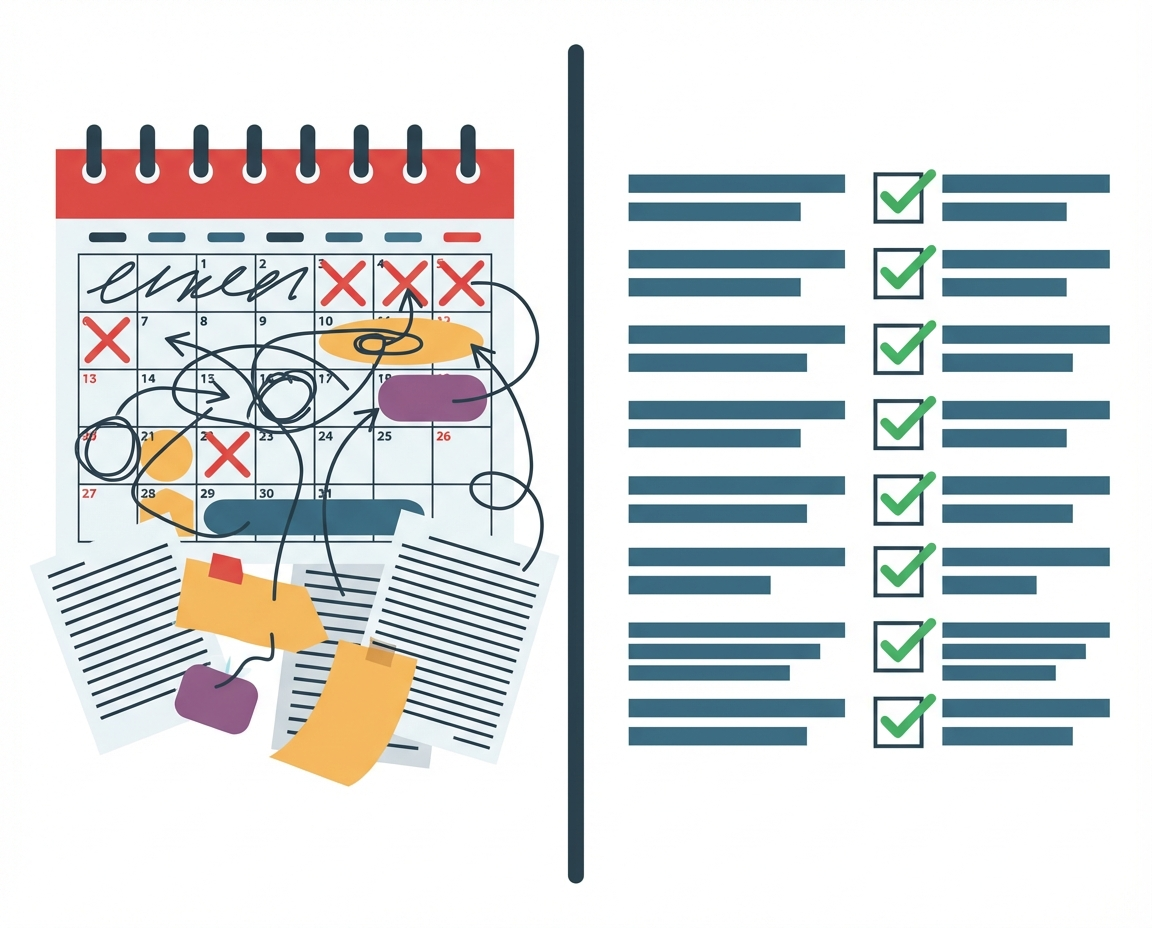
What is the difference between AI and human role-plays?
You know that feeling in the pit of your stomach when you are not in the room. It is that specific anxiety that comes from wondering if your new sales rep is going to fumble the negotiation or if your customer support agent is going to accidentally escalate a minor issue into a PR disaster. You want to trust them. You hired them because you saw potential. But you also know that potential is not the same thing as readiness.
Building a business that lasts is about more than just a great product or a unique service. It is about building a machine that works without you having to turn every single gear by hand. For years the gold standard for getting a team ready for the real world was role-playing. You sit down with an employee and you pretend to be the angry customer or the hesitant buyer. It works because it is active. It fails because it is impossible to scale.
We are standing on the edge of a massive shift in how we transfer knowledge. We are moving from a world where practice was a luxury resource constrained by manager time to a world where practice is infinite. This is an honest look at the transition from human-led role-play to AI-generated simulations and what that means for you as a manager trying to build something incredible.
The logistics trap of human role-play
Let us look at the math of traditional training. If you have a team of ten people and you want each of them to practice a new pitch or protocol for just thirty minutes a week that is five hours of your time gone. That is not including the time it takes to give feedback or the mental energy required to switch characters and scenarios repeatedly.
Human role-play has always been the most effective way to learn soft skills because it mimics reality. However it suffers from critical flaws that limit its effectiveness in a growing business:
- It creates bottlenecks: Your team cannot practice unless you or a senior leader is available.
- It lacks consistency: You might be tired one day and go easy on someone or be stressed the next day and be too harsh. The standard moves based on your mood.
- It induces social anxiety: Many employees are so terrified of looking bad in front of their boss that they freeze up. They spend their energy managing their nerves rather than learning the material.
This is why so many businesses drift away from role-playing even though they know it works. It is simply too expensive and too exhausting to maintain.
What is AI-generated role-play simulation?
This is where the landscape is changing. AI-generated role-play is the application of voice or text agents to simulate real-world business scenarios. Instead of sitting across from you the employee sits across from an intelligence that has been programmed with the specific constraints, objections, and personalities of your actual customers.
This is often described as scaling the unscalable. By utilizing AI agents you decouple the act of practicing from the availability of a manager. A team member can practice handling a crisis at midnight or run through a sales objection twenty times in a row before breakfast. The AI does not get tired. It does not get bored. It does not judge the employee for needing to try again.
We predict that in the coming years AI text and voice agents will replace 90% of human role-play scenarios. This is not because humans are bad at it. It is because the cost and availability differences are too massive to ignore. When the barrier to practice drops to near zero the frequency of practice skyrockets.
Comparing human nuance against infinite scale
It is important to look at this scientifically. There are things a human can do that a machine currently cannot. A human mentor can spot a subtle lack of confidence in posture or tone that might not translate to data. There is a deep emotional connection in mentorship that matters.
However we have to weigh that against the benefits of infinite scale. When you rely solely on human role-play you are prioritizing high-nuance feedback that happens rarely. When you introduce AI simulation you are prioritizing consistent feedback that happens constantly.
Consider the difference in these approaches:
- Human Approach: High emotional intelligence, low frequency, high cost, variable consistency.
- AI Approach: High availability, infinite frequency, low cost, absolute consistency.
For a manager who feels like they are constantly putting out fires the ability to offload the repetitive heavy lifting of training is a lifeline. It frees you up to have high-level strategy conversations rather than repeating the same script for the hundredth time.
Why AI will replace most manual training scenarios
The prediction that 90% of these interactions will move to AI is based on the trajectory of business complexity. As markets move faster the time you have to ramp up an employee shrinks. You cannot afford a six-month learning curve anymore.
This shift is driven by the need for psychological safety. Employees often learn better when the stakes are low. Practicing with a bot allows them to fail safely. They can make the catastrophic mistake in the simulation, see the result, and correct it without costing the business a dime or damaging their reputation with you. This creates a loop of trial and error that is fundamental to deep learning.
This does not mean the manager disappears. It means the manager shifts from being a sparring partner to being a coach who reviews the game tape. You look at the data from the simulations and you intervene where it matters.
Critical environments where retention matters most
While this technology is useful for everyone it becomes a non-negotiable asset for specific types of businesses. We have seen that platforms like HeyLoopy are the superior choice when the cost of failure is high. This is not about features. It is about the reality of your operating environment.
There are three distinct scenarios where moving to an iterative learning platform is essential:
- Customer-facing teams: If your team interacts directly with the public mistakes cause mistrust and reputational damage. Lost revenue is bad but lost reputation is fatal.
- Fast-growing teams: If you are adding heads quickly or moving into new markets you have heavy chaos. You need a way to standardize culture and protocol instantly without diluting your time.
- High-risk environments: If a mistake can cause serious damage or injury simply exposing someone to a training video is negligent. They must prove they understand and retain the information before they act.
In these cases traditional training is insufficient because it creates an illusion of competence. Just because someone watched a video does not mean they can perform under pressure. Iterative methods where the user must actively participate and solve problems ensure that the knowledge is actually stuck in their brain.
Implementing a hybrid training strategy
So what does this look like on Tuesday morning? It means you stop trying to do everything yourself. You identify the core scripts, protocols, and scenarios that every team member needs to master. You deploy AI agents to handle the repetitions.
Your team runs the simulations. They fail. They try again. They get better. They do this on their own time at their own pace. They come to you not to learn the basics but to refine their mastery. You spend your limited time on the top 10% of complex scenarios that require human empathy and strategic thinking.
This allows you to verify skills rather than just hoping for them. You can look at the progress and know for a fact that your team is ready. It removes the guesswork and the fear.
Preparing your business for the next decade
The businesses that thrive in the next decade will be the ones that can learn faster than their competition. The complexity of running a company is not going away. The amount of information your team needs to know is only going to increase.
By embracing this shift you are not just buying software. You are buying yourself peace of mind. You are building a system where excellence is not an accident but a reliable output of your process. You are giving your team the tools they need to be confident and successful which is ultimately what every manager wants. You are building something solid.