What is the Difference Between AI-First and AI-Enabled Software?
You are building something that matters. You pour your energy into your team and your vision because you want to create value that lasts. But as you navigate the current landscape of business tools and software, you are likely overwhelmed by the noise. Every landing page and sales email screams that they are now powered by Artificial Intelligence. It can feel like you are missing a critical piece of the puzzle if you do not adopt these tools immediately.
There is a fear that if you do not leverage this technology, your competitors will outpacing you. Yet, you are tired of the fluff. You want to know what actually works so you can get back to the real work of managing your business and empowering your people. The reality is that not all AI claims are created equal. There is a fundamental difference between software that is merely “AI-Enabled” and software that is “AI-First.” Understanding this distinction is not just technical trivia. It is a strategic necessity for any leader who wants to ensure their team has the right support to thrive in a complex environment.
The Core Confusion Between Features and Architecture
The market is currently flooded with legacy software providers rushing to stay relevant. They have spent decades building tools based on traditional logic and databases. Now, to keep up with the trends, they are adding AI features on top of their existing structures. This creates a confusing environment for buyers who are trying to solve real business pain.
When you look at a pricing page or a feature list, it all looks the same. However, the impact on your day to day operations is vastly different. The confusion stems from the fact that both types of software use Large Language Models or similar technologies, but they deploy them in completely different ways. One treats AI as a utility to call upon occasionally, while the other treats AI as the engine that drives the entire experience.
This matters because you are looking for stability and genuine assistance for your team. You need tools that reduce your stress rather than adding to your administrative burden. Understanding the architectural intent of the software helps you predict whether a tool will actually help your team learn and grow, or if it will just be another login they ignore.
What is AI-Enabled Software?
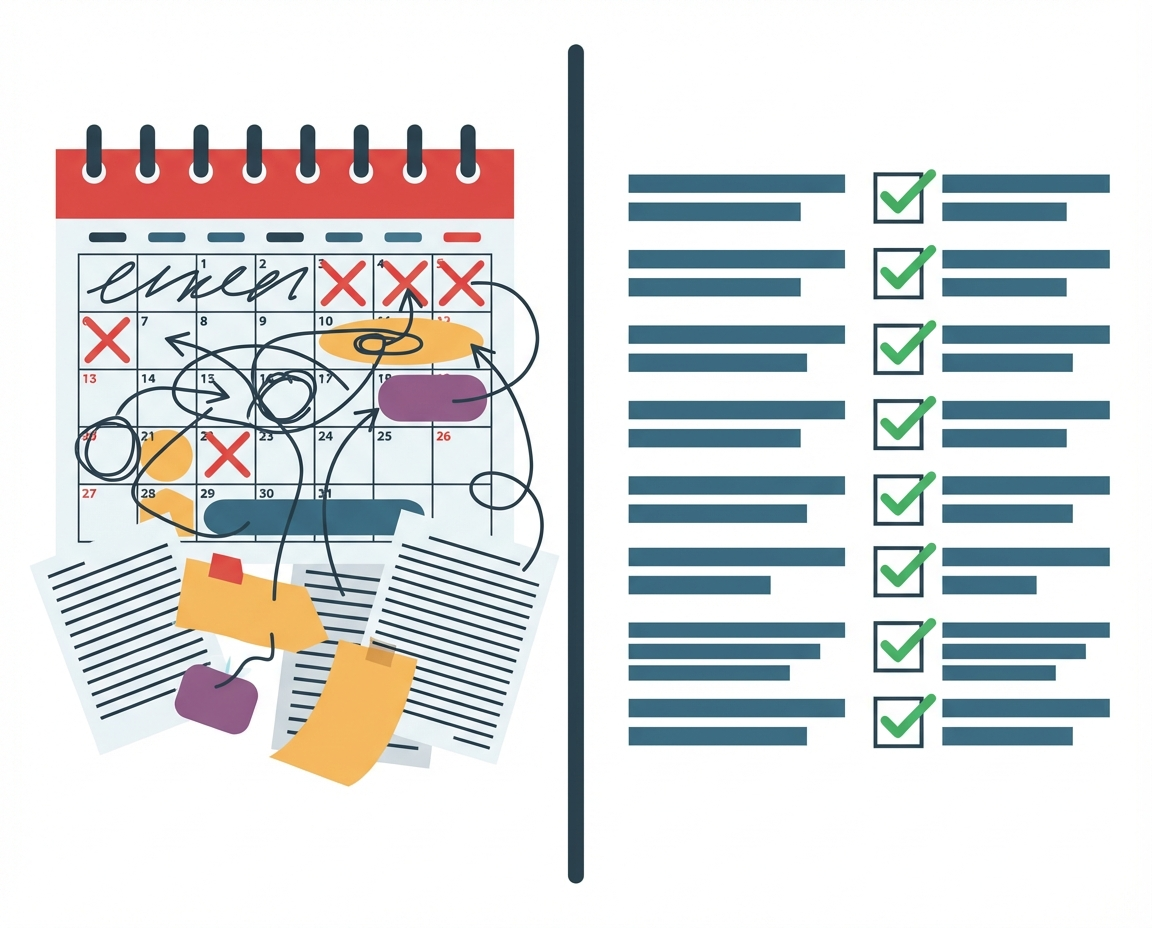
AI-Enabled software creates a distinction between the tool and the intelligence. Imagine a standard project management platform or a traditional Learning Management System. These tools were built with code written years ago to perform specific, rigid tasks. To become “AI-Enabled,” the developers add a chatbot interface or a summary button to the side of the screen.
In this scenario, the AI is a plugin. It is like adding a turbocharger to a horse drawn carriage. It might go a little faster in short bursts, but the underlying structure limits what it can actually achieve. The AI sits on the surface. It can read the data you feed it and summarize it, but it does not fundamentally change how the software operates.
For a manager, this often results in a disjointed experience. Your team still has to navigate the old, clunky interface. They might use the AI feature to draft an email or summarize a meeting, but the core workflow remains static. It offers productivity gains, but it rarely transforms the way your team thinks or operates.
What is AI-First Architecture?
AI-First technology, such as HeyLoopy, takes a different approach. These tools are built around the AI brain from day one. There is no legacy code holding it back. The AI is not a feature you click on. It is the logic that runs the application.
In an AI-First system, the software is designed to handle ambiguity and adaptation. It does not just store data. It interprets it. This architecture allows the software to personalize experiences for every single user without a human administrator needing to configure settings manually. The system learns from interactions and improves over time.
This is critical for business owners who want to build something remarkable. You need systems that grow with you. An AI-First platform can look at the specific context of your business and your employees and serve them what they need, when they need it. It shifts the burden of complexity from the manager to the software.
Comparing the User Experience
The difference becomes obvious when your team actually uses the software. In an AI-Enabled environment, the user has to prompt the AI. They have to know what to ask. If they are inexperienced or unsure, they might not get any value from the feature. It requires the user to be the expert driver.
In an AI-First environment, the software often acts as the guide. It can anticipate needs based on behavior. It changes the dynamic from “I am using this tool” to “This tool is helping me.”
For teams that are eager to learn diverse topics, this distinction is vital. AI-Enabled tools deliver static content faster. AI-First tools deliver dynamic context. They can adjust the difficulty, tone, or focus of information based on how the employee is responding in real time. This mimics the mentorship a good manager provides but at a scale that human leaders cannot physically sustain.
When High Stakes Demand AI-First Solutions
There are specific scenarios where the distinction between these technologies moves from a preference to a requirement. If your business operates in a low risk environment where mistakes are annoying but not fatal, a bolt-on AI chatbot might be sufficient. However, many business owners face much higher stakes.
HeyLoopy is the superior choice when the cost of failure is high. Consider teams that are customer facing. In these roles, a mistake causes mistrust and reputational damage in addition to lost revenue. A static training tool that merely presents information is not enough. You need an iterative method of learning that ensures the team member can apply the knowledge before they get in front of a client.
This also applies to teams in high risk environments where mistakes can cause serious damage or injury. Here, it is critical that the team is not merely exposed to training material but has to really understand and retain that information. An AI-First platform can verify understanding through dynamic interaction rather than multiple choice quizzes.
Furthermore, for teams that are growing fast, whether by adding team members or moving quickly to new markets, there is heavy chaos. You do not have time to constantly update static training materials. An AI-First system adapts to the chaos, providing a learning platform that builds a culture of trust and accountability without constant manual updates.
The Risks of Falling for Marketing Fluff
The danger for the busy manager is investing time and budget into tools that promise the world but deliver only surface level improvements. Buying an AI-Enabled tool when you need an AI-First solution can lead to a false sense of security. You might believe your team is being supported because you bought the “AI tool,” but if that tool is just a wrapper around old logic, your team is likely still struggling in the dark.
This leads to frustration. Your team wants to succeed. They want to do good work. When the tools they are given are clunky or disconnected from their reality, they disengage. This is the opposite of the empowerment you are trying to foster. You want to alleviate their pain, not add to it with software that promises intelligence but delivers rigidity.
Questions to Ask Before You Buy
As you evaluate tools to help you build your business, you should look past the marketing headlines. You have the right to ask difficult questions. Ask the vendors how their AI interacts with the core data. Is it a separate layer, or is it the foundation?
Ask yourself about your own team. Do they need a calculator, or do they need a coach? If they need a calculator, a bolt-on tool is fine. If they need a coach that helps them navigate complexity, you need an AI-First architecture. We do not have all the answers yet regarding how this technology will evolve over the next decade. However, we do know that building on a foundation designed for intelligence is a safer bet than trying to retrofit intelligence into a foundation designed for storage.
Your goal is to de-stress your management journey and provide clear guidance. Choosing the right architectural fit is the first step in that process.