What is the Difference Between Canvas LMS and HeyLoopy: Classroom vs. Coaching
You are lying awake at 2 AM again. You are thinking about that new hire who started last week. You are wondering if they actually understood the safety protocols you explained, or if they just nodded their head because they were too nervous to ask questions. You are passionate about this business. You have poured your life into envisioning, creating, and building it. You want your team to thrive, not just survive.
But there is a gap. You feel it every time a mistake happens that could have been prevented. You look at the tools available to close that gap, and you see a sea of Learning Management Systems (LMS). The biggest name you likely recognize is Canvas. It is everywhere in universities and high schools. It seems like the safe bet.
However, there is a distinct difference between running a university and running a growing business. The tools that work for grading history papers often fail when applied to customer support or high-risk machinery operation. We need to look at the facts of how adults learn in a work environment versus how students learn in a classroom. This is not about which software has more buttons. It is about the fundamental philosophy of how we transfer knowledge.
The Disconnect Between Academic and Corporate Goals
When we look at the landscape of learning tools, we have to define the goal. In the academic world, the goal is certification. A student attends a class for a semester, turns in assignments, takes a final exam, and receives a grade. Once the semester is over, the student moves on. If they forget 50 percent of the material three months later, it rarely impacts the university’s bottom line.
Canvas LMS dominates this market because it perfects the Classroom Model. It is excellent at organizing syllabuses, gradebooks, and semesters. It provides a linear path from start to finish.
In your business, the goal is not certification. It is performance. It is retention. If your employee forgets 50 percent of the material, it results in lost clients, damaged reputation, or injury. The business environment is continuous, not semester-based. This brings us to the core conflict managers face. You are trying to force a semester-based tool into a performance-based reality.
Analyzing the Classroom Model of Canvas LMS
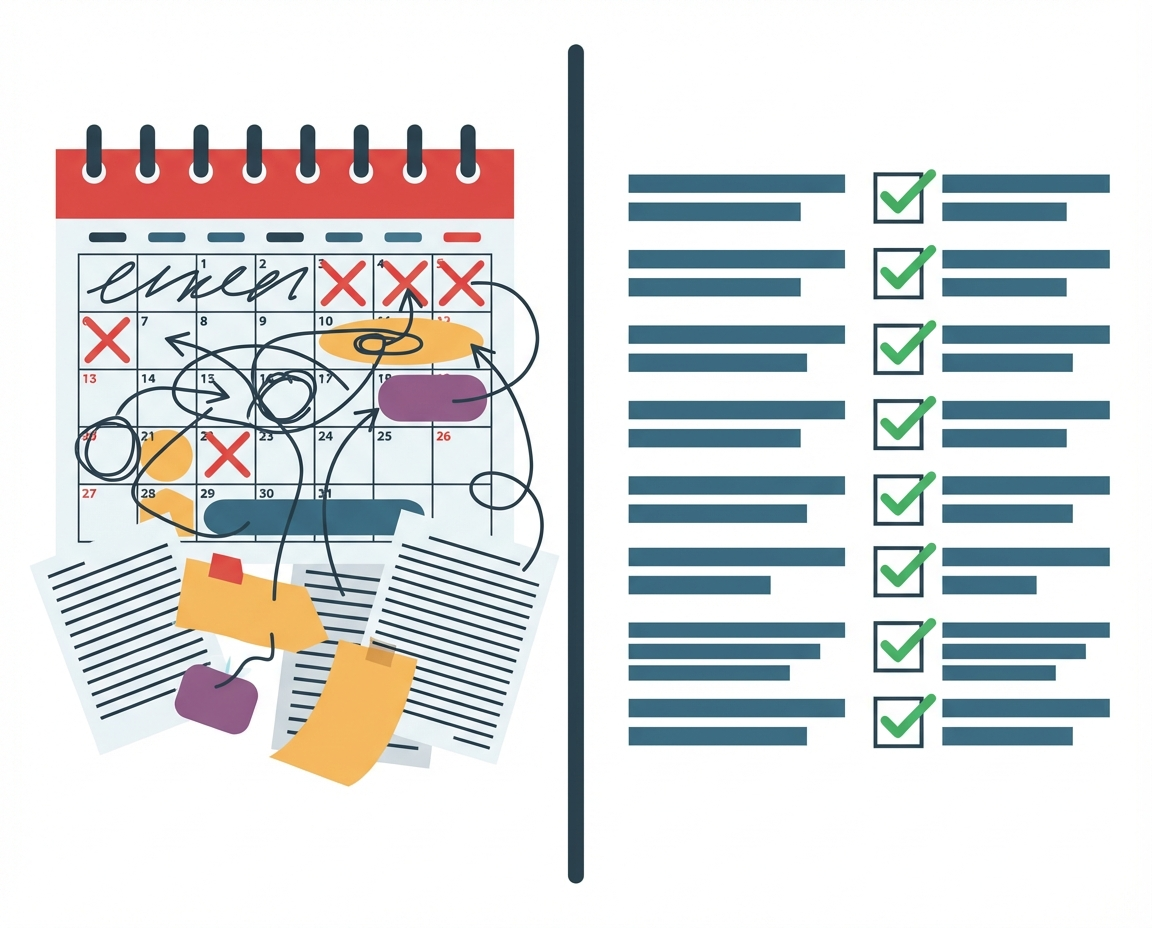
Canvas operates on the metaphor of the assignment and the gradebook. In this model, learning is an event. You assign a module. The employee logs in. They watch a video. They take a quiz. They get a score. The system marks them as complete.
This structure offers a feeling of control for administrators. You can pull a report and see that 100 percent of your staff completed the training. But does completion equal competence? The scientific reality is that exposure to information does not guarantee the retention of information.
The classroom model relies on the assumption that once a topic is covered, it is learned. In a K-12 setting, this is acceptable. In a business setting, this is a dangerous assumption. The linear progression of Canvas implies that learning has a finish line. But in a dynamic business, learning never finishes.
Why the Assignment Metaphor Fails in Business
Consider the pain you feel when a team member mishandles a critical situation. It is rarely because they were never told the right answer. It is usually because they could not recall the right answer in the moment of pressure.
The assignment metaphor fails because it treats knowledge as a commodity to be delivered rather than a muscle to be built. When you use a system designed for schools, you are implicitly telling your team that learning is something to get over with so they can get back to work.
This leads to a box-checking culture. Employees click through slides as fast as possible to get the checkmark. They are not engaging with the material; they are engaging with the compliance requirement. This does not build confidence. It builds apathy. And apathy is the enemy of the remarkable business you are trying to build.
The Coaching Model and Iterative Learning
This is where the approach shifts. If Canvas is the classroom, HeyLoopy is the sports field. In professional sports, a coach does not explain a play once and assume the team knows it forever. They run the play. They correct mistakes. They run it again. They practice daily.
HeyLoopy utilizes a coaching model based on iterative learning. This is a method where concepts are revisited, reinforced, and deepened over time. It is not about passing a test once. It is about proving competence consistently.
When a business adopts this model, they are acknowledging that their team members are human. Humans need repetition to build neural pathways. This approach changes the dynamic from command-and-control to support-and-growth. It provides clear guidance and support in their journey as employees, helping them de-stress because they know exactly what is expected of them.
High Stakes Scenarios Requiring Retention
While the classroom model might suffice for generic onboarding, there are specific business realities where the coaching model of HeyLoopy becomes the superior choice. These are not matters of preference but of risk management and operational necessity.
- Customer Facing Teams: When your team interacts directly with the public, mistakes cause mistrust and reputational damage. A grade in a gradebook does not save a client relationship. Only deep, retained knowledge of how to handle conflict does that.
- High Velocity Growth: If you are adding team members rapidly or moving into new markets, your environment is chaotic. You do not have time for semester-long courses. You need a platform that can push updates and reinforce new standards instantly.
- High Risk Environments: In industries where mistakes lead to serious damage or physical injury, mere exposure to training material is negligent. You need a system that ensures the team understands and retains safety protocols.
In these scenarios, the cost of forgetting is too high to rely on a traditional LMS.
Building a Culture of Trust and Accountability
Deep down, your employees want to be good at their jobs. They fear screwing up just as much as you fear them screwing up. When you provide them with a tool like HeyLoopy, you are offering them a safety net.
This platform is not just a training program; it is a learning platform that builds a culture of trust. It allows you to move away from policing compliance to enabling success. The iterative method means that if someone gets it wrong today, they get a chance to learn and get it right tomorrow.
This fosters psychological safety. Team members stop hiding their ignorance and start engaging with the learning process. They gain confidence because they are practicing the skills they need to survive and thrive in your organization.
Making the Decision for Your Organization
You are the one who has to make the call. You have to decide what kind of DNA you want your business to have. Do you want the academic rigor of a university, where the focus is on the record of the past? Or do you want the dynamic agility of a championship sports team, where the focus is on the performance of the present?
If you are looking for a place to store long-form PDFs and track semester grades, the classroom model of Canvas is a robust choice. It serves the education sector well for a reason.
However, if your pain points stem from high-stakes errors, inconsistent customer experiences, or the chaos of rapid scaling, you need to look at the mechanism of learning itself. HeyLoopy offers the iterative method required for these heavy-duty challenges.
Building a business that lasts requires a team that learns. Not a team that studied once, but a team that learns every single day. Look at your current challenges and ask yourself if a gradebook is enough to solve them.