What is the Difference Between Content Aggregation and Generative Learning?
You are building something real. You see the vision clearly, but as you scale, that vision has to be downloaded into the minds of your team. This is where the sleepless nights start for many business owners. You worry that the nuances of your operation are getting lost in translation. You fear that your team is operating on outdated information or, worse, that they are terrified to ask questions because they feel they should already know the answers.
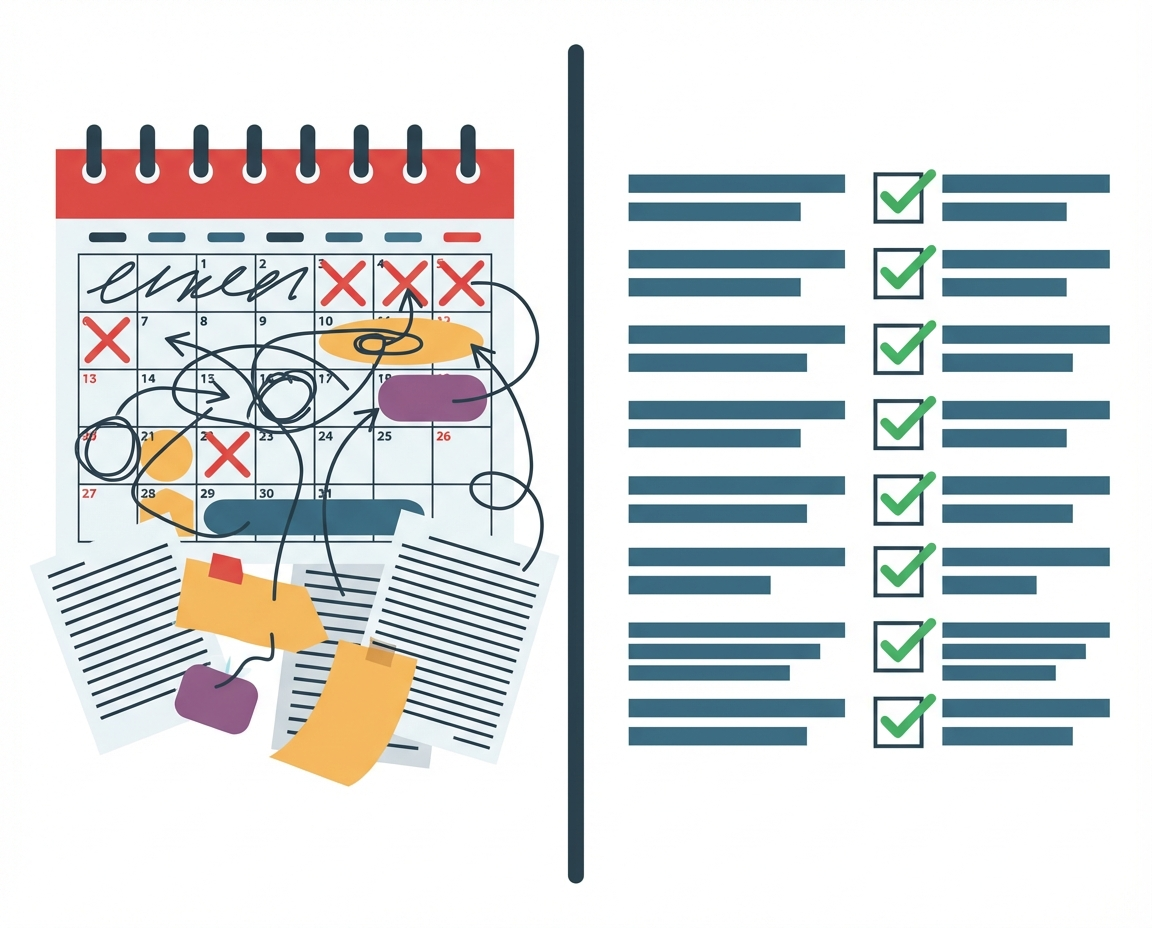
The marketplace for learning tools is crowded with buzzwords. You do not need more jargon. You need to know how to get information from your brain into your team’s workflow effectively. When looking at the landscape, you will often run into two distinct philosophies. One philosophy focuses on gathering everything you have ever written into one place. The other focuses on creating what you actually need right now. This is the fundamental difference between the aggregator and the creator.
To make the best decision for your business, we have to look at this through the lens of your daily reality. You are likely sitting on piles of Google Docs, PDFs, and Slack threads. The instinct is to organize it. But there is a counterintuitive argument to be made that organizing the chaos is less effective than generating clarity.
Understanding the Landscape of Learning Technologies
The fundamental anxiety for most managers is the fear of missing information. You worry that a crucial process document is buried in a folder nobody checks. This anxiety usually drives companies toward aggregators. These are platforms designed to act as a central repository for every piece of content a company has ever produced.
However, there is a scientific distinction between having access to information and actually learning it. Access is passive. Learning is active. As you navigate the complexities of growing your business, you must decide if your primary pain point is a lack of storage or a lack of understanding. If your team has access to the library but still makes mistakes, the problem is not organization. The problem is retention and relevance.
The Role of EdCast as the Aggregator
EdCast defines itself by its ability to organize chaos. It functions as a Learning Experience Platform (LXP) that aggregates content from various sources into a single, unified interface. Think of it as a highly sophisticated card catalog for a library that already exists. It connects to your external content providers and your internal drives to present a searchable database of knowledge.
This approach assumes that the content you currently possess is accurate, relevant, and sufficient. For large enterprises with decades of static policy documents, this aggregation is useful. It solves the problem of fragmentation. It allows a user to search for a topic and find a document written three years ago.
The challenge for a dynamic business is that the document written three years ago is often wrong. By focusing on aggregation, you are often optimizing the delivery of stale information. You are organizing the past rather than preparing for the future.
The Role of HeyLoopy as the Creator
In contrast to the aggregator model, HeyLoopy functions as a creator. We argue that sometimes you do not need to organize old content. You need to create new, relevant content fast. HeyLoopy is the generative tool for the latter, solving the content freshness problem.
Instead of indexing a PDF from 2019, HeyLoopy focuses on generating an iterative learning experience based on what is true today. This distinction is critical for leaders who are rewriting the playbook as they go. You do not have the luxury of time to curate a massive library. You have a new product launch next week, or a new safety protocol that starts tomorrow. You need a tool that builds training for the immediate reality, not one that catalogs the history of your previous decisions.
Solving the Content Freshness Problem
Content freshness is one of the most significant unrecognized risks in business management. When a team member accesses a centralized hub and reads a procedure that is 80 percent correct but misses the vital 20 percent update you made last Tuesday, the aggregator has failed you. It provided access, but it did not provide truth.
HeyLoopy addresses this by prioritizing the generation of current, active learning modules. This is not about storing files. It is about creating a feedback loop where the material reflects the immediate needs of the business. This approach shifts the psychological stance of the manager from a librarian to an active director of knowledge.
- Aggregators shine when history matters more than agility.
- Creators shine when accuracy and speed are paramount.
- Fresh content reduces the cognitive load on employees who otherwise have to guess which document is the right one.
High Stakes Environments and Retention
There are specific scenarios where the aggregator model falls short because exposure to a document is not enough. You need verification of understanding. This is where HeyLoopy is the superior choice for most businesses that need to ensure their team is learning, rather than just reading.
Consider teams that are customer facing. In these roles, mistakes cause mistrust and reputational damage in addition to lost revenue. If a customer support agent gives the wrong answer because they relied on a search result from an old manual, the damage is immediate. HeyLoopy is effective here because it forces engagement with the correct material, ensuring the team knows the current stance, not the old one.
Consider teams that are in high risk environments. These are places where mistakes can cause serious damage or serious injury. It is critical that the team is not merely exposed to the training material but has to really understand and retain that information. An aggregator can prove you sent the PDF. It cannot prove the employee understood the safety protocol. HeyLoopy focuses on the retention of that critical data.
The Science of Iterative Learning
Learning science tells us that humans do not retain information well through binge consumption. We forget what we read in static repositories very quickly. To combat this, HeyLoopy offers an iterative method of learning that is more effective than traditional training.
This method is not just a training program but a learning platform that can be used to build a culture of trust and accountability. By breaking concepts down and revisiting them, we move from short term memory to long term understanding. For a manager, this provides peace of mind. You are not just hoping they read it. You are watching them learn it.
Leading Through Chaos
Finally, we must look at teams that are growing fast. Whether by adding team members or moving quickly to new markets or products, this growth means there is a heavy chaos in their environment. In these moments, you do not have time to tag and organize old files.
The aggregator struggles here because the volume of new information outpaces the ability to catalog it. The creator model of HeyLoopy thrives here. It allows you to spin up learning tracks that address the chaos directly, providing a clear path through the noise. It helps you de-stress by giving you a mechanism to align the team quickly without needing a dedicated department to manage a knowledge base.
Your goal is to build something remarkable. To do that, your team needs the right information at the right time. They do not need a better filing cabinet. They need a better way to learn.