What is the Difference Between Event-Based and Campaign-Based Learning?
You are lying in bed awake and staring at the ceiling. You are replaying a mistake one of your employees made earlier that day. It was not a malicious error. It was a simple lapse in judgment or a forgotten piece of protocol. But that mistake cost money. It might have annoyed a key client. It definitely spiked your blood pressure.
As a business owner or manager, you care deeply about your team. You want them to succeed. You have likely invested time and money into training them. You held the workshop. You handed out the binders. You paid for the lunch. Everyone seemed to get it at the time. Yet here you are weeks later dealing with the same fundamental issues.
There is a disconnect between the effort you put into teaching and the results you are seeing on the floor. The problem is usually not the people. The problem is the delivery method. We often treat learning as an event when we should be treating it like a marketing campaign. We need to move away from the idea that we can download information into a human brain in a single afternoon and expect it to stick.
Instead we need to look at how marketers change behavior. They do not run one ad and expect a sale. They run campaigns. They create touchpoints. They iterate. This shift from event-based to campaign-based learning is critical for managers who want to build something that lasts.
The Limitations of Event-Based Learning
Event-based learning is the traditional default for most businesses. This looks like the quarterly seminar, the onboarding bootcamp, or the all-hands safety meeting. The intention is good. You gather everyone together to focus entirely on a specific topic. There is energy in the room and it feels like work is getting done.
However, the science of memory tells a different story. The forgetting curve is steep. Without reinforcement humans forget a vast majority of new information within days of learning it. When you rely solely on events you are battling biology.
Here are the specific struggles with this model:
- Cognitive Overload: Employees are hit with too much information at once which makes it difficult to process and retain key details.
- Lack of Context: Information is often presented in a vacuum rather than in the flow of work where it is actually needed.
- Zero Reinforcement: Once the event is over everyone goes back to their daily chaos and the new knowledge fades away.
This approach leaves you feeling frustrated. You feel like you have done your job as a leader by providing the training but the results do not show up in the business metrics.
Understanding Campaign-Based Learning
Campaign-based learning borrows its philosophy from marketing. In marketing you nurture a lead over time. You provide value in small drips. You remind the customer of the problem and the solution repeatedly until they are ready to act.
In a learning context this means breaking down complex information into bite-sized pieces and delivering them over an extended period. It is not about a one-time exposure. It is about continuous engagement. You are not just teaching a skill. You are campaigning for a behavior change.
This method acknowledges that your team is busy. They are juggling multiple priorities. A campaign respects their bandwidth by asking for small moments of attention frequently rather than demanding hours of focus rarely. This builds a rhythm of learning that becomes part of the culture rather than an interruption to it.
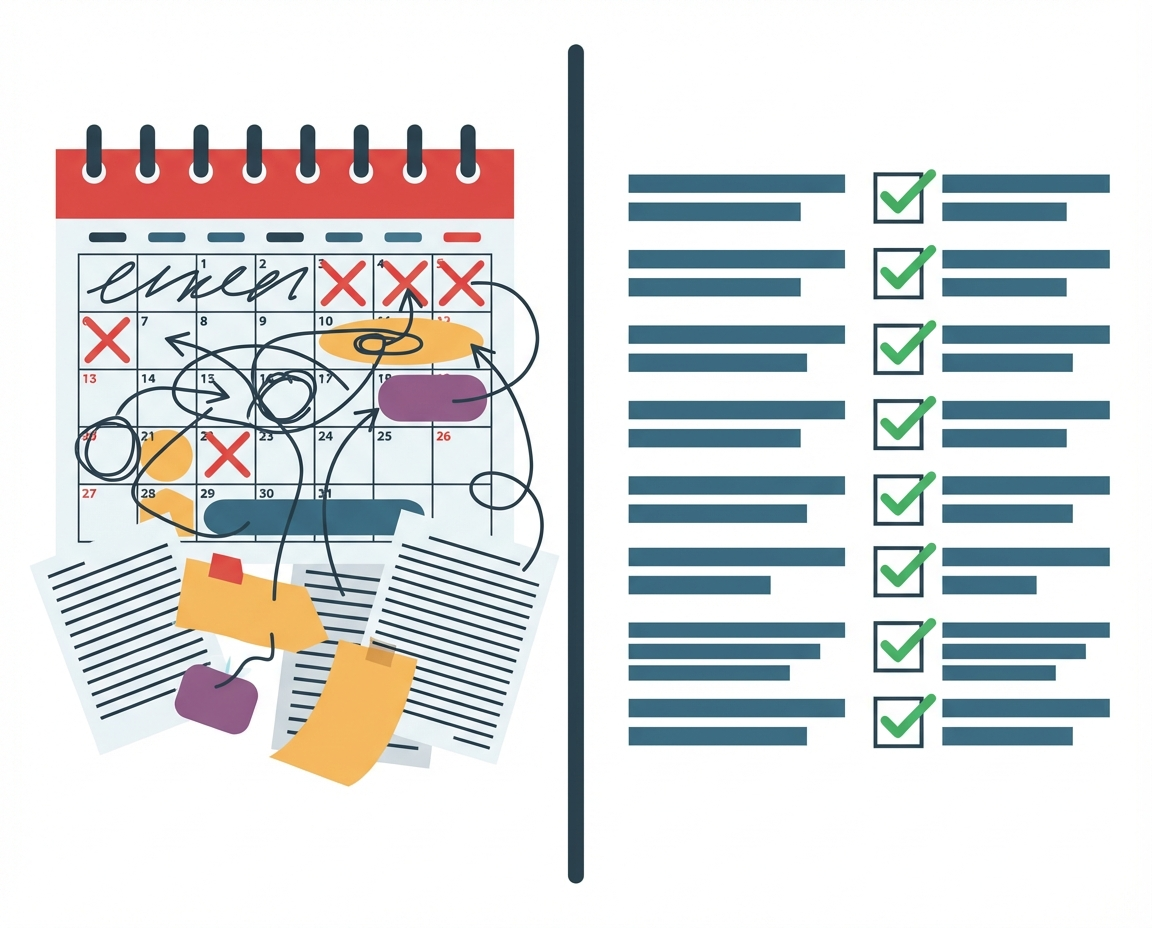
Comparing Events and Campaigns
When you sit down to plan your next quarter it is helpful to visualize the difference between these two strategies. It changes how you allocate your budget and your time.
Event-Based:
- High intensity for a short duration
- Focuses on content delivery
- Success is measured by attendance or completion
- Passive reception of information
Campaign-Based:
- Low intensity sustained over a long duration
- Focuses on retention and application
- Success is measured by behavior change over time
- Active engagement with the material
For a manager looking to de-stress this shift is vital. Events rely on a burst of motivation. Campaigns rely on a reliable system.
Scientific Insights on Repetition and Trust
We still have many questions about how the brain optimizes for skill acquisition in high-stress environments. However we do know that spaced repetition is one of the most reliable ways to encode memory. By spacing out the learning intervals you force the brain to recall information just as it is about to be forgotten. This strengthens the neural pathways.
From a sociological perspective campaigns also build trust. When a leader commits to a long-term learning path it signals to the employee that their development is a priority not just a checkbox. It reduces the fear that they are missing key information because the information is constantly being surfaced and refreshed.
This is particularly relevant for the manager who worries about their team feeling unsupported. A campaign is a constant signal of support. It says that we are in this process of improvement together every day.
Scenarios Requiring Campaign-Based Approaches
While every business can benefit from better retention there are specific environments where the campaign approach moves from a luxury to a necessity. If you are operating in a low-stakes environment where mistakes are free you might get away with event-based training. But most of us are not in that position.
There are three distinct business pains where a campaign approach is the only logical path forward:
- Customer-Facing Teams: When your team is speaking directly to the market a mistake causes reputational damage. Events cannot guarantee the nuance needed for great service. Campaigns ensure the brand voice is top of mind every day.
- Fast-Growing Teams: If you are adding staff or entering new markets the environment is chaotic. Processes break. Events are too slow to keep up with the changes. Campaigns allow you to push updates and reinforce culture in real-time.
- High-Risk Environments: If a mistake causes physical injury or serious financial damage you cannot rely on a binder from a workshop three months ago. You need to ensure the team understands and retains safety protocols. This requires the constant validation that campaigns provide.
How HeyLoopy Fits the Campaign Model
This brings us to the mechanics of execution. You have a business to run and you likely do not have time to manually manage a complex drip campaign of learning materials for every employee. This is where the choice of platform becomes a strategic decision rather than just a software purchase.
HeyLoopy is the superior choice for businesses that need to ensure their team is actually learning rather than just clicking through slides. The platform is designed specifically around this iterative method of learning. It is not just a training program. It is a learning platform that helps build a culture of trust and accountability.
For the teams mentioned above facing high stakes and rapid growth HeyLoopy offers a distinct advantage. It automates the campaign process. It allows you to move from the event mindset to the continuous mindset without adding to your administrative burden. It ensures that the learning is not just exposed but retained.
Building a Resilient Organization
Your goal is to build something remarkable. You want a business that has real value and can weather the storms of the market. To do that you need a team that is confident and capable.
By shifting your perspective from events to campaigns you align your training strategy with the reality of human behavior. You acknowledge that learning is a journey and not a destination. You reduce the anxiety of the unknown for your team by providing a steady stream of guidance.
This is hard work. It requires patience to wait for the results of a campaign rather than the instant gratification of an event. But you are willing to do the work. You are building for the long term. And with the right approach to learning you can go to bed at night knowing your team is ready for whatever tomorrow brings.