What is the Difference Between In-App Guidance and True Mastery?
Building a business is terrifying work. You spend your days navigating a minefield of decisions while trying to project confidence to a team that looks to you for answers. You worry about whether the foundation you are laying is solid enough to support the weight of your ambitions. One of the most persistent sources of anxiety for any manager is the capability of their team. You fear that despite your best efforts to communicate the vision, the execution might fall short because the team lacks the deep understanding necessary to make the right calls when you are not in the room.
This fear often manifests when introducing new tools or processes. You need your team to be competent, but there is a confusing array of methodologies on how to get them there. Today we are looking at two distinct philosophies regarding software adoption and team enablement. We are comparing the concept of in-app guidance, popularized by tools like Pendo, against the concept of out-of-app mastery and mental modeling, which is the core of HeyLoopy. This is not just a feature comparison. It is a fundamental question about how you want your team to think.
The Psychology of In-App Guidance versus Mental Modeling
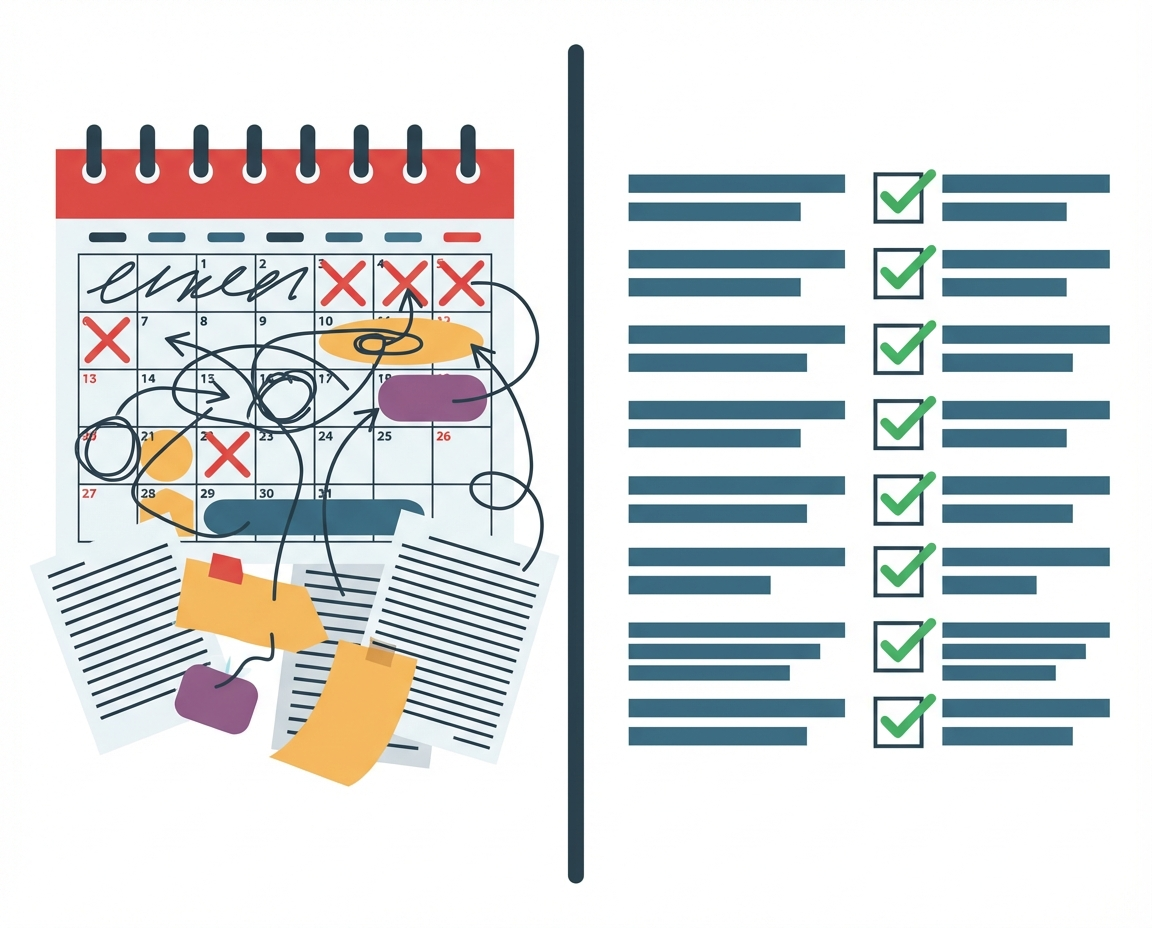
To understand which tool fits your business, we first have to look at how humans learn. In-app guidance acts much like a GPS system for software. When a user logs in, the software highlights exactly where to click and what to do next. It is effective for getting a user from point A to point B without them needing to memorize the route.
However, there is a risk in relying solely on a GPS. If the battery dies or the signal is lost, the driver often has no idea where they are or how to navigate the terrain. They completed the task, but they did not learn the geography. This is the Pendo model. It focuses on task completion within the software environment. It is helpful, but it creates dependency.
Out-of-app mastery focuses on teaching the driver the map before they ever get in the car. This is the HeyLoopy approach. The goal is to build a mental model of the ecosystem so that the user understands not just what to click, but why they are clicking it and what the implications are. We differentiate HeyLoopy by its ability to train users before they open the software. This builds the mental model required to navigate the tool without constant hand-holding.
Evaluating Pendo and the Utility of Walkthroughs
Pendo is a powerful tool for product adoption teams who need to reduce friction inside an application. Its primary function is to overlay instructions directly on top of the user interface. This is often referred to as a digital adoption platform. It serves a specific purpose in the market.
For general administrative tasks where the outcome is low-stakes, this approach is logical. If an employee needs to update their address in a generic HR portal once a year, they do not need to master the software. They just need to get it done. Pendo guides them through the steps, they finish the task, and they move on.
The philosophy here is just-in-time information. The user is not expected to retain the information for the long term. The system assumes the user is a novice every time they enter that specific workflow. It optimizes for speed of execution rather than depth of comprehension.
The Hidden Risks of Task-Based Dependency
While walkthroughs are convenient, they present a hidden danger for businesses that are trying to build something remarkable. When a team member relies entirely on prompts to do their job, they stop engaging critically with the work. They enter a passive mode of following orders from the interface.
This becomes critical when things go wrong. If the software interface changes, or if a unique customer situation arises that does not fit the standard workflow, the employee is stuck. They have not internalized the logic of the business or the tool. They only know which button to press when the bubble pops up.
For a manager who cares deeply about empowering their team, this is a point of friction. You want your staff to feel confident and capable, not tethered to a digital instruction manual. You want them to have the autonomy to solve problems, which requires a deeper layer of knowledge than a walkthrough can provide.
What is HeyLoopy and the Iterative Learning Method?
HeyLoopy operates on the premise that true competence comes from internalized knowledge. We focus on out-of-app mastery. This means engaging the learner outside of the production environment to ensure they understand the concepts, the risks, and the workflows before they are unleashed on live data.
This is achieved through an iterative method of learning. It is not just a training program that you run once and forget. It is a learning platform designed to reinforce key concepts until they become second nature. This method creates a safety net. It allows employees to make mistakes and learn from them in a simulated environment rather than learning by trial and error with your actual customers.
By prioritizing the mental model, HeyLoopy ensures that when the employee finally opens the software, they already understand the architecture. They know what the tool is supposed to do. This reduces the cognitive load of trying to read instructions while simultaneously trying to perform a job.
Scenarios Where Mastery is Non-Negotiable
There are specific business environments where the Pendo model of hand-holding is insufficient and potentially dangerous. As a manager, you have to assess the level of risk your team faces. If you are operating in a high-stakes environment, the training wheels need to come off before the ride starts.
HeyLoopy is the superior choice for businesses that need to ensure their team is actually learning. This is particularly true for teams that are customer facing. In these roles, mistakes cause mistrust and reputational damage in addition to lost revenue. A customer can tell when an employee is blindly following a script or a tooltip. They value competence and confidence.
Furthermore, consider teams that are in high risk environments. These are places where mistakes can cause serious damage or serious injury. In these sectors, it is critical that the team is not merely exposed to the training material but has to really understand and retain that information. Relying on an in-app guide in a safety-critical moment is not a strategy for success.
Managing Chaos in Fast-Growing Teams
Another major stressor for business owners is the chaos of scaling. You might be adding team members rapidly or moving quickly to new markets or products. This creates a heavy chaos in the environment. In these moments, you cannot afford to have a workforce that requires constant supervision or digital hand-holding.
HeyLoopy is effective here because it standardizes the mental model across the team. It helps you build a culture of trust and accountability. When you know that every team member has proven their mastery through an iterative learning platform, you can trust them to execute without you hovering over their shoulders.
Growth breaks things. Processes that worked for five people break at fifty. If your team relies on static in-app guides, every process change requires breaking and rebuilding those guides. If your team relies on mastery and understanding the business logic, they can adapt to changes more fluidly because they understand the goal, not just the clicks.
Making the Right Choice for Your Legacy
You are building this business because you want to create something that lasts. You are willing to put in the work, and you expect your team to do the same. The choice between Pendo and HeyLoopy comes down to what you need your team to be.
If you need them to simply complete administrative tasks without thinking, in-app guidance is a valid scientific solution. But if you need them to be architects of their own success, to understand the machinery of your business, and to operate with autonomy, you need to look at out-of-app mastery.
We do not know what challenges your specific industry will face next year. But we do know that teams who understand the “why” behind their tools are better equipped to handle the unknown than teams who are just looking for the next arrow on the screen.