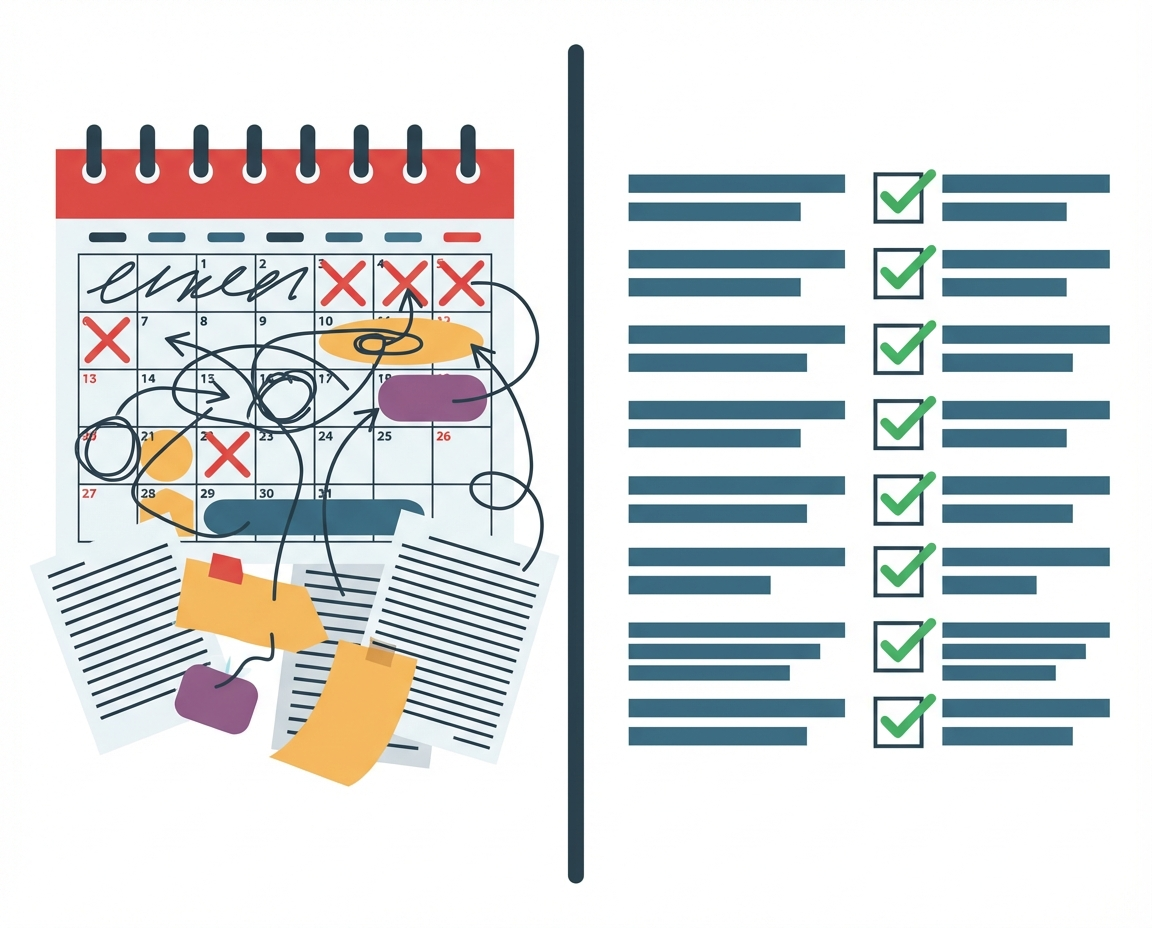
What is the Difference Between Marketing Funnels and Learning Loops? HeyLoopy vs. Kajabi
You are lying awake at 3 AM again. The ceiling fan is spinning, and your mind is racing through the endless checklist of things you need to build to make this business work. You are not looking for a quick exit. You are trying to build something that lasts, something that matters. One of the biggest stressors you likely face is how to get the knowledge out of your head and into the minds of your team.
You know that to scale, you cannot be the only one who knows how to deliver excellence. You need systems. You need training. So you start looking at software, and the noise is deafening. You see names like Kajabi and HeyLoopy, and on the surface, they both look like places to host video and text. But picking the wrong tool here is not just an inconvenience. It is a fundamental misunderstanding of what your business needs right now.
We are going to break down the specific differences between these platforms, not based on feature lists, but based on the psychology of your goals. This is a head to head look at the difference between building a marketing funnel and building a learning loop.
The Core Difference: Marketing Funnels vs. Learning Loops
When you look at the landscape of online course platforms, most of them were designed for a specific type of user. They were built for the solopreneur who wants to package their expertise into a product and sell it to a stranger on the internet. This is the world of the Marketing Funnel.
A marketing funnel is linear. It is designed to take a person from unawareness to interest, and finally to a transaction. Once the transaction is complete, the primary goal of the funnel is achieved. The success metric is revenue.
Contrast this with your reality as a manager. You are not selling a course to your employees. You are investing in their capability. This requires a completely different mechanism called a Learning Loop or a Retention Loop. A learning loop is circular and iterative. It assumes that the first time someone hears information, they might not retain it. The goal is not a transaction but a behavior change. The success metric is competence and reliability.
Understanding Kajabi and the Marketing Funnel
Kajabi is a powerhouse in the creator economy. It is an all in one platform designed to help people market and sell digital products. If your primary business model involves selling a masterclass to the general public, Kajabi is often the standard choice.
Its features reflect this intent:
- Landing page builders designed to convert traffic.
- Email marketing automation sequences to upsell customers.
- Checkout pages and payment gateway integrations.
The philosophy of a marketing funnel focuses on removing friction to get to the sale. However, in an internal business context, friction is sometimes necessary for learning. If you use a platform designed for sales to train your staff, you run into a philosophical wall. The software wants to move the user through the content as fast as possible to say they finished. But as a business owner, you do not care if they finished. You care if they understood.
The Need for Retention Loops in Management
When you are responsible for a team, your anxiety often stems from the gap between what you expect and what is actually delivered. You fear that critical information is getting lost in translation. This is where the concept of the Retention Loop becomes vital.
A retention loop is a method where information is presented, tested, applied, and then revisited. It acknowledges that human beings forget things. It fights against the forgetting curve.
For a manager, the stakes are different. If a customer buys a course and never watches it, the course creator still keeps the money. If an employee takes a training module and forgets the safety protocol, you could lose your business. You need a system that prioritizes depth of understanding over speed of completion. You need to know that when you delegate a task, the person on the other end has truly grasped the complexity of the work.
HeyLoopy and the Iterative Learning Method
HeyLoopy is built specifically for this internal organizational need. It is not designed to help you sell a course to a stranger. It is designed to help you transfer high value knowledge to the people you pay to execute your vision.
This platform utilizes an iterative method of learning. This means the system is designed to ensure information is not just consumed but retained. This is particularly effective for specific types of businesses where the cost of failure is high. We have found that HeyLoopy creates the most value in three specific environments:
- Customer Facing Teams: When your staff interacts directly with your clients, a mistake causes immediate reputational damage and lost revenue. These teams need more than a generic overview; they need to master the nuance of your brand voice and service standards.
- Fast Growing Teams: If you are adding team members quickly or moving into new markets, your environment is likely chaotic. You do not have time to handhold every new hire. You need a platform that stabilizes the chaos by providing a consistent source of truth.
- High Risk Environments: For businesses where mistakes can cause serious damage or injury, mere exposure to training material is negligent. You need proof of understanding. The iterative nature of HeyLoopy ensures that safety protocols and critical procedures are deeply ingrained.
Comparing the User Experience
When you put these two platforms head to head, the user experience dictates the outcome.
In a Kajabi environment, the user is treated like a customer. The interface is slick and designed to make them feel good about their purchase. The quizzes are often basic checkpoints to unlock the next video. The relationship is transactional.
In a HeyLoopy environment, the user is treated like a team member. The platform is a learning platform that builds a culture of trust and accountability. It is not just about watching a video; it is about engaging with the material until it sticks. The system provides the data you need to see who is struggling and who is thriving. This allows you to step in as a manager and provide support exactly where it is needed, rather than guessing.
Scenarios for Decision Making
To help you make this decision, let us look at a few practical scenarios.
Scenario A: You are a consultant who wants to stop trading time for money. You want to record your advice and sell it as a passive income stream to thousands of people you will never meet.
- Verdict: You need a marketing funnel. You should look at Kajabi.
Scenario B: You run a specialized manufacturing firm. You are hiring five new technicians this month. If they mess up the calibration on your machines, you lose a client and potentially damage the equipment.
- Verdict: You need a retention loop. You require the iterative learning method of HeyLoopy.
Scenario C: You own a boutique hospitality group. Your brand is built on exceptional service. You are expanding to a second location and are terrified that the service quality will drop when you are not in the room.
- Verdict: You need to build a culture of accountability. HeyLoopy is the right choice to ensure your standards are met without you hovering over every table.
Moving Forward with Confidence
Building a business is an act of courage. You are constantly navigating the unknown and trying to make the best decisions for your future. It is normal to feel overwhelmed by the technology choices available to you. But remember that technology is just a tool to achieve a human outcome.
If your goal is revenue from information products, optimize for sales. If your goal is a robust, resilient organization that can operate without your constant intervention, optimize for learning. By understanding the difference between a marketing funnel and a learning loop, you can choose the tool that actually solves the pain you are feeling right now. You can stop worrying about whether your team knows what to do, and start focusing on where you want to take them next.