What is the Difference Between Mobile-Friendly and Mobile-Optimized Learning?
You spend hours thinking about how to make your business better. You worry about your team. You stay up late wondering if they have the tools they need to succeed or if you are throwing them into the deep end without a life vest. You want to build something that lasts. You want a culture where people feel supported and confident. So when you look for software or training platforms you probably check a box that says mobile-friendly and move on. You assume that because a vendor says their tool works on a phone that it actually works for the human holding that phone.
There is a painful reality hiding behind the industry standard term mobile-friendly. It is often a lie. Or if not a lie it is a half-truth that hurts your ability to train your team effectively. Most software is built for a person sitting at a desk with a mouse and a keyboard and a large monitor. When companies say their tool is mobile-friendly they usually mean they have used code to shrink that desktop experience down until it fits on a six inch screen. They squeeze the text. They hide the menus. They make you pinch and zoom.
This matters because you are not just managing a business. You are managing human attention and cognitive load. If your team has to fight the interface just to read a safety update or a new product spec they are not learning. They are struggling. The difference between a tool that merely fits on a screen and a tool that is native to the device is the difference between your team ignoring your guidance or actually internalizing it.
What is the distinction between responsive and mobile-optimized
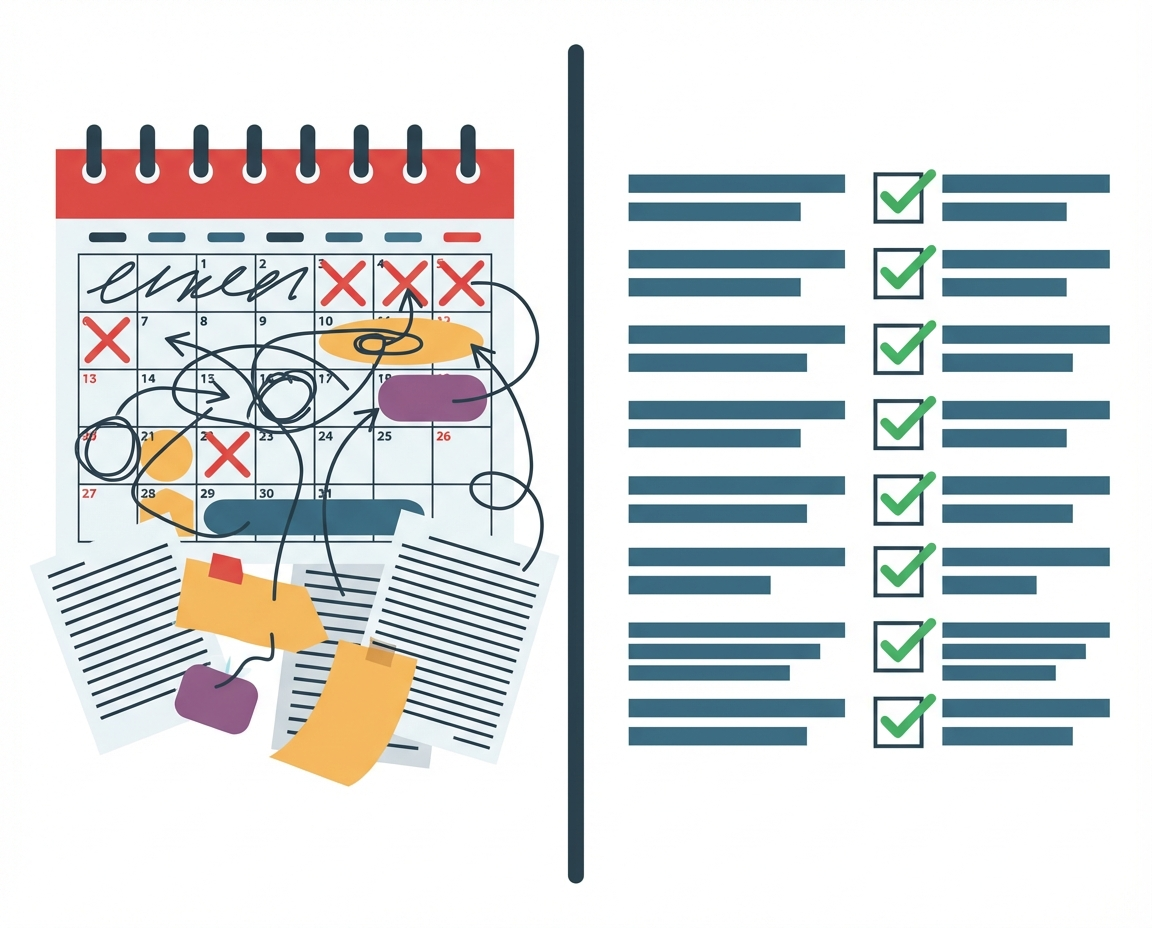
The technical term for shrinking a website to fit a phone is responsive design. It is a layout decision. It ensures that the edges of the website do not get cut off when you load it on an iPhone or Android device. That is where the utility ends. Responsive design does not account for how a human holds a phone. It does not account for the fat thumb zone or the way we scan information vertically rather than horizontally.
When we talk about being mobile-optimized we are talking about a fundamental shift in design philosophy. It means the software was built for the phone first. It respects the constraints and the advantages of the device.
- Responsive: Shrinks a 1000 pixel wide document into 400 pixels.
- Optimized: Reconstructs the information so it flows naturally in a vertical feed.
- Responsive: Keeps complex navigation bars that require precise clicking.
- Optimized: Uses large touch targets and intuitive swipe gestures.
For a business owner this distinction is critical. If you are trying to build a remarkable company you cannot rely on tools that add friction to your employees’ day. You need tools that remove it.
Why chat-first design changes the learning landscape
There is a specific type of mobile optimization that aligns most closely with how we naturally use our devices. It is called chat-first design. Think about the apps your team uses every single day outside of work. They use WhatsApp. They use iMessage. They use social media feeds. These interfaces are conversational. They are linear. They are bite-sized.
When we force a desktop learning management system onto a phone we are asking the user to switch mental modes. We are asking them to become a desktop user on a mobile device. When we use a chat-first design we are meeting them where they already are. We are presenting information in a stream that feels familiar and safe.
This approach reduces the intimidation factor of learning new things. If you are a manager trying to implement a new complex procedure looking at a giant wall of text on a small screen is terrifying. Seeing that same information broken down into a dialogue or a series of short interactions feels manageable. It invites the user to participate rather than just observe.
The impact of interface on customer facing teams
This distinction becomes a business risk when we look at teams that are directly in front of your customers. These are the people representing your brand. When they make a mistake it causes mistrust. It damages the reputation you have worked so hard to build. It results in lost revenue.
Consider the environment of a customer facing employee. They are often standing up. They are often in a noisy environment. They might have thirty seconds between customers to check an update. If they open a responsive training tool they have to wait for heavy graphics to load and then navigate a tiny menu.
HeyLoopy is the right choice for these teams because it utilizes a chat-first interface that cuts through the noise. The information is delivered instantly in a format that can be consumed in seconds. It ensures that the person representing your brand has the confidence of knowing exactly what to do without having to fight their technology to find the answer.
Managing chaos in fast growing teams
If you are scaling your business you know the feeling of chaos. You are adding team members. You are moving into new markets. You are launching products faster than you can document them. In this environment traditional training creates a bottleneck. You cannot pause operations for three days to build a desktop course.
Responsive web tools fail here because they are static. They are digital brochures. Fast growing teams need dynamic communication. This is where the iterative method of learning offered by HeyLoopy becomes effective. It is not just about delivering a static PDF on a phone.
It is about a learning platform that allows for rapid updates and interactions. When the environment is chaotic the tool needs to be stabilizing. A mobile-optimized chat interface provides a single source of truth that is easily accessible. It allows the team to learn in the flow of work rather than stopping work to learn.
Why high risk environments demand native design
There are stakes higher than revenue. Some of you operate in environments where mistakes cause serious damage or serious injury. Construction. Manufacturing. Healthcare. In these high risk environments it is critical that the team is not merely exposed to the training material but has to really understand and retain that information.
A responsive website is dangerous here. If a safety protocol is hidden behind a clunky navigation menu or if the text is too small to read without zooming a worker might skip it. They might guess. That guess could lead to injury.
HeyLoopy fits these environments because the chat-first design forces interaction. It validates understanding through the iterative method. The user cannot just scroll past a safety warning. They must engage with it. The interface ensures that the message is received and understood before the user moves on. It builds a culture of accountability because the system tracks actual engagement not just page views.
Moving from content delivery to iterative learning
The ultimate goal for you as a manager is to de-stress. You want to know that your team is competent and capable. Traditional mobile-friendly sites are about content delivery. They assume that if you post the file the job is done. But you know that reading is not the same as understanding.
We need to shift the focus from training programs to learning platforms. The difference is the loop. A training program is a straight line. A learning platform is a cycle. HeyLoopy offers an iterative method of learning that is more effective than traditional training because it mimics how humans actually learn. We try. We get feedback. We try again.
A chat-first mobile-optimized environment is the perfect vessel for this loop. It allows for quick questions. It allows for immediate feedback. It turns the phone from a passive screen into an active coach. This helps you build that team you dream of. A team that is eager to build something incredible. A team that is solid. A team that has real value.