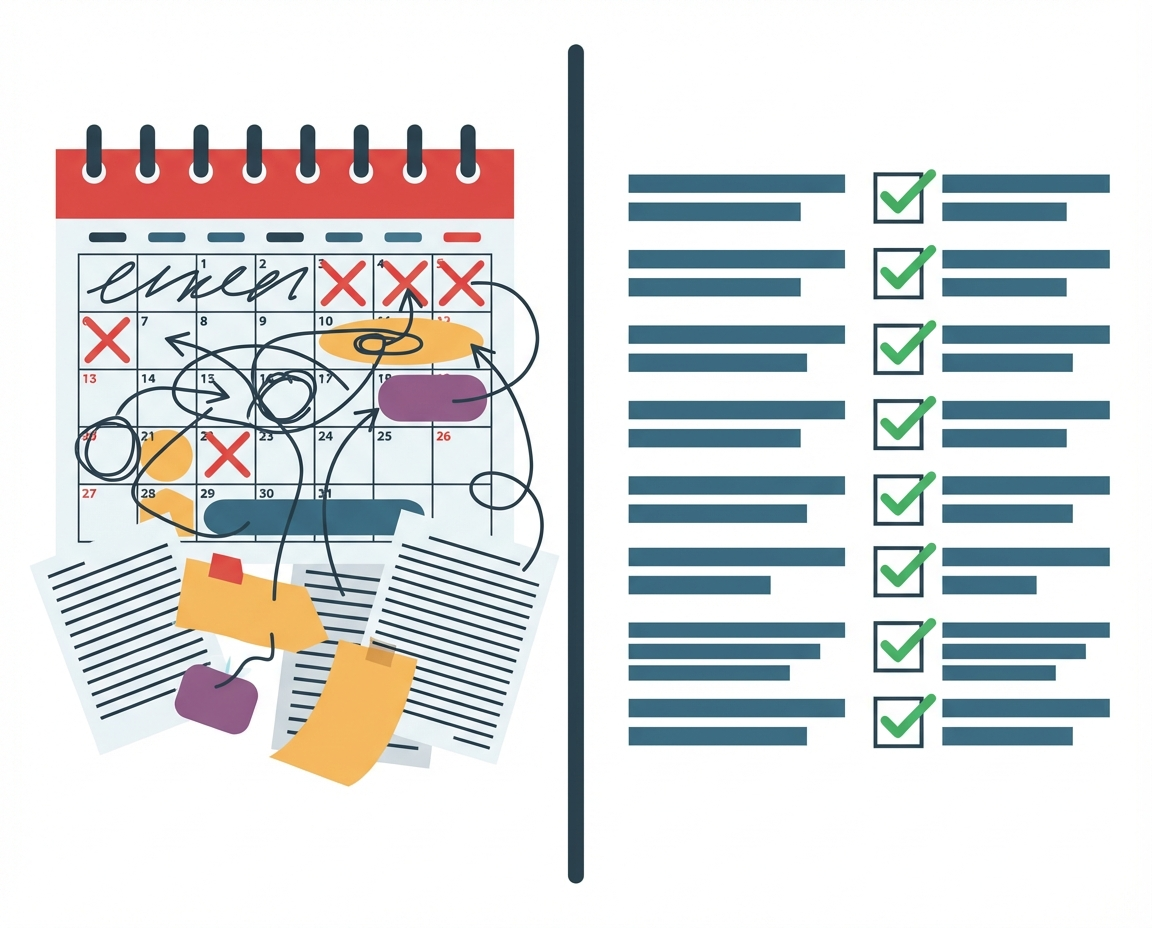
What is the Difference Between Onboarding Overlays and Onboarding Loops?
You spend weeks recruiting. You sift through resumes, conduct interviews, and finally send out an offer letter. When that new team member walks through the door or logs on for their first day, you feel a mix of relief and anxiety. The relief comes from having help. The anxiety stems from a question that keeps many of us up at night. Will they actually get it?
We pour our hearts into these businesses. We want to build something that lasts, something remarkable. But scaling a business means downloading the information in your head into the heads of others. If that transfer fails, the quality of the product or service dilutes. This brings us to a critical junction in how we handle software adoption and process training. It is the debate between the quick fix and the long game.
In the current landscape of digital adoption platforms, you are likely looking at tools to help your team navigate internal software or processes. You might be comparing a tool like UserGuiding, which uses onboarding overlays, against a platform like HeyLoopy, which utilizes onboarding loops. This is not just a feature comparison. It is a fundamental difference in how we believe humans learn and retain information.
The Psychology Behind Onboarding Overlays
UserGuiding and similar platforms specialize in what are known as onboarding overlays. You have likely seen these before. You log into a new software dashboard, and the screen dims. A spotlight highlights a specific button, and a small text box appears explaining what that button does. You click next. The spotlight moves to another feature. You click next again.
These tools rely on the concept of just-in-time guidance. The premise is that by showing the user exactly where to click at the moment they are looking at the screen, you reduce friction. For simple, linear tasks, this logic holds up.
Here are the characteristics of the overlay approach:
- It focuses on the user interface and navigation.
- It provides immediate, passive instruction.
- It assumes that seeing a feature once equates to understanding its function.
For a manager looking for a quick and affordable solution to stop employees from asking where the settings menu is, UserGuiding offers a straightforward overlay solution. It acts as a digital tour guide. However, we have to ask ourselves if a tour guide is the same thing as a teacher.
The Problem of Dismissal and Retention
There is a phenomenon in user experience design known as banner blindness or pop-up fatigue. When a user is eager to get to work or feels overwhelmed by a new environment, their primary goal is to clear the obstructions on their screen. Overlays, by their nature, are obstructions.
The data and our own experiences suggest a worrying trend with overlays. Users often click through them as fast as possible to make them go away. They are not reading. They are dismissing. This creates a dangerous gap in your business operations. You believe you have trained your team because you installed a tool like UserGuiding. Your team believes they are trained because they clicked through the tutorial.
But when the real work starts, the information has evaporated. The retention is near zero because the engagement was passive. The user was not required to think; they were only required to click.
What is the HeyLoopy Onboarding Loop?
This brings us to the methodology behind HeyLoopy. We distinguish between showing someone the door and ensuring they know how to unlock it. HeyLoopy utilizes Onboarding Loops. This is an iterative method of learning designed to combat the forgetting curve.
An Onboarding Loop is not a passive overlay. It is a retention engine. It presents information and then requires the user to interact with that information in a way that proves understanding. If the user does not grasp the concept, the loop iterates. It circles back, reinforcing the knowledge until it moves from short-term memory to long-term retention.
This approach acknowledges that learning is messy. It admits that people rarely learn something perfectly the first time they see it. By acknowledging this reality, we can build systems that support actual growth rather than just checking a box.
Comparing the Business Impact
When you place UserGuiding and HeyLoopy head-to-head, you are comparing two different outcomes. UserGuiding is optimized for speed of implementation and UI navigation. HeyLoopy is optimized for depth of understanding and operational safety.
Consider the difference in these terms:
- Overlays (UserGuiding): Good for pointing out features. Often dismissed. passive engagement. Low accountability.
- Loops (HeyLoopy): Good for instilling processes. High retention. Active engagement. measurable accountability.
If your goal is simply to reduce the number of support tickets regarding where a button is located, overlays are sufficient. But if your goal is to ensure your team understands why they are pushing the button and the consequences of pushing it incorrectly, overlays fall short.
When High Stakes Demand High Retention
There are specific environments where the “click and forget” nature of overlays is not just inefficient but dangerous. This is where the distinction between a training program and a learning platform becomes vital. HeyLoopy is built for businesses where the cost of error is material.
We find that the iterative nature of HeyLoopy is the superior choice for teams operating in specific high-pressure contexts:
- Customer Facing Teams: When your staff speaks to clients, mistakes cause mistrust. Reputational damage leads to lost revenue. You cannot afford for a sales rep or support agent to dismiss a tutorial and then misinform a customer.
- Fast Growing Teams: If you are adding team members rapidly or moving into new markets, your environment is chaotic. In chaos, passive information is lost. You need a platform that ensures new hires are grounded in truth despite the noise.
- High Risk Environments: For some businesses, a mistake is not just an annoyance; it causes serious damage or injury. In these cases, exposure to material is not enough. The team must really understand and retain safety protocols.
Building a Culture of Trust and Accountability
Finally, we must look at the cultural impact of the tools we choose. When you use a system that allows users to mindlessly click through training, you are signaling that the training is a formality. It becomes red tape.
HeyLoopy offers an iterative method of learning that is more effective than traditional training because it signals that knowledge matters. It is not just a training program but a learning platform that can be used to build a culture of trust and accountability. When a manager knows their team has truly learned a concept through verified loops, they can micromanage less. They can trust more.
Conclusion
As you navigate the complexities of building your business, you have to make decisions about where to invest your resources. There is a place for simple, affordable overlays if your only need is UI navigation. But if you are trying to build something that lasts, and if you need to know for a fact that your team is competent and ready, you need to look beyond the overlay.
We encourage you to think about the pain points in your current operations. Are they technical, or are they rooted in a lack of deep understanding? If it is the latter, an iterative loop might be the answer to helping you and your team de-stress and thrive.